
Introduction
How do you choose the right trolling rod for saltwater fishing? Start by matching the rod to your target species, fishing environment, line class, rod power, action, length, lure weight, guides, and reel. Each factor affects how the rod performs and how well your complete tackle system handles pressure.
Saltwater trolling puts continuous load on a fishing rod. The moving boat keeps the lure or bait under tension as it travels through the water. When a fish strikes, the load can increase quickly. A powerful fish may make long runs, change direction, or pull hard against the drag. The rod must handle these forces without losing control.
Common saltwater trolling targets include tuna, marlin, sailfish, wahoo, mahi-mahi, kingfish, and shark. These species differ in size, fighting power, habitat, and fishing technique. Because of these differences, one trolling rod cannot provide the ideal setup for every situation.
Choosing the strongest rod is not always the best solution. Instead, focus on a balanced trolling setup. The rod should work well with the reel, fishing line, leader, lure, hooks, and drag. A well-matched system can improve control and reduce unnecessary stress on individual components.
In this guide, we will explain how to choose a saltwater trolling rod step by step. We will look at target species and fishing conditions first. Then, we will cover line class, rod power, action, length, lure weight, guides, butt style, reel compatibility, and drag. By matching these factors, you can build a trolling setup that fits your fishing style and target species.
What Is a Saltwater Trolling Rod?
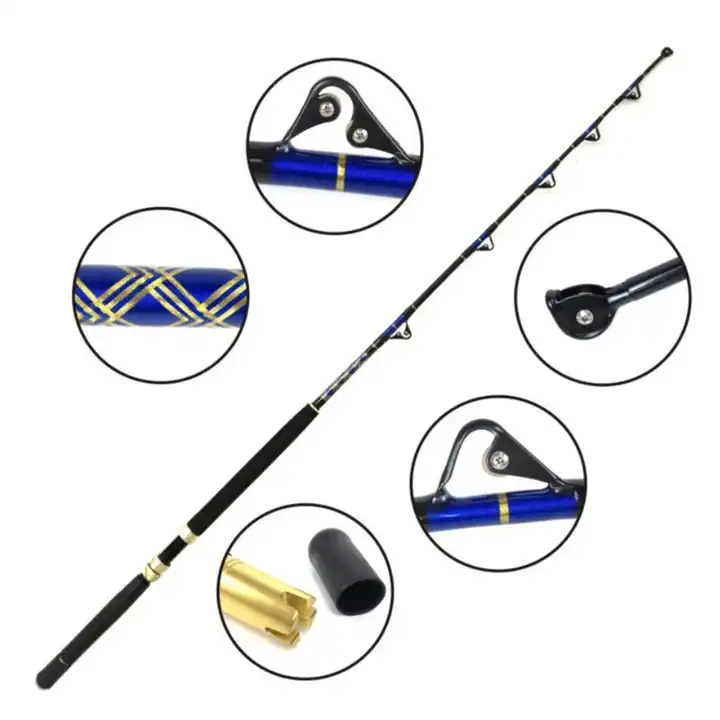
A saltwater trolling rod is a fishing rod designed to pull a lure or bait behind a moving boat. It must handle steady line tension, water resistance, and sudden loads from hooked fish. Compared with many general-purpose fishing rods, trolling rods usually offer stronger blanks, durable guides, secure reel seats, and powerful butt sections.
How Is Trolling Different From Casting?
Trolling and casting use different fishing methods. When casting, you throw the lure or bait and retrieve it toward the boat. The rod mainly handles the cast, lure movement, and fish during the fight.
Trolling keeps the lure or bait in the water while the boat moves. The line stays under tension for much of the presentation. This creates a constant load on the trolling rod, reel, line, and terminal tackle.
A saltwater trolling rod may face pressure from several sources:
- Moving boat: Boat speed keeps the line and lure under steady tension.
- Lure or bait: Large lures and rigged baits create resistance as they move through the water.
- Water resistance: Drag from the water increases with lure size, trolling speed, and current.
- Hooked fish: A powerful fish can make sudden runs, change direction, and increase the load on the rod.
For this reason, a trolling rod needs enough power, durability, and flexibility to manage continuous pressure. The right rod should also work smoothly with the reel’s drag system and the selected fishing line.
Why Do Saltwater Trolling Rods Need Corrosion-Resistant Components?
Saltwater can accelerate corrosion on metal components. Guides, reel seats, roller systems, and other hardware can face repeated exposure to salt, moisture, and spray.
A quality saltwater trolling rod should use durable components that can withstand this environment. Stainless steel, corrosion-resistant alloys, protective coatings, and suitable guide materials can help extend component life. However, even corrosion-resistant tackle needs proper care. Rinse the rod with fresh water after saltwater trips and allow it to dry before storage.
Types of Saltwater Trolling Rods
Saltwater trolling rods come in different designs for different fishing environments and target species.
- Inshore trolling rods: Designed for fishing closer to shore and targeting smaller or moderate-size saltwater species.
- Nearshore trolling rods: Built for areas just offshore, where anglers may encounter stronger fish and heavier tackle demands.
- Offshore trolling rods: Designed for open-water fishing and species such as tuna, wahoo, mahi-mahi, and larger game fish.
- Deep-sea trolling rods: Built to handle greater depths, heavier terminal tackle, and strong currents.
- Big-game trolling rods: Designed for powerful species such as large tuna, marlin, and shark. They typically combine high line classes with strong blanks, heavy-duty guides, and powerful butt sections.
The right category depends on where you fish, what you target, the size of your lures, and the amount of drag you plan to use.
What Fish Can You Catch With a Saltwater Trolling Rod?
A saltwater trolling rod can target many different species. Your choice of rod should match the size and fighting power of the fish you expect to encounter.
- Tuna: Tuna can make fast, powerful runs and require strong tackle with suitable line capacity and drag.
- Marlin: Marlin demand heavy-duty equipment that can manage long runs and sudden changes in direction.
- Sailfish: Sailfish are fast and highly active, so rod power and action should provide control without sacrificing responsiveness.
- Wahoo: Wahoo are fast predators that often require trolling setups designed for speed and strong strikes.
- Mahi-mahi: Mahi-mahi can make energetic runs and jumps, making a responsive trolling setup useful.
- Kingfish: Kingfish are aggressive predators that can put significant pressure on the line and rod.
- Shark: Sharks can generate sustained pulling power, so heavier line classes and stronger trolling rods may be necessary.
Because these species vary so much, there is no single saltwater trolling rod that fits every application. Start with your target species and fishing environment, then match the rod’s line class, power, action, length, guides, and reel to the conditions.
What Should You Consider When Choosing a Saltwater Trolling Rod?
Choosing the right saltwater trolling rod starts with more than rod length or power. The rod needs to match your target fish, fishing conditions, line, lure, and reel. A balanced setup helps you control the fish while reducing unnecessary stress on the tackle.
Use this selection framework:
Target Species → Fishing Environment → Line Class → Rod Power → Action → Length → Lure Weight → Guides → Butt Style → Reel & Drag
1. Target Species
Start with the fish you plan to catch. Tuna, marlin, sailfish, wahoo, mahi-mahi, kingfish, and shark can require very different tackle. Consider the expected fish size and fighting power before choosing a rod.
2. Fishing Environment
Next, consider where you will troll. Inshore, nearshore, offshore, and deep-sea fishing create different demands. Water depth, current, boat size, trolling speed, and available space can all affect your rod choice.
3. Line Class
The trolling rod line class should match your fishing line and target species. Common big-game line classes include 30 lb, 50 lb, 80 lb, 100 lb, and 130 lb. Heavier line classes suit larger fish and higher tackle loads, but they can also require heavier rods and reels.
4. Rod Power
Rod power describes how much force the rod can handle. Choose a power level that matches your line class, lure weight, and target fish. Heavier power is not automatically better. An oversized rod can reduce sensitivity and make smaller fish less enjoyable to fight.
5. Action
Rod action describes how the blank bends under load. Fast, moderate, and slow actions create different bending profiles. Your choice should match the trolling technique, lure or bait, hook setup, and desired fighting characteristics.
6. Length
Rod length affects leverage, line control, and boat handling. A shorter trolling rod can provide strong leverage and work well in limited space. A longer rod can help separate lines and spread lures across a wider trolling pattern.
7. Lure Weight
Match the rod to the weight and resistance of your lure or bait. Large trolling lures can create significant water resistance, especially at higher speeds. The rod should have enough capacity to handle the lure without feeling overloaded.
8. Guides
Guide design also matters in saltwater trolling. Standard guides, roller guides, and big roller guides each suit different applications. Heavy-duty roller systems can help manage high line loads, while standard guides may offer a simpler and lighter setup.
9. Butt Style
Choose between a straight butt and bent butt trolling rod based on your fighting style and rod-holder setup. Bent butts can provide a useful angle for fighting large fish from a boat. Straight butts offer greater versatility for some setups.
10. Reel & Drag
Finally, match the rod with a suitable trolling reel and drag system. Check the reel’s line capacity, drag range, gear ratio, and overall size. The rod, reel, and line should work together rather than treating any single specification as the most important factor.
The key is to build a balanced saltwater trolling system. Instead of choosing the strongest rod available, match every component to the fish, environment, technique, and expected load. The following sections will explain each factor in more detail so you can make a more precise trolling rod selection.
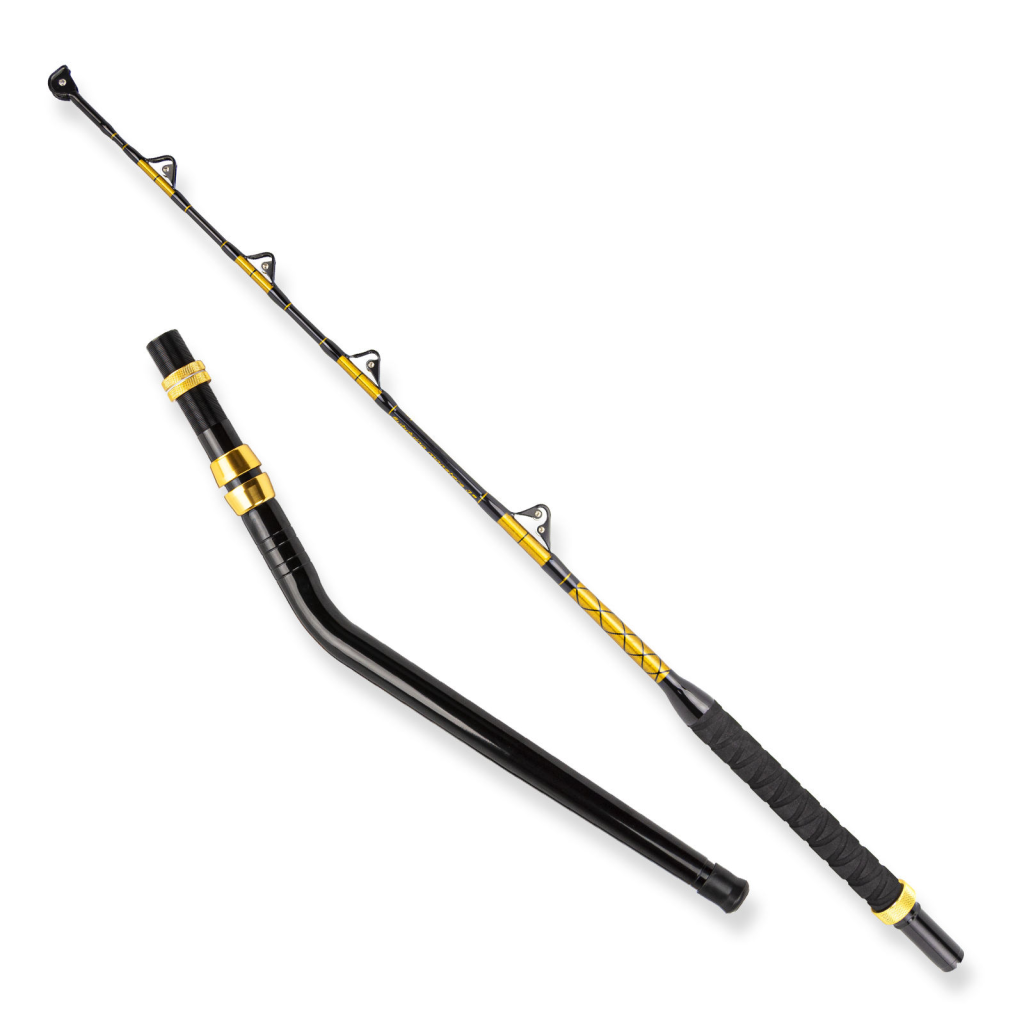
Choose a Trolling Rod Based on Target Species
The target species and expected fish size should be the starting point when choosing a saltwater trolling rod. Different fish fight in different ways. A small mahi-mahi may need a very different setup from a large bluefin tuna or marlin.
Consider more than the species name. Think about the average fish size, possible trophy fish, fighting style, trolling speed, line class, and drag pressure. These factors help you determine the right rod power and overall tackle strength.
Trolling Rod for Tuna
Tuna species such as yellowfin, bluefin, bigeye, and albacore can require different trolling setups. Their size and fighting power vary widely, so match the rod to the tuna you expect to encounter.
Large tuna can make long and powerful runs. They can also maintain heavy pressure during the fight. A suitable rod needs enough backbone to control the fish while working within the limits of the fishing line and reel drag.
Your line class and drag setting should guide the rod selection. Heavy tuna may call for heavier line classes and stronger rods. Smaller tuna can work well with lighter tackle that provides more sport and sensitivity.
A heavy-duty tuna trolling rod makes sense when you regularly target larger fish or fish with higher drag settings. A lighter tuna setup can be more suitable when the expected fish size is smaller. Avoid choosing a rod simply because it has the highest power rating. Match the rod to the complete system.
Trolling Rod for Marlin
Marlin can put extreme loads on offshore tackle. Large fish can make powerful runs and change direction quickly. These movements place significant stress on the rod, reel, line, and terminal tackle.
For larger marlin, anglers often use heavy line classes and powerful trolling rods. The rod needs a strong backbone to maintain pressure without losing control during long fights.
Guide design also matters. Roller guides can help manage heavy line loads and reduce friction as the line moves through the guides. A bent-butt trolling rod can also provide a useful fighting position when paired with a suitable rod holder and reel.
Choose the rod based on the expected marlin size and fishing method. The goal is to create enough power for the fight without adding unnecessary weight to every component.
Trolling Rod for Sailfish
Sailfish are known for fast runs, jumps, and sudden changes in direction. These movements require a responsive and well-balanced trolling setup.
A sailfish rod needs enough power to maintain pressure, but excessive power can make the setup unnecessarily heavy. Match the rod to the expected fish size, line class, lure or bait, and drag setting.
A balanced setup can help the angler respond quickly when the fish changes direction. It also allows the rod to absorb sudden movements while the drag system controls the line.
Trolling Rod for Wahoo and Mahi-Mahi
Wahoo and mahi-mahi often suit lighter or medium trolling tackle, depending on their expected size and the fishing conditions.
Lure size and trolling speed are important factors. Wahoo trolling often involves faster presentations, while mahi-mahi can be targeted with a wider range of lure and bait setups. The rod should handle the lure’s weight and water resistance at the selected speed.
Consider the entire terminal setup as well. Leader strength, hook size, lure design, and connection points should match the target fish. Wahoo, in particular, can damage lighter terminal tackle with their sharp teeth, so the leader and other components need appropriate protection.
Trolling Rod for Shark
Shark fishing requires a setup based on the expected shark size and fighting power. Different shark species can range from relatively manageable fish to extremely powerful game fish.
Larger sharks may require heavy line, strong leaders, and substantial drag pressure. The trolling rod should have enough backbone to maintain pressure and provide lifting power when the fish comes closer to the boat.
The rod also needs to work with the selected hook and terminal tackle. Check that the rod, reel, line, leader, hook, and connections can handle the expected load as a complete system.
Match the Rod to the Fish, Not Just the Species
The same species can require different trolling rods depending on its size and the fishing conditions. A setup for smaller yellowfin tuna, for example, may not suit large bluefin tuna.
Start with species → expected fish size → fishing method → line class → drag pressure. Then choose the rod power, action, length, and other components. This approach helps you build a balanced trolling setup instead of simply choosing the heaviest rod available.
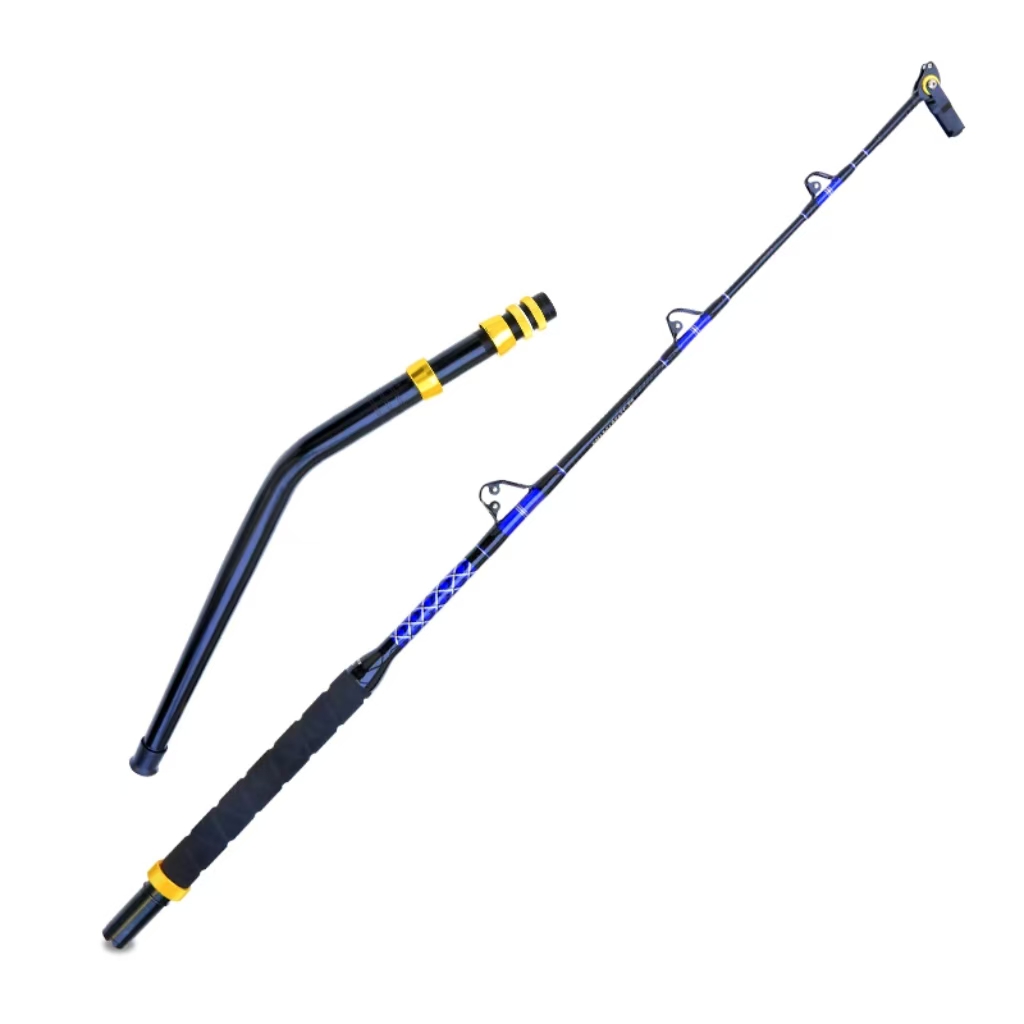
Match the Trolling Rod to Your Saltwater Fishing Environment
Your fishing environment plays an important role when choosing a saltwater trolling rod. Water depth, current, target species, lure size, boat layout, and line length can all affect the load on your tackle.
A rod that works well for inshore trolling may not have enough power for offshore or deep-sea fishing. Match the rod to the conditions you expect to face.
Inshore Saltwater Trolling
Inshore saltwater trolling usually targets smaller or medium-size species in relatively shallow water. These conditions often allow anglers to use lighter tackle and more flexible rod options.
A lighter saltwater fishing rod can provide better sensitivity and make smaller fish more enjoyable to fight. You may also have more freedom to choose between different rod lengths, powers, and actions.
When selecting an inshore trolling rod, consider the expected fish size, lure weight, trolling speed, and line class. There is usually no need to use a heavy big-game setup when the target species and conditions call for lighter tackle.
Nearshore Trolling
Nearshore trolling sits between inshore and offshore fishing. You may encounter larger fish, stronger currents, and underwater structure such as reefs, rocks, or drop-offs.
A medium-power trolling rod can provide a useful balance between control and flexibility. It should have enough backbone to turn a fish away from structure while still matching the line and lure being used.
Boat layout also matters. Consider where you will place the rod, how much space you have to fight the fish, and how you will manage multiple trolling lines. A suitable rod length and butt style can make line management easier around the boat.
Offshore Trolling
Offshore trolling often involves larger game fish, heavier lures, longer lines, and greater water resistance. The fish may also make long runs that keep the tackle under load for extended periods.
An offshore trolling rod needs enough power to handle the expected fish and line class. Heavier lures can also create significant resistance, especially at higher trolling speeds. The rod should handle this load without feeling overloaded.
Species such as tuna, marlin, wahoo, and large mahi-mahi may require different levels of tackle strength. Match the rod to the expected fish size rather than automatically choosing the heaviest option.
Long fights create additional demands on the entire system. The rod, reel, line, leader, guides, and drag should work together throughout the fight.
Deep-Sea Trolling
Deep-sea trolling adds depth, strong currents, and potentially large offshore species to the equation. These conditions can increase line tension and make fish control more demanding.
A deep sea trolling rod should provide enough backbone for heavy tackle and the expected target species. You may also need heavier line, stronger leaders, larger lures, and a reel with sufficient line capacity.
Strong currents can increase the resistance on the lure and line. Deep water also means that a hooked fish may have a large amount of line between the boat and the fish. These factors make rod power, reel capacity, and drag performance especially important.
For large offshore species, a big game trolling rod can provide the strength needed for sustained pressure. However, choose the rod based on your actual fishing conditions, target size, and tackle system. More power is not always necessary.
Match the Rod to the Environment
The basic progression is simple:
Inshore → Nearshore → Offshore → Deep Sea
As the environment becomes more demanding, you may need greater rod power, heavier line, larger lures, and stronger supporting tackle. However, the right choice still depends on the specific fish and technique.
Before buying a saltwater trolling rod, consider the water depth, current, target species, lure size, trolling speed, line class, and boat layout. Matching these factors will help you build a balanced setup that performs reliably on the water.
Choose the Right Trolling Rod Line Class
Line class refers to the general strength rating of the fishing line used with a trolling setup. It helps anglers match the trolling rod, reel, line, and drag to the expected fish size and fishing conditions.
Common offshore line classes include 30 lb, 50 lb, 80 lb, 100 lb, and 130 lb. A higher line class generally indicates a heavier-duty setup. However, line class should only be the starting point. It does not determine the right trolling rod by itself.
For example, a 30 lb setup may suit lighter offshore trolling and smaller game fish. A 50 lb or 80 lb setup can provide more strength for larger fish and heavier conditions. Anglers targeting large tuna, marlin, or shark may use 100 lb or 130 lb tackle when the expected fish size and fishing method require it.
Saltwater Trolling Rod Line Class Chart
| Application | General Line Class | Typical Use |
| Light trolling | Lower line classes | Smaller saltwater species |
| Medium trolling | Medium line classes | General offshore applications |
| Heavy offshore | Heavy line classes | Larger tuna and game fish |
| Big game | 80–130 lb+ | Large tuna, marlin, shark |
These ranges are general references, not fixed rules. The same species can require different line classes depending on its size, fishing location, technique, and expected fight.
30 lb Trolling Rod Setup
A 30 lb trolling setup can work well for lighter saltwater applications and smaller game fish. It offers a balance of strength and sport when you do not expect extremely large fish.
Match the rod to the line class and lure weight. A lighter rod can also provide better sensitivity and a more engaging fight.
50 lb Trolling Rod Setup
50 lb is a common choice for medium-duty offshore trolling. It can provide more lifting power and line strength when compared with lighter setups.
This line class can suit a range of offshore species. However, consider the expected fish size and drag setting before choosing the rod.
80 lb Trolling Rod Setup
An 80 lb trolling setup moves into heavier offshore and big-game territory. It can provide the additional strength needed for larger fish and demanding conditions.
An 80 lb line class should work with a rod and reel that can handle the expected load. Check the rod’s power, reel capacity, drag range, and lure rating as part of the selection process.
100 lb Trolling Rod Setup
100 lb tackle suits applications where anglers expect substantial fish and high loads. It can be useful for larger tuna and other powerful offshore species.
At this level, the entire system becomes especially important. The rod, reel, line, leader, guides, hooks, and drag must work together. A heavy line alone does not create a suitable big-game setup.
130 lb Trolling Rod Setup
A 130 lb trolling setup is designed for very heavy-duty applications. Anglers may use it when targeting large tuna, marlin, shark, and other powerful game fish.
A 130 lb line class typically pairs with a powerful trolling rod and a reel with sufficient line capacity and drag performance. Heavy-duty guides and a suitable butt style can also help manage high loads during long fights.
Line Class Is Only One Part of Rod Selection
Do not choose a trolling rod based on line class alone. A suitable setup should also match:
Target species → Fish size → Fishing environment → Line class → Rod power → Action → Length → Lure weight → Guides → Reel & drag
For example, two anglers may target the same species but choose different line classes because they fish in different depths, currents, or structures. Their rod power and reel requirements may also differ.
The goal is not to use the heaviest line class available. Instead, choose a line class that matches the expected fish and fishing conditions, then build the rest of the saltwater trolling setup around it.
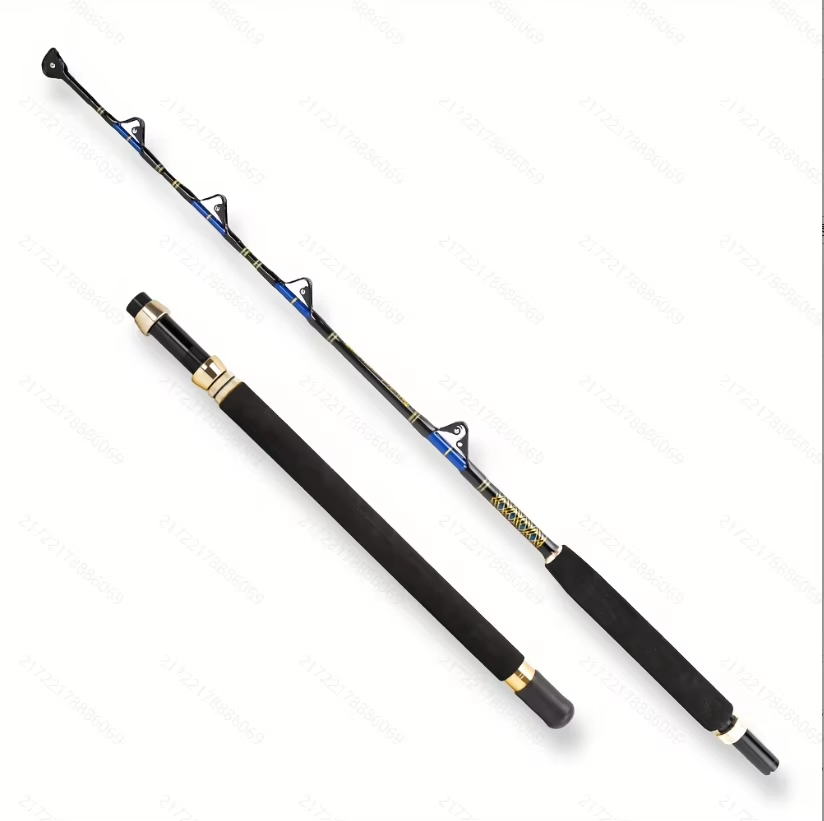
Understand Trolling Rod Power
Trolling rod power describes how much force a rod can handle before it bends deeply under load. It also affects the rod’s lifting capability during a fight. Common power ratings include light, medium, heavy, and extra-heavy.
The right power depends on more than the size of the fish. You also need to consider your line class, drag pressure, lure weight, and rod length. These factors work together. A balanced combination gives you better control and helps prevent unnecessary stress on the tackle.
Light Power
A light power trolling rod suits smaller saltwater species and lighter trolling setups. It offers more flex and can make smaller fish more engaging to fight.
Light-power rods work well when you use lighter line, smaller lures, and moderate drag pressure. They may not provide enough lifting power for large tuna, marlin, or other powerful game fish.
Medium Power
A medium power trolling rod provides a balance between flexibility and lifting strength. It can suit general saltwater trolling and medium-sized game fish.
Medium-power rods work best when the rod, reel, line, and drag all fall within a similar range. They can handle more pressure than light rods while still offering useful rod flex during the fight.
Heavy Power
A heavy power trolling rod is designed for higher loads. It works well for larger fish, heavier line classes, stronger drag settings, and demanding offshore conditions.
Heavy rods provide more lifting power. This can help anglers control powerful fish and gain line during the later stages of a fight. A heavy rod also needs a reel, line, guides, and butt section that can handle similar loads.
Extra-Heavy Power
An extra-heavy trolling rod targets extreme loads and large game fish. It can suit very heavy line classes and high-drag applications when the fishing conditions require them.
This level of power can provide substantial lifting capability. However, it also reduces flexibility compared with lighter rods. The extra strength only helps when the rest of the tackle can support it.
How Rod Power Affects Lifting Capability
Rod power has a direct relationship with lifting capability. A more powerful rod can generally handle greater loads and provide more force when you need to move a fish.
However, rod power does not work alone. Line class and drag pressure determine how much load the rod sees. Fish size and fighting behavior also affect the load.
For example, a large tuna may require a heavy-power rod with a suitable line class and drag system. A smaller fish may perform better on a lighter setup. Using an extremely powerful rod for every situation does not automatically improve performance.
How Trolling Rod Power Works With Other Factors
Line class: Match rod power with the line class. A heavier line usually pairs with a more powerful rod, but the two should not be selected independently.
Fish size: Larger and stronger fish generally require more lifting power. Consider the expected size and fighting behavior of the target species.
Drag pressure: Higher drag settings place more load on the rod. A powerful rod can help handle heavier drag, but the reel, line, leader, hooks, and other components must also support the load.
Lure weight: Heavy lures and high-resistance trolling lures can place additional stress on the rod. Choose a rod with a suitable lure-weight range for your presentation.
Rod length: Length also affects leverage. A shorter rod can provide strong leverage and lifting power, while a longer rod can offer more line control and flexibility. The ideal length depends on the boat, technique, lure spread, and target species.
A useful selection process is:
Fish size → Line class → Drag pressure → Lure weight → Rod power → Rod length
Use this as a starting point rather than a strict formula. Your fishing environment and technique can change the final choice.
Is a Heavier Trolling Rod Always Better?
No. A heavier trolling rod is not always better.
A rod with excessive power can reduce flexibility and make the setup harder to balance. It may also make smaller fish less enjoyable to fight and can limit the rod’s ability to work naturally with lighter tackle.
An oversized rod can also create an unbalanced trolling system. For example, pairing an extremely heavy rod with light line, a small reel, or a light lure does not create a stronger setup. Each component should work within a compatible range.
Instead of choosing the most powerful rod available, match the power to the target fish, line class, drag pressure, lure weight, and fishing environment.
For saltwater trolling, the goal is not maximum rod power. The goal is the right rod power for the application. A balanced setup can provide enough lifting strength while maintaining the flexibility and control you need during the fight.
Choose the Right Trolling Rod Action
Trolling rod action describes where a rod bends along its blank when you apply pressure. It affects how quickly the rod loads, how it responds to a strike, and how it distributes pressure during a fish fight.
Rod action usually falls into three categories: fast, moderate, and slow. Each type creates a different bending profile.
Action works closely with rod power. Power tells you how much force the rod can handle, while action tells you where the rod bends. You should consider both when choosing a saltwater trolling rod.
Fast Action
A fast action trolling rod bends mainly in the upper section of the blank. The lower section stays relatively stiff.
This design can provide a quick response when a fish strikes. The rod tip can load rapidly while the stronger lower section provides additional backbone.
Fast action can suit situations where anglers want a more direct connection with the lure or fish. It can also help with responsive hook-setting and precise lure control.
However, a very fast action may transfer more sudden force through the line and terminal tackle. Your drag setting, line strength, leader, and hook setup should match the rod.
Moderate Action
A moderate action trolling rod bends through more of the blank. It sits between fast and slow action.
This profile can provide a good balance between responsiveness and progressive loading. The rod gradually builds pressure as the fish pulls.
Moderate action works well for many general trolling applications. It can help maintain steady pressure while giving the fish less opportunity to exploit sudden changes in tension.
For anglers who want one versatile saltwater trolling rod, moderate action can provide a practical balance between lure control and fish-fighting characteristics.
Slow Action
A slow action trolling rod bends deeper into the blank. More of the rod loads during pressure.
This creates a smoother and more progressive bend. The rod can absorb changes in pressure during a fight and maintain a consistent load on the fish.
Slow action can also create a more natural presentation for certain trolling lures and baits. The deeper bend allows the rod to work continuously as the boat moves and the lure pulls through the water.
However, slow action does not automatically mean better performance. The rod still needs enough power for the target species, line class, lure weight, and drag pressure.
How Trolling Rod Action Affects Performance
Rod loading: Action determines how the blank loads under pressure. Fast action loads near the tip, while moderate and slow actions load progressively deeper into the blank.
Strike response: Fast action can respond quickly to a strike. Moderate action provides a more progressive response. Slow action gives the blank more time to load.
Pressure distribution: A deeper-loading rod can distribute pressure across more of the blank. A fast-action rod concentrates more load toward the upper section before the lower blank engages.
Fish-fighting characteristics: Fast action can provide a more direct feel and strong control from the lower blank. Moderate action offers a balanced bend. Slow action can provide a smoother, more progressive fight.
Lure presentation: Action can influence how a lure or bait moves behind the boat. The rod tip responds to lure resistance, boat movement, waves, and changes in tension. Match the action to the lure style and trolling technique.
For saltwater trolling, action should always work with the rest of the system. Consider the target species, fish size, line class, rod power, lure weight, trolling speed, and drag pressure before making your choice.
Trolling Rod Power vs Action
Rod power and rod action describe two different characteristics. Power refers to the rod’s resistance to bending and its overall load-handling capability. Action describes where the rod bends along the blank.
A simple way to remember the difference is:
Power = how much force the rod handles
Action = where the rod bends
| Feature | Rod Power | Rod Action |
| Main meaning | Overall strength and load capacity | Bending location and profile |
| Common ratings | Light, medium, heavy, extra-heavy | Fast, moderate, slow |
| Main effect | Lifting capability and load handling | Rod loading and response |
| Affects | Line class, drag, fish size, lure weight | Strike response, pressure distribution, lure presentation |
| Selection question | How much load must the rod handle? | How should the rod bend under load? |
For example, you can have a heavy-power fast-action trolling rod or a heavy-power moderate-action trolling rod. Both rods can handle substantial loads, but they will behave differently under pressure.
The same principle applies to lighter setups. A light-power rod can have fast, moderate, or slow action depending on its design and intended application.
When choosing a saltwater trolling rod, do not select power and action separately. First determine the expected fish size, line class, drag pressure, and lure weight. Then choose a power level that can handle the load and an action that provides the response and loading characteristics you need.
A balanced combination of power + action can give you better control throughout the fight without adding unnecessary stiffness to the setup.
How to Choose the Right Trolling Rod Length
Trolling rod length affects leverage, line control, lure spread, and fighting position. The right length depends on your target species, fishing technique, boat layout, and trolling setup.
Short and long trolling rods each have specific advantages. A short rod can provide strong leverage and a compact fighting position. A longer rod can help separate lines and spread lures across the water.
There is no universal best trolling rod length. Start with your target fish and fishing environment. Then consider how much space you have around the rod holder and how you plan to fight the fish.
How Trolling Rod Length Affects Performance
Leverage: Shorter rods can provide strong leverage when fighting powerful fish. The shorter distance between the angler and the rod tip can make it easier to apply controlled pressure.
Line separation: Longer rods can position lines farther apart. This can help reduce line interference when you run several trolling rods at different angles.
Lure spread: A longer rod can help place a lure farther from other lines. This can create a wider trolling spread and give each lure more space to work.
Boat handling: Rod length should match the boat’s layout. Consider the gunwale height, rod-holder position, cockpit space, and distance between anglers. A rod that works well on a large offshore boat may feel awkward on a smaller boat.
Fighting position: Rod length changes the position of the angler during a fight. Short rods can create a compact fighting position and make it easier to control heavy tackle. Longer rods can provide more reach but may require more room around the angler.
Short Trolling Rods
Short trolling rods often suit heavy offshore and big-game applications. Their compact design can provide strong leverage against powerful fish.
A shorter blank can make it easier to apply pressure when a large tuna, marlin, or other game fish makes a hard run. It can also help the angler maintain a stable fighting position close to the boat.
Short rods work particularly well when you need lifting power and direct control. They can also fit better in tight cockpit spaces where a longer rod may interfere with other equipment or anglers.
For heavy tackle, a short trolling rod can pair well with a powerful conventional reel, heavy line, and high drag pressure. However, the rod should still match the target fish and overall tackle system.
Long Trolling Rods
Long trolling rods can provide useful advantages when you need greater lure spread and line separation.
A longer rod can position the line farther away from neighboring lines. This can help create a wider trolling pattern when several rods run from different rod holders.
Long rods can also work well for certain trolling patterns where anglers need to place lures at different angles or distances behind the boat. The additional reach can help manage the lure spread and reduce interference between lines.
However, longer does not always mean better. A long rod can require more space during a fight. It may also feel less convenient on a small boat or in a crowded cockpit.
Let Your Boat Layout Guide Rod Length
Your boat layout should influence your trolling rod length. Before choosing a rod, consider:
- Rod-holder position and angle
- Distance between rod holders
- Cockpit and fighting space
- Gunwale height
- Number of trolling rods
- Lure spread and trolling pattern
- Where anglers stand during the fight
- Clearance around the stern and other equipment
A large offshore boat may provide enough space for longer rods and a wide lure spread. A smaller boat may benefit from shorter rods that offer better control in limited space.
The goal is to choose a length that supports your fishing technique and boat setup. Match rod length with power, action, line class, lure weight, reel, and drag pressure to create a balanced saltwater trolling system.
In simple terms:
Short rod = leverage and compact fighting position
Long rod = lure spread and line separation
Choose the length that fits your target species, trolling pattern, and available boat space rather than simply choosing the longest or shortest rod.
Choose the Right Trolling Rod Guides
Trolling rod guides control the fishing line as it moves between the reel and the lure. They help manage line movement and distribute load along the rod blank.
The right guide system depends on your line type, line diameter, rod power, reel, and drag pressure. Standard guides work well for many applications, while roller guides can suit heavier offshore tackle.
Guide selection should also match the rest of the fishing system. A powerful rod with heavy line and high drag may need a different guide setup than a lighter trolling rod.
Standard Guides
Standard guides use fixed guide rings to control the fishing line. They provide a simple and familiar design for many saltwater trolling applications.
They can work well with both monofilament and braided line when the guide size and material match the line. Standard guides also add relatively little weight to the rod.
Their simple construction makes them easy to inspect and maintain. Anglers can quickly check the guide frames and inserts for damage or wear.
Standard guides can suit light to medium trolling and some heavier setups. The key is to make sure the guides can handle the expected line diameter, drag pressure, and fish size.
Roller Guides
Roller guides replace a traditional guide ring with a rotating roller. The roller allows the line to move over a rolling surface as it travels through the guide.
This design can help reduce friction when the line moves under heavy load. As a result, roller guides are common on some heavy offshore trolling rods and big-game setups.
Roller guides can work well with heavy monofilament and other high-load applications. However, they require more attention than standard guides.
Saltwater, sand, and debris can affect the rollers. Regular inspection and cleaning help keep them moving freely. Check the rollers after saltwater trips and remove any buildup that could restrict movement.
Big Roller Guides
Big roller guides are designed for heavy line and high-load applications. They can suit powerful offshore rods used for large game fish.
A larger roller provides a suitable contact surface for heavier line. It can help manage substantial loads during long fights with tuna, marlin, shark, and other big-game species.
Big roller guides often appear on heavy-duty and extra-heavy trolling rods. They work especially well when the setup uses a heavy line class and significant drag pressure.
However, bigger guides are not automatically better. An oversized roller system can add unnecessary weight if the rest of the tackle does not require it.
Match the Guides to the Complete Tackle System
Guide selection should follow the requirements of the entire setup. Consider these factors together:
Line type: Monofilament and braided line behave differently under load. Make sure the guide system suits the line you plan to use.
Line diameter: Heavy monofilament can have a larger diameter than equivalent-strength braid. Guide size should provide enough clearance for smooth line movement.
Rod power: A heavy-power or extra-heavy rod may need guides designed for higher loads.
Reel: Match the guide system to the reel type and spool position. The line should travel smoothly from the reel through the guides.
Drag: Higher drag pressure creates greater load on the guides and rod. Heavy-drag setups need components that can handle those forces.
A simple selection guide is:
| Guide Type | Typical Application | Main Advantage | Maintenance |
| Standard Guides | Light to medium saltwater trolling | Simple and lightweight | Relatively easy |
| Roller Guides | Heavy offshore trolling | Helps reduce friction under load | Regular cleaning and inspection |
| Big Roller Guides | Heavy line and big-game trolling | Handles high-load applications | More attention to rollers |
The goal is not to choose the largest or most advanced guide system. Choose guides that match your line type, line diameter, rod power, reel, and drag pressure.
A well-matched guide system helps the rod load smoothly and keeps the line under control during both trolling and the fish fight.
Straight Butt vs Bent Butt Trolling Rod
The rod butt style affects how you hold the rod, how the rod sits in the rod holder, and how you apply pressure during a fish fight. The two common options are straight butt and bent butt trolling rods.
Neither design works best for every situation. Your choice should match the target species, reel, rod holder, harness, fighting technique, and boat setup.
Straight Butt
A straight butt trolling rod has a relatively straight lower section from the reel seat toward the butt end. This design works well for many saltwater trolling applications.
Straight-butt rods offer a versatile setup. They can work with many conventional reels and fit a wide range of rod holders. Their familiar design also makes them easy for many anglers to use.
The straight configuration provides a familiar fighting position. Anglers can hold the rod naturally while standing or fighting from the boat’s cockpit.
Straight butt rods can suit different species and tackle classes. They work particularly well when the boat already has standard rod holders and the angler does not need a specialized fighting position.
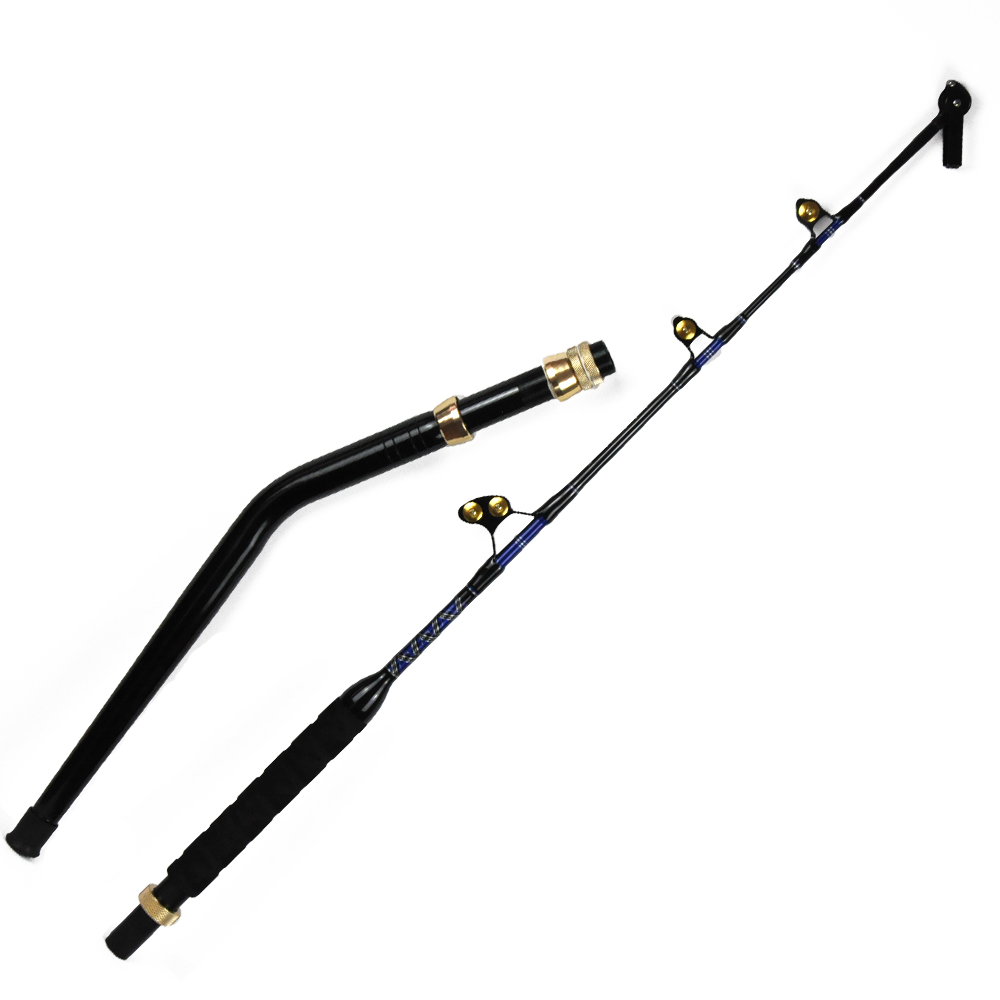
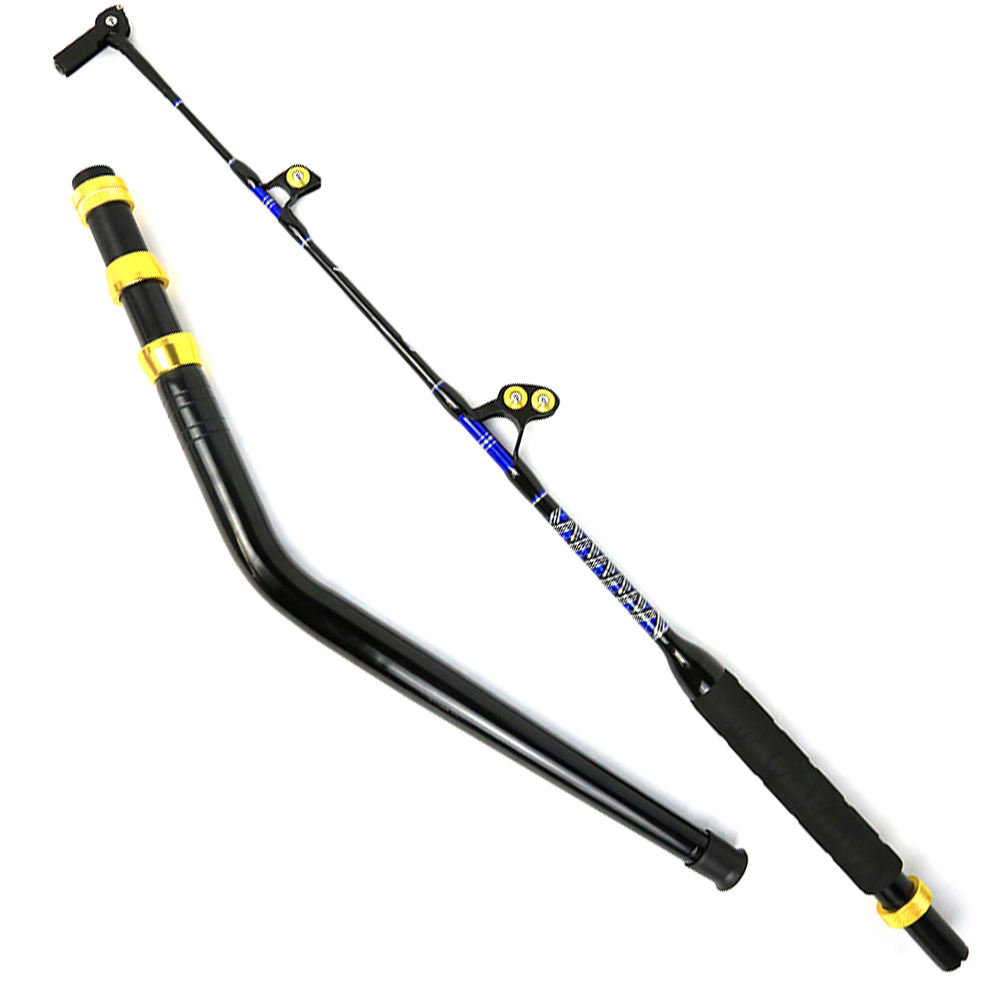
Bent Butt
A bent butt trolling rod has an angled lower section that changes the position of the reel and rod relative to the angler.
This design changes the fighting angle. It can help position the reel closer to the angler and create useful leverage in certain heavy-tackle setups.
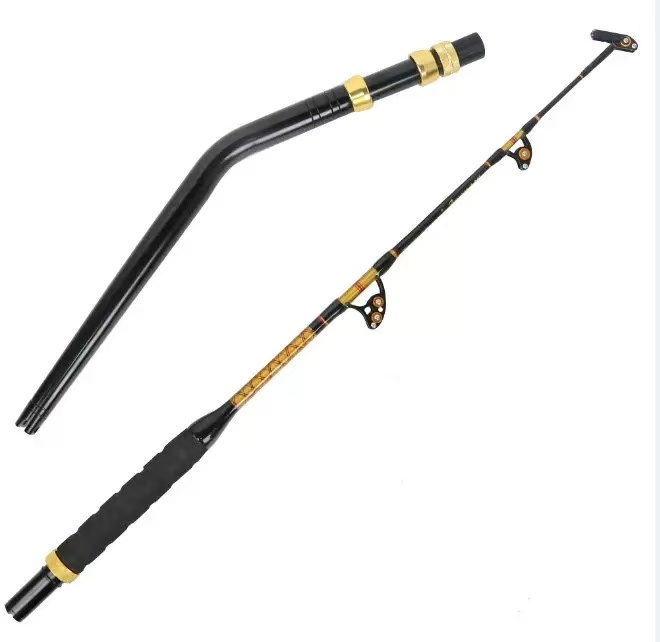
Bent butt rods often appear in big-game and heavy offshore trolling. Anglers may use them with a harness, fighting chair, or compatible heavy-duty rod holder.
The bent configuration can help reduce the need to hold the rod at an awkward angle during a long fight. However, the benefit depends on the boat, fighting position, and other equipment.
A bent butt also requires compatible hardware. Check the rod holder, gimbal setup, harness, or fighting chair before choosing this style.
Which Butt Style Should You Choose?
Choose between a straight butt and bent butt trolling rod based on your complete fishing system rather than the butt shape alone.
Target species: Large tuna, marlin, shark, and other powerful game fish may require heavy tackle and specialized fighting equipment. Smaller saltwater species may work well with a more versatile straight-butt setup.
Reel: Match the butt style with your reel type and position. Make sure the reel sits comfortably and allows you to control the line and drag.
Rod holder: Check the dimensions and design of your rod holder. A bent butt may require a specific holder or gimbal system.
Harness: If you plan to use a fighting harness, consider how the butt shape connects with the harness and distributes pressure.
Fighting technique: Think about how you normally fight fish. A standing angler may prefer a different setup from an angler using a fighting chair.
Boat setup: Available space matters. Consider the cockpit, rod-holder position, gunwale height, fighting area, and other equipment around the angler.
| Feature | Straight Butt | Bent Butt |
| Design | Straight lower section | Angled lower section |
| Versatility | High | More specialized |
| Fighting position | Familiar and natural | Changes the rod and reel angle |
| Leverage | General-purpose leverage | Can improve leverage in certain setups |
| Rod holders | Compatible with many standard holders | May require compatible holders |
| Harness/Fighting Chair | Can work depending on setup | Often used with specialized fighting systems |
| Typical use | General saltwater trolling | Heavy offshore and big-game trolling |
The choice ultimately depends on how you plan to fish. A straight butt trolling rod can provide a versatile and familiar setup. A bent butt trolling rod can provide a different fighting angle and useful leverage when paired with compatible equipment.
For a balanced saltwater trolling system, match the butt style with the rod power, action, reel, line class, drag pressure, rod holder, and fighting technique.
Choose the Right Trolling Rod Material
Trolling rod material affects weight, flexibility, strength, and durability. The rod blank needs to handle repeated loads from trolling, hook sets, and long fish fights.
The three common material choices are fiberglass, carbon fiber, and composite. Each material offers different characteristics. The right choice depends on your target species, fishing style, rod power, and overall tackle setup.
Fiberglass Trolling Rods
Fiberglass trolling rods are known for durability and flexibility. Fiberglass blanks can handle repeated loading without requiring an extremely rigid design.
Their flexibility can help keep steady pressure on a hooked fish. The rod can bend progressively as the fish pulls, which can make fiberglass a practical choice for many trolling applications.
Fiberglass also suits anglers who prioritize durability and repeated-load performance. Trolling rods can remain under tension for extended periods, especially when fishing offshore. A durable fiberglass blank can handle this type of repeated stress.
The trade-off is weight. Fiberglass rods can weigh more than comparable carbon fiber rods. They may also feel less responsive when compared with a lighter, stiffer carbon fiber design.
For heavy-duty trolling, fiberglass remains a practical material when durability and progressive flex matter more than minimum weight.
Carbon Fiber Trolling Rods
Carbon fiber trolling rods offer a high strength-to-weight ratio. Carbon fiber can provide substantial stiffness and strength without adding as much material weight as some traditional fiberglass designs.
The lighter construction can reduce fatigue during long fishing sessions. It can also make the rod easier to handle when anglers need to control the rod actively.
Carbon fiber also provides good responsiveness. The blank can react quickly to changes in pressure from the lure or fish.
This characteristic can suit anglers who want a lighter and more responsive saltwater trolling rod. However, carbon fiber rod performance depends heavily on blank design and construction. A carbon fiber rod is not automatically the right choice for every heavy-duty application.
When choosing carbon fiber, consider the rod’s power, action, line class, and intended load rather than focusing only on the material.
Composite Trolling Rods
Composite trolling rods combine fiberglass and carbon fiber characteristics. Manufacturers can adjust the material combination to create a blank with specific performance goals.
A composite blank can balance the durability and flexibility of fiberglass with the lighter weight and responsiveness of carbon fiber.
This approach allows manufacturers to develop rods for specific fishing applications. For example, a composite trolling rod can target a particular combination of power, action, weight, and flexibility.
Composite construction can therefore work well when you need a balance rather than one extreme characteristic.
Which Trolling Rod Material Should You Choose?
| Material | Main Characteristics | Typical Advantage |
| Fiberglass | Durable, flexible, progressive | Repeated-load performance |
| Carbon Fiber | Lightweight, stiff, responsive | High strength-to-weight ratio |
| Composite | Balanced material characteristics | Application-specific performance |
Material should not be the only factor in your decision. A well-designed fiberglass rod can outperform an unsuitable carbon fiber rod for a specific trolling application. The same applies to composite construction.
Start with your target species, fishing environment, line class, rod power, action, lure weight, and reel. Then choose a material that supports those requirements.
For heavy offshore trolling, durability and load handling may be priorities. For active fishing, weight and responsiveness may matter more. A composite rod can provide a middle ground when you want characteristics from both material types.
The goal is to build a balanced saltwater trolling system, not simply choose the most advanced-sounding material.
Match the Trolling Rod With the Reel
You should not choose a trolling rod without considering the reel. The rod and reel work as one system. Their size, strength, line capacity, and drag range should match the target fish and fishing conditions.
A powerful rod paired with a small reel can create an unbalanced setup. The reel may lack enough line capacity or drag control. On the other hand, a large reel on a light rod can add unnecessary weight and load.
When choosing a saltwater trolling setup, consider these factors:
- Reel type: Conventional reels work well for many trolling applications. A lever-drag reel gives quick and precise drag adjustments during a fight.
- Reel size: Match the reel size to the target species, line class, and lure setup. Larger offshore fish usually require more line capacity and stronger internal components.
- Line capacity: The reel should hold enough line for long runs and deep-water fishing. Make sure its capacity matches your chosen line diameter and class.
- Gear ratio: A higher gear ratio provides faster line retrieval. A lower ratio can provide more cranking power under heavy load.
- Drag range: The reel should provide a practical drag range that matches the line, leader, rod, and target species. Maximum advertised drag does not automatically mean better performance.
- Reel-seat compatibility: Check the reel foot and reel seat before buying. The reel should fit securely and remain stable under heavy pressure.
- Two-speed options: A two-speed trolling reel can help with heavy offshore fishing. The high gear can recover line quickly, while the low gear provides more cranking power when a large fish pulls hard.
For example, a heavy offshore trolling rod designed for 80–130 lb line needs a reel with suitable line capacity, strong gearing, and a compatible drag system. The rod can only perform properly when the reel supports the same level of load.
How Much Drag Do You Need for Saltwater Trolling?
How much drag do you need for saltwater trolling? The answer depends on the complete tackle system. Do not choose drag based only on the reel’s maximum advertised number.
Maximum drag shows how much pressure a reel can produce under specified conditions. Practical drag refers to the drag pressure you can use consistently while maintaining smooth operation and protecting the rest of your tackle.
A reel may advertise a very high maximum drag. That does not mean you should fish at that setting. Excessive drag can increase stress on the fishing line, leader, rod, knots, hooks, and reel components.
Instead, match your practical drag setting to the weakest part of the system.
Consider these components:
| Component | Why It Matters |
| Fishing Line | The line must handle the selected drag without excessive risk of failure. |
| Leader | Leader strength and knot quality affect how much pressure the terminal system can handle. |
| Trolling Rod | The rod must handle the load created by drag pressure and the fish’s resistance. |
| Trolling Reel | The reel needs smooth drag performance and suitable internal strength. |
| Hooks | Hooks and connections must handle the pressure without bending or pulling free. |
| Target Species | Fish size, fighting power, and behavior determine how much control you need. |
For example, a large tuna may require a heavier line class, stronger leader, powerful trolling rod, and a reel with a robust drag system. A smaller saltwater species may need much less drag. Using the same maximum drag for both situations does not create a better setup.
The goal is controlled and consistent drag pressure, not the highest possible number. Your rod, reel, line, leader, hooks, and target species should all support the selected drag setting.
A balanced setup also helps the rod load progressively during the fight. This can improve fish control while reducing unnecessary stress on individual components.
When choosing your trolling rod and reel, think about the entire system:
Target Species → Line Class → Rod Power → Rod Action → Reel Size → Line Capacity → Gear Ratio → Drag → Leader → Hooks
This approach helps you build a balanced saltwater trolling setup instead of choosing individual components based on maximum strength alone.
Match the Trolling Rod to Lure Weight and Trolling Speed
Lure weight and trolling speed both affect how much load a trolling rod must handle. A lure does not simply move through the water. It creates resistance as it travels behind the boat. This resistance transfers through the fishing line and into the rod.
Heavy lures can place more load on the rod during trolling. However, weight is not the only factor. A smaller lure can also create strong resistance if it has a deep-diving design or runs at high speed.
When choosing a saltwater trolling rod, check the lure weight and trolling conditions you plan to use. The rod should handle the lure without excessive bending or instability.
Why Does Lure Weight Matter?
Every trolling rod has a practical load range. A heavy lure can increase the initial load on the rod and line. It can also affect how the rod loads when the lure moves through waves or changes direction.
Before using a lure, check the manufacturer’s lure-weight recommendations when they are available. These specifications provide a useful starting point for matching the lure to the rod.
Avoid exceeding the intended lure range. An oversized lure can create excessive load, especially when you combine it with high trolling speeds or strong currents.
You should also consider the complete setup. Match the lure to the:
- Trolling rod
- Trolling reel
- Fishing line
- Leader
- Hooks
- Trolling speed
- Target species
A balanced setup keeps the rod working within its intended range.
How Does Trolling Speed Change Rod Load?
Trolling speed directly affects the resistance created by a lure. As speed increases, water moves across the lure with greater force. This can increase pressure on the lure, line, and trolling rod.
For example, a lure that creates moderate resistance at a slow trolling speed may produce much more load at a higher speed. A strong current can increase or reduce the lure’s effective movement through the water as well.
High-speed trolling also places different demands on lure design and rod selection. Wahoo and other high-speed trolling applications may use lures designed to remain stable at faster speeds. The trolling rod must handle the resulting line tension and lure resistance.
Do not select a lure based on weight alone. Consider how the lure behaves at your intended trolling speed.
How Does Lure Resistance Affect a Trolling Rod?
Lure resistance is the force created when a lure moves through water. It transfers through the fishing line and creates a steady load on the trolling rod.
Several factors affect this resistance:
| Factor | Effect on Trolling Rod Load |
| Water Pressure | Higher water pressure can increase resistance against the lure. |
| Lure Diving Depth | Deeper-running lures can encounter greater pressure and create additional line tension. |
| Trolling Speed | Higher speeds generally increase water resistance and rod load. |
| Current | Current can change the lure’s effective speed and movement through the water. |
| Lure Design | Shape, lip size, body profile, and diving design affect how much water the lure pushes. |
Water pressure increases as the lure moves faster through the water. Lure shape determines how that pressure transfers into resistance.
Lure diving depth also matters. A deep-diving lure may create significant resistance as it works below the surface. This can keep the rod under continuous load during trolling.
Trolling speed changes the amount of force acting on the lure. Fast trolling can produce substantially more resistance than slow trolling, especially with high-resistance lure designs.
Current can change lure behavior even when the boat maintains the same speed. A strong current may increase the lure’s effective water speed in one direction and reduce it in another.
Lure design plays a major role as well. Large lips, deep-diving bodies, wide wobbling actions, and high-resistance shapes can place more load on the rod.
For this reason, a trolling rod for saltwater fishing should match both the lure and the way you plan to fish it. A rod that handles a lightweight lure at moderate speed may not suit a high-resistance lure at high speed.
Before selecting your setup, check the manufacturer’s recommended lure range when available. Then consider the lure’s running depth, resistance, trolling speed, and target species.
The goal is not to use the heaviest lure or the fastest trolling speed. The goal is to keep the rod, reel, line, lure, and trolling speed working together within their intended range.
How to Build a Balanced Saltwater Trolling Setup
A balanced saltwater trolling setup works as one complete system. The rod, reel, line, leader, lure, hooks, and drag all affect each other.
Many anglers focus on rod power first. However, the strongest trolling rod does not automatically create the best setup. A rod that is too powerful for the rest of the tackle can create an unbalanced system. The same applies to an oversized reel, excessive drag, or a lure that exceeds the rod’s intended range.
Instead, match the entire system to your target species, fish size, fishing environment, and trolling technique.
The basic system is:
Rod + Reel + Line + Leader + Lure + Hooks + Drag
How Does Each Component Work Together?
Rod: The rod provides the main load-bearing structure. Its power and action determine how it loads during trolling and when a fish strikes. Choose the rod based on fish size, line class, lure load, and fishing environment.
Reel: The reel stores line and controls the fight through its drag system. Its size should provide enough line capacity and mechanical strength for the target species. The reel should also fit the rod’s reel seat securely.
Line: The fishing line connects the reel to the leader. Its strength and diameter affect line capacity, drag settings, lure performance, and fish-fighting control. Match the line class to the rod and target species.
Leader: The leader protects the main line and provides a strong connection to the lure and hooks. Choose leader strength and material based on the target fish, structure, teeth, abrasion risk, and expected drag pressure.
Lure: The lure creates the presentation that attracts the fish. Its weight, diving depth, shape, and resistance affect the load on the trolling rod. Match the lure to the rod’s intended range and your trolling speed.
Hooks: Hooks must handle the pressure created during the fight. Their size, strength, and connection should match the lure, leader, target species, and expected load.
Drag: The drag controls how much resistance the fish feels when it pulls line from the reel. Set practical drag pressure according to the line, leader, rod, reel, hooks, and target species. Do not rely only on the reel’s maximum advertised drag.
Match the System to the Target Species and Environment
Start with the target species and fishing environment. Then build the tackle around those requirements.
For example, tuna fishing can range from relatively light offshore trolling to heavy big-game applications. The same rod power does not suit every tuna fishery.
Consider factors such as:
- Expected fish size
- Water depth
- Current strength
- Fishing structure
- Boat size and layout
- Trolling speed
- Lure size and resistance
- Line class
- Expected drag pressure
This approach helps you avoid choosing a rod based only on its maximum power rating.
Example 1: Medium Offshore Tuna Setup
A medium offshore tuna setup can focus on balance and versatility.
A suitable system might include:
Medium/Heavy Trolling Rod + Conventional or Lever-Drag Reel + 50 lb Line + Suitable Leader + Medium Trolling Lure + Strong Hooks + Moderate Drag
This type of setup can work for medium-sized tuna when the fishing conditions and tackle specifications match. The rod should provide enough backbone without becoming unnecessarily heavy. The reel should hold enough line for the expected runs.
Example 2: Heavy Big-Game Tuna Setup
A heavy big-game tuna setup needs more load capacity.
A typical system might include:
Heavy/Extra-Heavy Trolling Rod + Large Lever-Drag Reel + 80–130 lb Line + Heavy Leader + High-Resistance Trolling Lure + Heavy-Duty Hooks + Controlled Heavy Drag
A heavy-duty offshore trolling rod may use roller guides and a strong butt section for this type of application. The reel also needs sufficient line capacity and strong gearing.
However, more power does not always mean better performance. The rod, reel, line, leader, hooks, and drag must all support the intended load.
Example 3: Marlin Trolling Setup
Marlin can produce powerful runs and sudden changes in direction. A marlin trolling setup therefore needs strong and well-matched tackle.
A typical system might include:
Heavy Big-Game Trolling Rod + Lever-Drag Reel + Heavy Line + Abrasion-Resistant Leader + Marlin Trolling Lure + Strong Hooks + Properly Set Drag
Depending on the fishing method, a bent butt trolling rod can work well with a compatible rod holder, harness, or fighting-chair system. Roller guides can also suit heavy line and high-load applications when the rod design supports them.
The exact setup should still reflect the expected marlin size, fishing location, line class, lure choice, and boat setup.
Build the Setup as One System
A good saltwater trolling setup does not depend on one impressive specification. It depends on compatibility.
Use this selection sequence:
Target Species → Fishing Environment → Line Class → Rod Power → Rod Action → Rod Length → Reel → Line → Leader → Lure → Hooks → Drag
Check each component against the next one. Make sure the reel fits the rod. Make sure the line matches the rod and reel. Make sure the leader and hooks can handle the practical drag. Finally, make sure the lure and trolling speed stay within the rod’s intended working range.
The goal is a balanced trolling system, not maximum power. When every component works together, you can maintain better control, manage pressure more effectively, and use your saltwater trolling rod within its intended performance range.
Common Mistakes When Choosing a Saltwater Trolling Rod
Choosing a saltwater trolling rod involves more than checking its power rating. Many anglers focus on one specification and overlook how the rod works with the rest of the tackle.
A good setup should match the target species, fish size, line class, lure, reel, fishing environment, and boat layout. Avoid these common mistakes when choosing an offshore or deep-sea trolling rod.
1. Choosing the Strongest Rod Available
A stronger rod is not always the right rod. An oversized rod can add unnecessary weight and reduce flexibility.
It may also create an imbalance with the reel, line, lure, and drag. Instead of choosing the maximum power available, choose enough power for your target fish and fishing conditions.
2. Ignoring Target Fish Size
The same species can vary greatly in size. A setup for smaller tuna may not suit large bluefin tuna or other big-game fish.
Consider the expected fish size, fighting power, and fishing location before choosing rod power. Start with the fish you actually plan to target.
3. Ignoring Line Class
Line class provides an important reference for rod and reel selection. Using a line that does not match the rod can create an unbalanced setup.
Common offshore line classes include 30 lb, 50 lb, 80 lb, 100 lb, and 130 lb. Choose the line class based on fish size, conditions, technique, and expected drag pressure.
4. Choosing the Wrong Rod Action
Rod power and rod action are not the same thing. Power describes the rod’s overall load capacity. Action describes where the rod bends.
A fast-action rod can provide a quick response and direct connection. A moderate or slower action can provide a more progressive bend. Match the action to your lure, fishing technique, hook setup, and target species.
5. Using an Unsuitable Reel
The reel must work with the trolling rod. A small reel may not provide enough line capacity or drag performance for heavy offshore fishing.
Check:
- Reel size
- Line capacity
- Gear ratio
- Drag range
- Gear strength
- Reel-seat compatibility
A conventional or lever-drag reel should match the rod’s power and intended line class. Heavy offshore applications may also benefit from a two-speed reel.
6. Ignoring Lure Weight
Lure weight affects rod loading. Lure resistance can also create significant continuous pressure while trolling.
Do not look at lure weight alone. Consider the lure’s diving depth, design, resistance, and trolling speed. Check the manufacturer’s lure-weight recommendations when available, and avoid exceeding the intended range.
7. Choosing Guides Without Considering Line Type
Rod guides must work with the fishing line and expected load. A guide system that suits light mono may not be the best choice for heavy offshore applications.
Consider the line diameter, material, rod power, reel, and drag. Roller guides and big roller guides can suit heavy-load applications, while standard guides work well for many lighter and medium trolling setups.
Guide selection should also include maintenance requirements. Salt, sand, and debris can affect roller systems.
8. Selecting the Wrong Butt Style
The butt section affects the fighting position and rod-holder compatibility.
A straight butt trolling rod offers versatility for many setups. A bent butt trolling rod can provide a different fighting angle and may suit heavy big-game systems with compatible rod holders, harnesses, or fighting chairs.
Choose the butt style based on your complete setup rather than appearance alone.
9. Ignoring Boat Layout
Your boat affects how the trolling rod performs. Rod-holder position, gunwale height, cockpit space, fighting position, and lure spread can all influence rod selection.
A long rod may help create line separation and a wider lure spread. A shorter rod can provide more leverage and work well in compact fighting positions.
Before buying a rod, consider where and how you will use it on the boat.
10. Neglecting Saltwater Corrosion Resistance
Saltwater creates a harsh environment for fishing tackle. Salt, moisture, and spray can accelerate corrosion on guides, reel seats, roller systems, and other hardware.
Look for suitable corrosion-resistant components when choosing a saltwater trolling rod. After each trip, rinse the rod with fresh water and allow it to dry completely. Pay extra attention to guides, roller mechanisms, reel seats, and metal fittings.
11. Using One Rod for Every Offshore Application
One trolling rod cannot provide the ideal performance for every offshore situation. Tuna, marlin, sailfish, wahoo, and shark can require different tackle combinations.
Fish size, line class, lure weight, trolling speed, water depth, and boat setup can all change the requirements.
A better approach is to build a small range of balanced setups when your fishing covers different applications. For example, a medium offshore tuna setup can use different power and line specifications from a heavy big-game tuna or marlin setup.
Choose the Rod as Part of the Complete System
Avoid making your decision from one specification. Maximum rod power, maximum drag, or the heaviest line class does not automatically create the right setup.
Instead, match the complete system:
Target Species → Fish Size → Environment → Line Class → Rod Power → Action → Length → Lure → Guides → Butt → Reel → Drag
This approach helps you choose a saltwater trolling rod that fits your actual fishing needs. It also reduces the risk of creating unnecessary stress between the rod, reel, line, lure, and terminal tackle.
How to Maintain a Saltwater Trolling Rod
Saltwater can damage fishing tackle over time. Salt, moisture, sand, and dirt can affect the trolling rod, guides, reel seat, handle, and metal fittings. Regular maintenance helps keep the rod reliable and ready for your next trip.
You do not need a complicated maintenance routine. A few simple steps after each saltwater fishing trip can help reduce corrosion and catch small problems before they become serious.
Rinse the Rod With Fresh Water
Rinse your saltwater trolling rod with fresh water after every saltwater trip. Fresh water helps remove salt deposits, sand, and other debris from the rod surface and components.
Use a gentle flow of water. Avoid using high-pressure water around the guides, roller guides, reel seat, and fittings. High water pressure can force salt, sand, or moisture into small gaps and moving parts.
Pay attention to areas where saltwater can collect, including:
- Rod guides
- Roller guides
- Reel seat
- Butt section
- Handle
- Metal fittings
- Connections and joints
Inspect the Guides and Roller Guides
Check the rod guides after each trip. Look for corrosion, cracks, loose frames, and damaged guide rings.
Run a clean piece of cloth or cotton material around the inside of each guide. If it catches on a rough or damaged area, inspect the guide more closely. A damaged guide can affect the fishing line and increase the risk of line damage.
If your rod uses roller guides, check that each roller moves smoothly. Look for salt buildup, sand, corrosion, or unusual resistance. Clean the roller system according to the manufacturer’s recommendations.
Check the Reel Seat and Butt
Inspect the reel seat for salt deposits, corrosion, cracks, or loose components. Make sure it still holds the reel securely.
Also check the rod butt for damage. This area receives significant pressure during heavy offshore fishing. Pay attention to cracks, loose fittings, and signs of deformation.
For a bent butt trolling rod, inspect the connection between the bent section and the rest of the rod carefully. Make sure the butt remains secure and compatible with your rod holder or fighting system.
Inspect the Handle and Connections
Check the handle for cracks, loose sections, or damaged grips. A secure handle gives you better control when fighting a fish.
For multi-section or connected rods, inspect every connection point. Make sure the sections fit correctly and do not show unusual movement or damage.
Do not continue using a rod if you find a serious crack or structural problem. Replace or repair the affected component according to the manufacturer’s instructions.
Dry the Rod Completely Before Storage
After rinsing, allow the rod to dry completely before storage. Moisture trapped around guides, reel seats, fittings, or connections can contribute to corrosion.
Wipe the rod with a clean, soft cloth. Then place it in a dry and well-ventilated area until all components are completely dry.
Avoid storing the rod while it is still wet inside a rod bag or case.
Store the Rod Away From Heat and Direct Sunlight
Store your saltwater trolling rod in a cool, dry location. Avoid excessive heat and prolonged direct sunlight.
High temperatures can affect some rod materials, coatings, adhesives, and grips. Long-term UV exposure can also damage certain materials.
Keep the rod away from areas with large temperature changes or high humidity when possible.
Check for Damage Before Your Next Trip
Give the rod a final inspection before using it again. Look for:
- Corrosion on metal components
- Cracks in the blank or fittings
- Loose components
- Damaged guide rings
- Loose or damaged roller guides
- Reel-seat damage
- Butt or handle damage
- Problems at rod connections
Small problems can become more serious under heavy fish-fighting pressure. A quick inspection can help you identify potential failures before they affect your fishing trip.
Simple Saltwater Trolling Rod Maintenance Routine
A simple routine works well:
Rinse → Inspect → Dry → Store → Check Again Before Fishing
Regular care can extend the useful life of your offshore trolling rod and help maintain consistent performance. Saltwater fishing puts heavy loads and harsh environmental conditions on your equipment. Good maintenance protects the rod and helps keep your complete trolling system reliable.
Frequently Asked Questions About Saltwater Trolling Rods
What size trolling rod is best for saltwater?
The best saltwater trolling rod size depends on the target species, line class, lure weight, and boat setup. Short rods often provide strong leverage and work well for heavy offshore fishing, while longer rods can help create line separation and a wider lure spread. Choose a length that fits your fighting position, rod holders, and trolling pattern.
What rod power is best for offshore trolling?
Heavy or medium-heavy rod power suits many offshore trolling applications, but the right power depends on fish size and tackle load. Smaller offshore species may need less power, while large tuna, marlin, and shark often require heavy or extra-heavy tackle. Match rod power with line class, drag pressure, lure weight, and reel strength.
What line class should I use for tuna trolling?
Tuna trolling commonly uses 30 lb to 130 lb line classes, depending on tuna size, fishing conditions, and technique. Lighter classes can suit smaller tuna and sport-focused setups. Larger tuna and heavy offshore applications may require 80 lb, 100 lb, or 130 lb line. Always match the line to the rod, reel, leader, and practical drag setting.
Are roller guides better for saltwater trolling?
Roller guides can suit heavy saltwater trolling because they help manage line friction under high loads. They work particularly well with heavy line and big-game applications. However, standard guides can work well for many lighter and medium setups, and roller guides require regular cleaning and inspection.
Is fiberglass or carbon fiber better for a trolling rod?
Fiberglass offers durability and flexibility, while carbon fiber provides lower weight and greater responsiveness. Fiberglass can suit repeated heavy loads and traditional offshore trolling. Carbon fiber can reduce rod weight and improve response, but the blank design matters as much as the material. Composite rods can combine characteristics of both materials.
What length trolling rod should I use?
Choose a trolling rod length based on leverage, lure spread, boat layout, and fighting position. Short rods can provide more leverage and work well in compact fighting positions. Longer rods can improve line separation and lure spread when the boat provides enough space.
What is the difference between a trolling rod and an offshore rod?
A trolling rod is designed specifically to keep a lure or bait under tension behind a moving boat, while “offshore rod” is a broader term for rods used in offshore fishing. An offshore rod can cover several techniques, including trolling, jigging, bottom fishing, and other applications. Always check the rod’s intended technique before choosing it.
Can I use a spinning reel on a trolling rod?
You should use a spinning reel only when the trolling rod is specifically designed for spinning-reel use. Conventional trolling rods normally use reel seats and guide systems designed for conventional reels. A spinning reel can create poor balance or line-management issues if the rod does not support it.
What is the best trolling rod for tuna?
The best trolling rod for tuna depends on the tuna species, expected fish size, line class, fishing environment, and trolling technique. A lighter setup may suit smaller tuna, while large yellowfin, bluefin, or bigeye tuna can require heavier tackle. Match the rod with the reel, line, leader, lure, hooks, and drag rather than choosing rod power alone.
Do I need a bent-butt trolling rod?
You need a bent-butt trolling rod only when its fighting position and boat setup suit your fishing application. Bent-butt rods can change the rod and reel angle and provide leverage in certain heavy offshore systems. They often work with compatible rod holders, harnesses, or fighting chairs. A straight butt offers more general versatility.
How much drag should I use when trolling?
Use a practical drag setting that matches your line, leader, rod, reel, hooks, and target species. Do not set the drag based only on the reel’s maximum advertised rating. Excessive drag can increase stress on the entire tackle system. Your drag should provide enough control while keeping the line and terminal tackle within their intended limits.
Can one trolling rod handle different saltwater species?
One trolling rod can handle several saltwater species when their size, tackle requirements, and fishing conditions are similar. For example, a medium offshore setup may cover several medium-sized game fish. However, large tuna, marlin, and shark can require very different power, line class, guides, reel, and drag. For different offshore applications, a range of balanced rods usually provides greater flexibility.
Quick Saltwater Trolling Rod Selection Guide
When choosing a saltwater trolling rod, use this simple sequence:
Target Species → Fish Size → Fishing Environment → Line Class → Rod Power → Rod Action → Rod Length → Lure Weight → Guides → Butt Style → Reel → Drag
This approach helps you choose a rod based on the complete fishing system rather than one specification. The right setup should match the conditions and fishing technique you actually use.
Final Thoughts: How to Choose the Right Trolling Rod for Saltwater Fishing
There is no universal trolling rod for every saltwater application. The right rod depends on the fish you target, where you fish, and how you plan to fish.
Start with three key factors:
Target Species + Fish Size + Fishing Environment
These factors give you a clear starting point. A medium offshore tuna setup may need different specifications from a heavy big-game tuna or marlin setup. Water depth, current, trolling speed, boat layout, and lure choice can also affect your selection.
Once you define the basic requirements, match the rest of the tackle:
Line Class → Power → Action → Length → Lure Weight → Guides → Butt → Reel → Drag
Each component should work with the others. The rod should match the line and lure. The reel should provide suitable line capacity and drag control. The guides should handle the line type and expected load. The butt should fit your rod holder and fighting technique.
Avoid choosing a saltwater trolling rod based only on maximum strength. The same applies to reel drag. A higher power rating or maximum drag number does not automatically create a better fishing setup. Excessive power or drag can make the system heavier and place unnecessary stress on the line, leader, hooks, and other components.
Instead, focus on a balanced tackle system. Choose enough rod power, line strength, reel capacity, and drag for your target fish and fishing conditions. This approach can give you better control while keeping each component within its intended working range.
Whether you are targeting tuna, marlin, sailfish, wahoo, mahi-mahi, or other offshore species, start with your actual fishing requirements. Then build the rod and reel system around those needs.
Explore our saltwater and offshore trolling rod collection to find trolling rods designed for different line classes, power levels, lengths, guide systems, and big-game applications. Choose the setup that matches your target species, fishing environment, and complete tackle system.
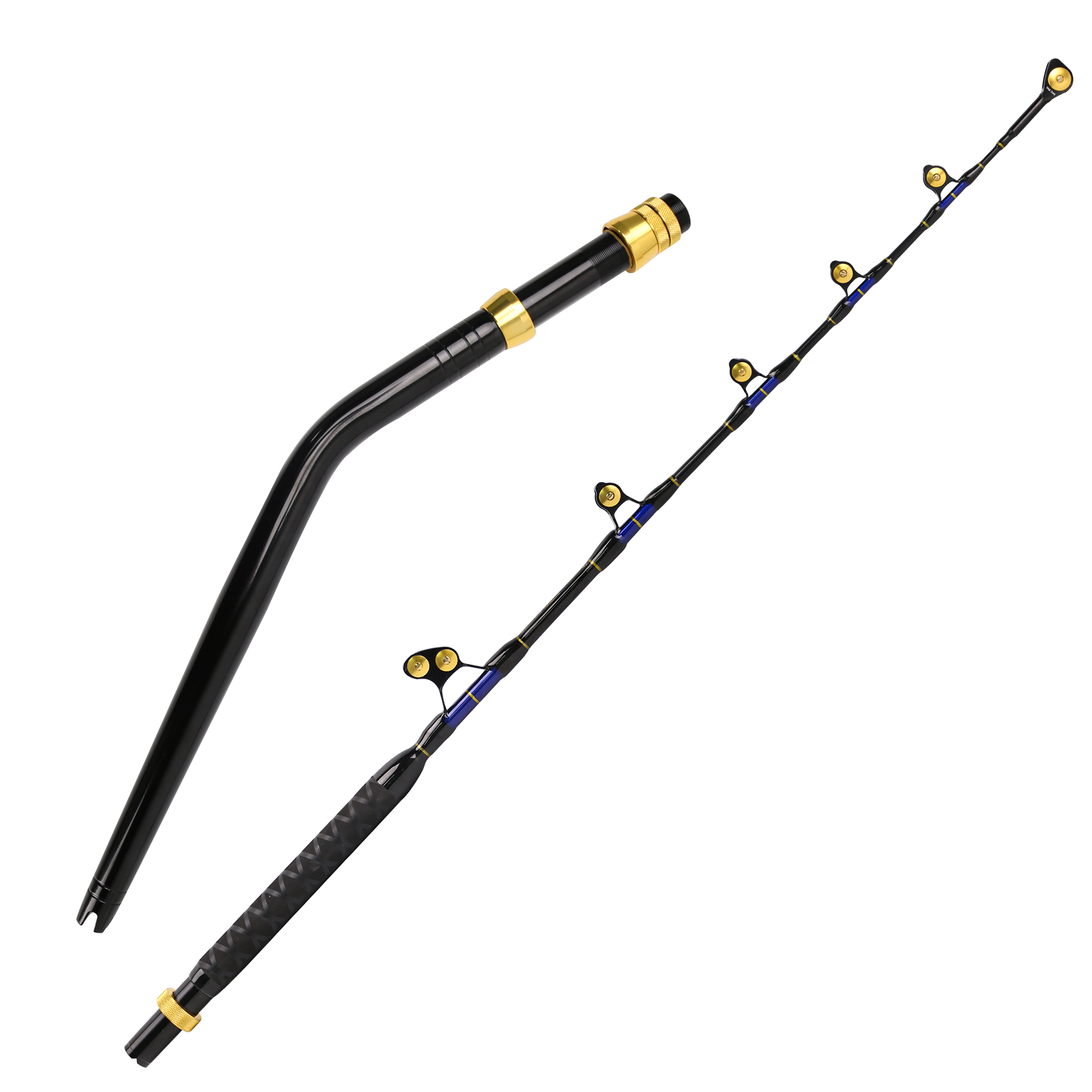
-
Sale!

-
Sale!

-
Sale!

-
Sale!
