
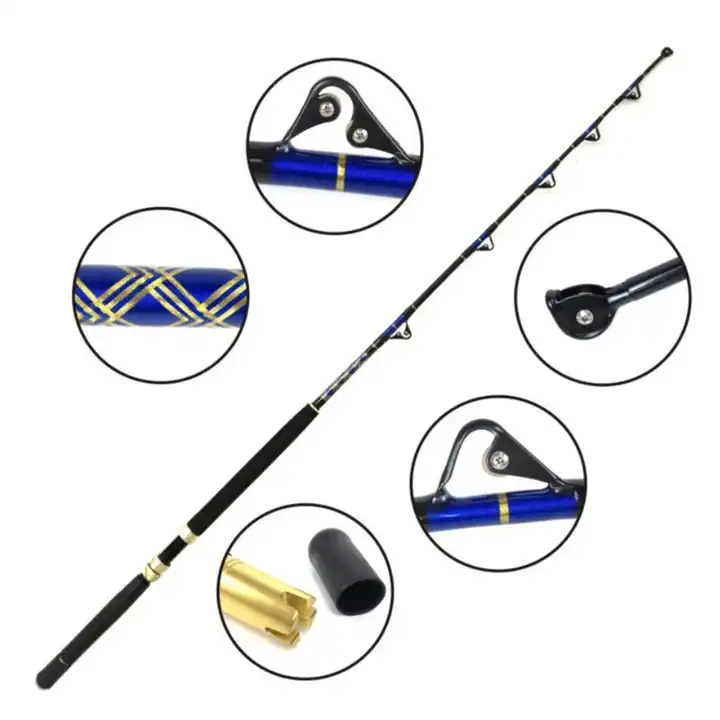
What trolling rod length is best for offshore fishing? There is no single best length for every offshore angler. In general, a 5’6″ to 7’6″ trolling rod covers many offshore trolling applications. The right length depends on your target species, boat size, trolling method, lure setup, line class, and fighting style.
A shorter trolling rod, such as a 5’6″ to 6’6″ model, gives you more leverage when fighting powerful fish. Its compact length can also make it easier to lift and control a heavy fish. Short rods are especially useful when fishing from a fighting chair or a boat with limited cockpit space. They can help you apply steady pressure without requiring as much rod movement.
Longer trolling rods, often around 6’6″ to 7’6″, offer different advantages. The extra length can create greater separation between lines and help anglers manage a wider trolling spread. Longer rods can also influence lure positioning and work well for certain trolling patterns and lure presentations.
However, rod length should not be considered on its own. A 7-foot rod is not automatically better than a 6-foot rod. The ideal choice comes from balancing rod length, power, action, line class, lure weight, reel, and drag. For heavy big-game trolling, leverage may matter more than maximum length. For spread management, additional length may be more useful.
In short, choose the rod length that fits your entire offshore trolling system, rather than simply choosing the longest or shortest rod available.
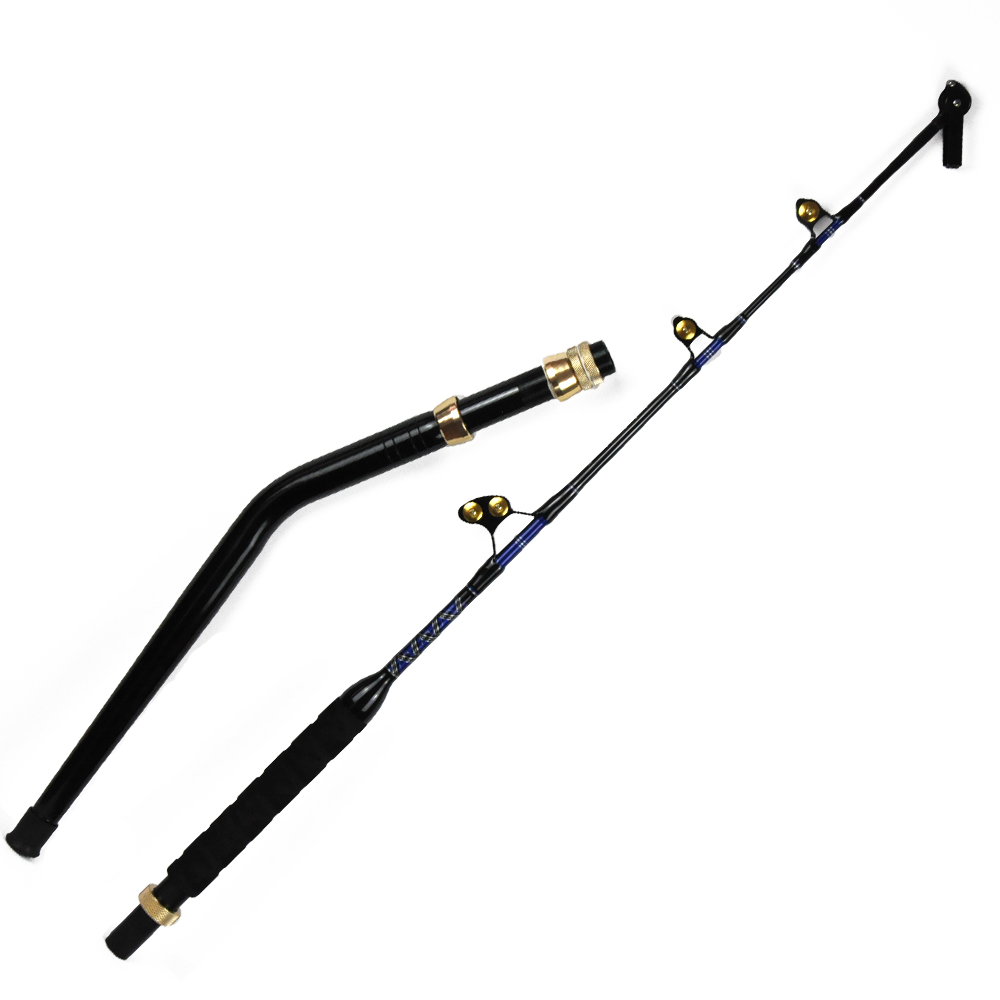
Rod Length aWhy Does Trolling Rod Length Matter for Offshore Fishing?
Trolling rod length affects more than how far the rod extends from the boat. It influences leverage, line control, lure positioning, and handling during an offshore fight. The right length can make your setup easier to manage and help you control your trolling spread. However, rod length works together with rod pownd Leverage
Shorter trolling rods can provide more practical leverage when fighting strong offshore fish. A shorter blank gives you better control when you need to lift and turn a powerful fish. This can be useful when targeting tuna, marlin, shark, and other big-game species.
Rod length also affects how much effort you need to control the setup. A longer rod creates a larger lever arm, which can increase the physical effort required to hold and move the rod under heavy load. A shorter rod can feel more manageable during a long fight, especially when you use heavy drag pressure.
However, shorter does not always mean better. You still need enough length to match your trolling spread and boat layout. The goal is to balance fighting leverage with line control.
Rod Length and Line Control
Longer trolling rods can help create more separation between lines. This can make it easier to organize multiple rods across the trolling spread and reduce the chance of lines crossing.
Rod length also affects the line angle between the rod tip, lure, and water. A longer rod can change the position of the line and help place a lure at a different point within the spread. This can be useful when you run several trolling lines at different positions.
Still, rod length is only one part of line control. Rod-holder position, outrigger setup, lure distance, line type, and trolling speed also affect how your lines track behind the boat.
Rod Length and Lure Presentation
Rod length can influence where a lure sits within the trolling spread. A longer rod may help position the line farther away from neighboring lines, while a shorter rod can keep the setup more compact.
However, rod length does not determine lure performance by itself. Lure design, lure weight, trolling speed, line length, leader setup, and sea conditions all affect lure action.
For example, a well-matched lure can produce the desired swimming action at the correct distance even when paired with a shorter rod. Instead of choosing a rod based only on length, match the rod to the complete trolling setup.
Rod Length and Boat Space
Your boat layout should also influence your choice of trolling rod length. Consider the gunwale position, rod holders, outriggers, fighting chair, harness setup, and available cockpit space before choosing a rod.
A long rod can work well on a large offshore boat with plenty of room and multiple rod positions. On a smaller boat, however, a 7-foot or longer rod may be harder to move around the cockpit. It can also interfere with nearby rods, equipment, or anglers when a fish changes direction.
A shorter rod often provides easier handling in a compact cockpit. It can also work well with a fighting chair or heavy-duty big-game setup where leverage matters more than maximum reach.
Ultimately, the best trolling rod length depends on how the rod, reel, line, lure, boat, and trolling spread work together. Choose a length that gives you enough control without making the setup difficult to manage.
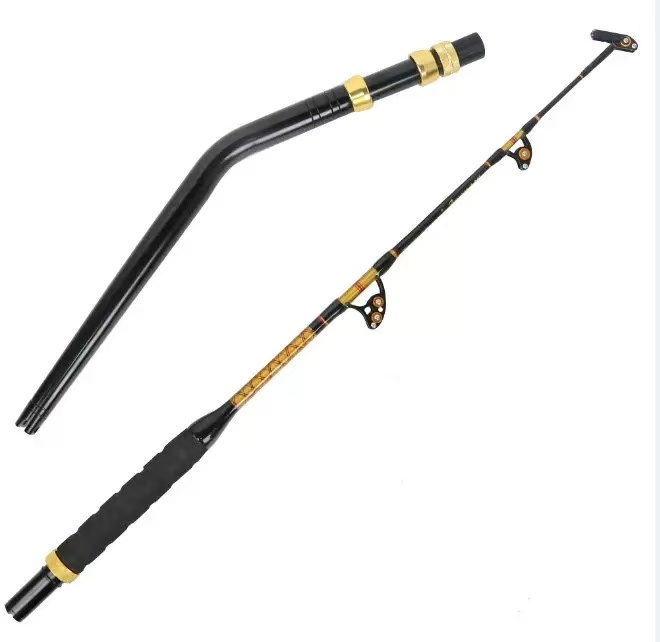
What Is the Best Trolling Rod Length by Fishing Situation?
The right trolling rod length depends on your fishing situation, target species, boat layout, trolling method, and tackle setup. Shorter rods often provide more leverage for heavy offshore fishing, while longer rods can improve line separation and spread coverage.
The table below provides a practical guide to common trolling rod lengths and their typical applications.
| Rod Length | Typical Use | Main Advantage | Consideration |
| 5’6″–6′ | Heavy offshore / big game | High leverage | Less spread separation |
| 6’–6’6″ | General offshore trolling | Balanced control | Moderate line coverage |
| 6’6″–7′ | Versatile trolling | Good spread coverage | Slightly less leverage |
| 7’–7’6″ | Light/medium trolling | Better line separation | More rod movement |
| 7’6″+ | Specialized applications | Maximum reach | Can be harder to handle |
5’6″–6′: Heavy Offshore and Big Game
Rods in the 5’6″ to 6′ range are often suited to heavy offshore trolling and big-game applications. Their shorter length can provide strong leverage when fighting powerful fish. They also work well in setups that use high drag pressure or a fighting chair.
The main trade-off is reduced line separation. A shorter rod may not spread trolling lines as widely as a longer model.
6’–6’6″: General Offshore Trolling
A 6′ to 6’6″ trolling rod offers a practical balance between leverage and line control. This range can fit a variety of offshore trolling situations without being excessively long or short.
It can work well when you want reasonable fighting control while still maintaining moderate coverage across the trolling spread.
6’6″–7′: Versatile Trolling
Rods from 6’6″ to 7′ provide additional reach and can help with spread management. They may suit anglers who want a versatile setup for different offshore trolling patterns.
Compared with shorter rods, they can provide slightly less leverage under heavy load. Your reel, line class, rod power, and fishing technique should therefore match the extra length.
7’–7’6″: Light and Medium Trolling
A 7′ to 7’6″ rod can provide better separation between trolling lines and greater reach. This makes the range useful for light and medium offshore applications where spread coverage plays an important role.
The trade-off is handling. A longer rod can require more movement and may feel less convenient when fighting a powerful fish in a confined cockpit.
7’6″+: Specialized Applications
Rods longer than 7’6″ can provide maximum reach for specific trolling applications. They may help anglers manage specialized spreads or achieve a particular lure position.
However, extra length can make a rod more difficult to handle. Boat size, rod-holder position, trolling technique, and lure setup become especially important at this length.
How Should You Choose?
There is no universally best trolling rod length. A 5’6″ rod may make more sense for heavy big-game fishing, while a 7′ rod may better suit a spread-focused setup. The correct choice depends on what you need the rod to do.
Before choosing a length, consider your target species, fish size, line class, rod power, action, lure weight, reel, drag, boat space, and trolling pattern. This approach helps you build a balanced offshore trolling system instead of choosing a rod based on length alone.
Best Trolling Rod Length for Tuna
Tuna trolling requires a rod that can handle sustained pressure while giving the angler enough control during long fights. The ideal trolling rod length depends on tuna species, fish size, line class, drag pressure, lure weight, and boat setup. In many offshore situations, a rod between 5’6″ and 6’6″ provides a practical balance of leverage and control for heavy tuna tackle.
Yellowfin Tuna
Yellowfin tuna can range from moderate-size fish to powerful offshore specimens. Your rod length should match the expected fish size and tackle class.
A 6′ to 6’6″ trolling rod can provide a useful balance for medium-heavy to heavy yellowfin tuna setups. This length gives you enough leverage to control a strong fish without making the rod too short for general trolling and spread management.
For smaller yellowfin, anglers may use lighter line classes and slightly longer rods. As fish size increases, heavier line and higher drag pressure become more important. In these situations, a shorter rod can provide better leverage and help reduce the physical effort needed during the fight.
The key is to match rod length with line class and rod power. A 6′ rod designed for heavy line is very different from a 6′ rod designed for lighter offshore tackle.
Bluefin Tuna
Bluefin tuna can put extreme loads on offshore tackle, especially when targeting larger fish with heavy line and high drag pressure. For this reason, heavier bluefin setups often favor shorter trolling rods.
A practical range is around 5’6″ to 6’6″, depending on the fish size, line class, reel, boat layout, and fighting technique. A shorter 5’6″ to 6′ rod can provide strong leverage when you need to maintain pressure on a powerful fish.
Heavy line classes also change how the rod works under load. When you combine heavy line with high drag pressure, a compact rod can make the setup easier to control. However, a slightly longer rod may offer more useful reach and line separation when the boat and trolling spread require it.
For bluefin, do not choose rod length separately from the rest of the system. Rod power, action, reel capacity, drag performance, and line strength all need to match the expected load.
Bigeye and Other Offshore Tuna
Bigeye tuna and other offshore tuna species also require careful tackle matching. Fish size, trolling speed, lure choice, water depth, and sea conditions can all affect the ideal rod setup.
For larger tuna, anglers may prefer shorter rods when leverage and heavy drag pressure are priorities. For lighter tackle or situations that require more spread coverage, a longer rod may offer useful control over line position and lure placement.
There is no fixed rod length that determines fighting performance. Rod construction, power, action, line class, reel, drag, lure setup, and angler technique all contribute to how effectively you can fight a tuna.
The best approach is to choose rod length as part of a complete tuna trolling system. Match the rod to the fish size and fishing conditions first, then fine-tune the length based on your boat and trolling strategy.
Best Trolling Rod Length for Marlin
Marlin trolling places high demands on the entire fishing system. Large lures, strong runs, heavy drag, and long fights all require well-matched tackle. Rod length also affects how you manage the trolling spread and control a hooked fish.
For offshore marlin, longer rods can help with spread management and lure positioning, while shorter rods can provide more leverage when fishing heavy tackle. The right choice depends on the marlin species, fish size, lure weight, line class, drag pressure, and boat setup.
Rod Length for Blue Marlin
Blue marlin trolling usually involves heavy-duty tackle, large lures, strong line, and high drag pressure. These conditions can place substantial loads on the rod during both trolling and the fight.
A shorter rod can provide useful leverage when targeting large blue marlin. Rods around 5’6″ to 6’6″ can make it easier to maintain pressure and control a powerful fish from a fighting chair. The shorter length also works well when the setup prioritizes lifting power over maximum line separation.
However, longer rods can have advantages when managing a large trolling spread. A 6’6″ to 7′ or longer rod can provide additional reach and help position lines at different angles. This can be useful on larger sportfishing boats with multiple trolling positions and outriggers.
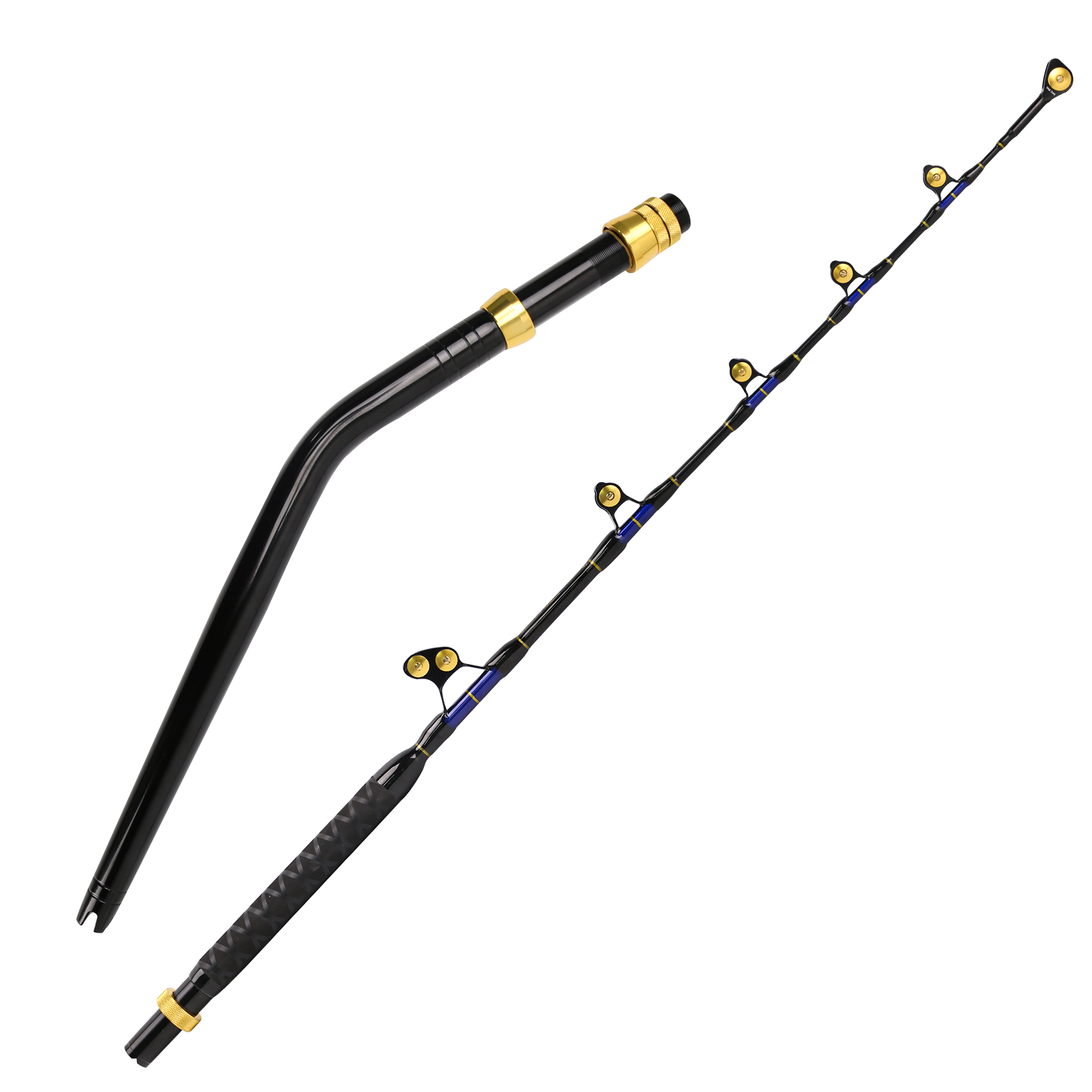
The boat’s fighting position also matters. A rod used from a fighting chair may need different characteristics from one used while standing or from a rod holder. Bent-butt rods are common in heavy big-game setups because they can work well with a fighting chair and harness system. They also help establish a consistent fighting angle.
Straight-butt rods offer a more traditional and versatile configuration. They can work across different rod holders and boat layouts and may suit anglers who want more flexibility between trolling and fighting positions.
Rod Length for Striped or Smaller Marlin
Striped marlin and other smaller marlin can allow anglers to use lighter tackle. With lower line classes and lighter lures, a longer rod can provide useful flexibility without creating the same demands as a heavy blue marlin setup.
A rod around 6’6″ to 7’6″ can provide additional reach and line separation for lighter marlin trolling. The extra length may also help position lures within a wider trolling spread.
Lure size and trolling speed should also influence the choice. Larger or heavier lures require a rod with enough power and a suitable lure rating. High-speed trolling may also place more load on the rod and guides.
For smaller marlin, avoid choosing length based on species name alone. Consider the expected fish size, lure weight, trolling speed, line class, reel, drag, and boat layout. A longer rod can improve spread control, while a shorter rod may provide better leverage. The best setup balances both needs rather than relying on rod length by itself.
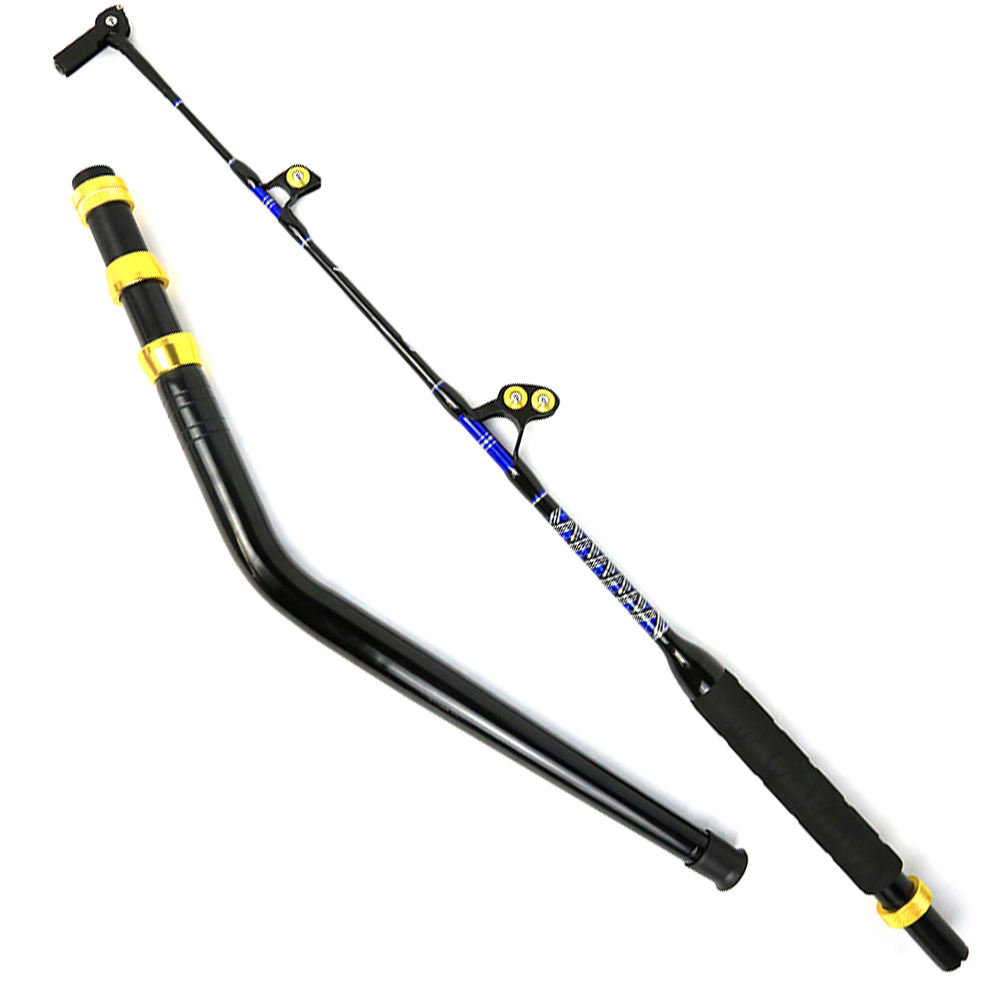
How Does Boat Size Affect Trolling Rod Length?
Boat size plays an important role in choosing the right trolling rod length. A rod that works well on a large sportfishing boat may feel difficult to manage on a smaller offshore boat. Your cockpit space, rod-holder position, outriggers, and number of trolling lines all affect the ideal setup.
Small Offshore Boats
Small offshore boats often have limited cockpit space. Anglers need to move around the boat while managing rods, lines, and hooked fish. In this situation, a shorter trolling rod can be easier to control.
A rod around 5’6″ to 6’6″ can provide useful leverage without taking up too much space. Shorter rods are also easier to move between rod holders and can reduce interference with nearby equipment or anglers.
Pay close attention to rod-holder positioning. A rod that fits the holder but extends too far across the cockpit may create handling problems. The rod length should work with the actual angle and position of the holder.
Mid-Size Offshore Boats
Mid-size offshore boats usually provide more room for rod placement. Anglers can use several rod holders and may have enough space for different trolling positions.
A 6′ to 7′ trolling rod can offer a balanced option for many mid-size boats. This range provides reasonable leverage while giving you enough reach for line control and spread management.
However, the ideal length still depends on the fishing method. A heavy big-game setup may benefit from a shorter rod, while a spread-focused setup may benefit from additional length.
Large Sportfishing Boats
Large sportfishing boats usually have more rod positions, larger cockpits, and more space for a complex trolling spread. They may also use outriggers, multiple trolling lines, and dedicated fighting chairs.
In these setups, longer rods can provide additional line separation and help position different lures across the spread. A 6’6″ to 7’6″ rod may offer useful reach for certain trolling patterns.
Even on a large boat, longer does not automatically mean better. Heavy tackle and high drag pressure can still favor shorter rods because they provide more leverage and easier fish control.
Ultimately, choose the rod length based on how much space, leverage, reach, and line separation your boat and fishing method require. Boat size is an important factor, but it should work together with your target species, line class, lure setup, reel, and trolling pattern.
How Does Trolling Technique Affect Rod Length?
Your trolling technique can change how much rod length you need. Different trolling methods place the lure, line, and rod tip at different angles. They also create different loads on the rod. Because of this, the best trolling rod length depends not only on your target species, but also on how you present the lure.
Flat-Line Trolling
Flat-line trolling keeps the lure directly behind the boat without an outrigger. Rod length can affect the line angle and the lure’s position within the trolling spread.
A longer rod can place the line farther from nearby rods and create more separation across the spread. It can also change the angle between the rod tip, line, and lure. This may help you position a lure at a specific distance or angle behind the boat.
A shorter rod creates a more compact setup. It can provide better leverage when a fish strikes and make the rod easier to control during the fight. This can be useful when fishing heavier tackle or when cockpit space is limited.
For flat-line trolling, consider both line separation and fighting control. A rod around 6′ to 7′ can provide a practical balance for many offshore setups, but the ideal length still depends on your line class, lure weight, reel, and boat layout.
Outrigger Trolling
Outrigger trolling changes how you manage line separation. The outrigger itself moves the fishing line away from the boat and helps spread the lures across a wider area. This means the rod does not need to provide all the separation.
With an outrigger system, a moderate-length rod can still create an effective trolling spread. The outrigger extends the line outward, while the rod mainly provides the required line control, lure presentation, and fighting leverage.
For example, a 6’6″ rod paired with an outrigger can create more practical spread coverage than the same rod used without one. The final line position depends on the outrigger length, clip position, line length, rod-holder position, and lure distance.
This is why you should not choose a very long rod simply to increase spread separation. If your boat already uses effective outriggers, excessive rod length may add handling difficulty without providing a major advantage.
High-Speed Trolling
High-speed trolling places additional demands on the rod, reel, line, and lure. Trolling speeds can reach higher levels, and the lure must remain stable while moving through the water.
Rod length should match the lure weight, lure design, trolling speed, line class, and rod power. A rod that is too light or too long for a heavy lure can become difficult to control under continuous load.
For heavy high-speed trolling, a shorter or medium-length rod can provide better leverage and handling. This can be useful when targeting powerful offshore species with heavy-duty tackle. A shorter blank can also make it easier to control the setup when a large fish strikes.
However, length should not be reduced without considering lure presentation. A longer rod may still work well when the lure and tackle are properly matched. The key is to ensure that the rod has enough power and lure capacity for the trolling speed and terminal setup.
Deep-Diving and Weighted Trolling
Deep-diving lures, trolling weights, and other weighted terminal tackle can place additional load on the rod. The extra resistance does not come only from the fish. The lure or sinker can continuously load the rod while you troll.
For this reason, rod length should match the lure weight and terminal tackle. A longer rod can create a larger lever arm and may feel more difficult to control when a heavy lure or sinker constantly pulls against the blank.
A shorter rod can provide better control for heavily weighted trolling systems. However, the most important factor is the rod’s power and lure rating. Do not select a rod based on length alone.
Check the manufacturer’s recommended line class, lure weight, and rod power before using heavy diving or weighted tackle. If the lure or sinker exceeds the rod’s intended rating, the setup may become difficult to control and can increase stress on the blank and guides.
Ultimately, trolling technique should guide your rod-length choice. Flat-line trolling may benefit from additional line separation, outriggers reduce the need for the rod to create spread width, high-speed trolling emphasizes stability and heavy-duty control, and deep-diving or weighted trolling requires careful attention to lure load. Match rod length with the entire setup rather than choosing a rod based on length alone.
Should You Choose a Short or Long Offshore Trolling Rod?
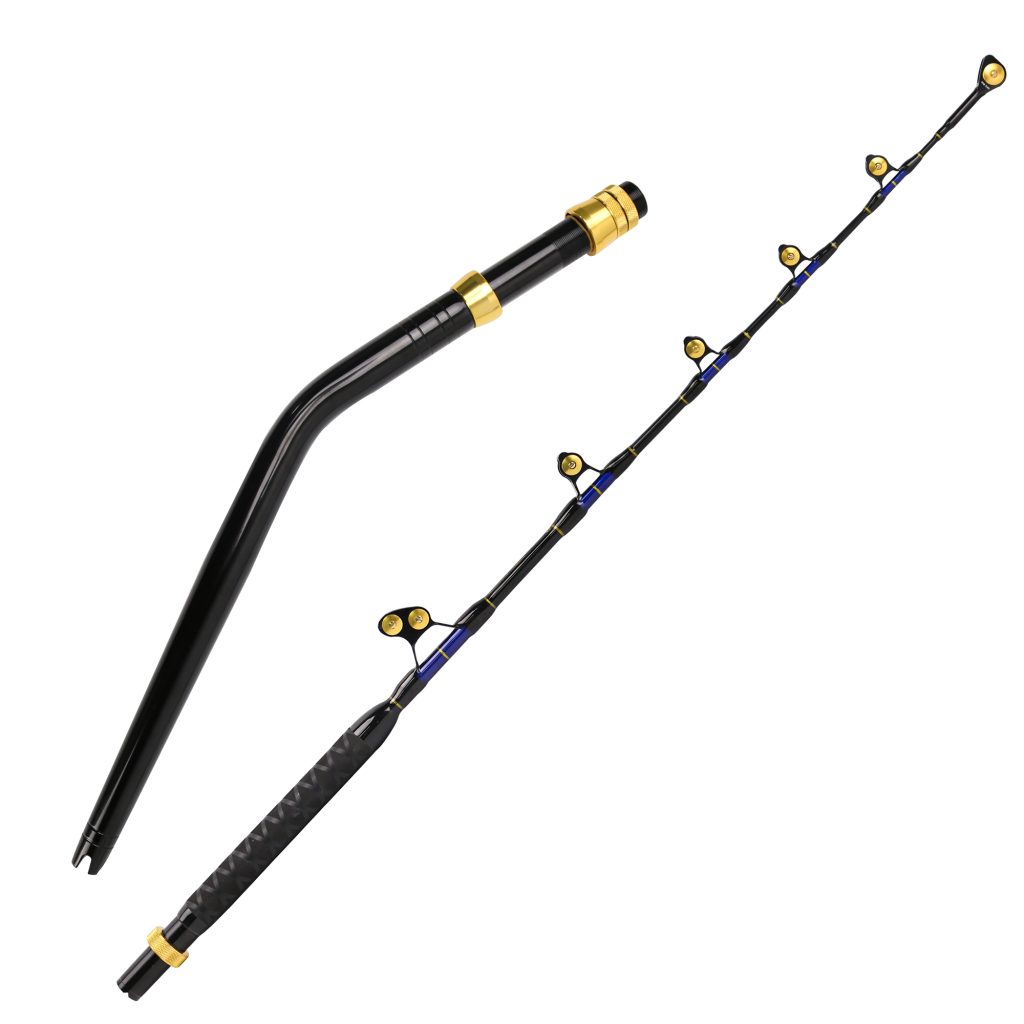
Choosing between a short or long offshore trolling rod depends on what you need from your setup. Short rods usually provide better leverage and easier handling, while long rods can improve line separation and spread management.
For heavy big-game fishing, a shorter rod may make more sense because it helps you control a powerful fish under high drag. For lighter or medium offshore trolling, a longer rod can provide useful reach and help position multiple lines across the spread.
The right choice depends on your target species, line class, rod power, lure weight, trolling technique, reel, drag, and boat layout.
Advantages of Short Trolling Rods
Short trolling rods, often around 5’6″ to 6’6″, can provide strong leverage during a fight. Their compact length gives you more direct control over the rod and fish.
One major advantage is leverage. A shorter rod can make it easier to maintain pressure when a powerful fish makes a long run or changes direction. This becomes especially useful with heavy line and high drag settings.
Short rods also offer better handling in confined spaces. They are easier to move around a small cockpit, fighting chair, or crowded rod-holder setup. This can reduce interference with nearby rods and equipment.
For heavy offshore tackle, short rods can also work well with high-drag applications. When the reel applies substantial pressure, a compact rod can provide a more manageable fighting setup.
These characteristics make shorter rods useful for tuna, marlin, shark, and other powerful offshore species, especially when leverage and fish control are the main priorities.
Advantages of Long Trolling Rods
Long trolling rods, often around 6’6″ to 7’6″, provide greater reach and can help spread lines across the boat’s trolling pattern.
One key advantage is line separation. A longer rod can position the line farther from nearby rods, which can help reduce line interference when running multiple trolling lines.
Long rods can also help with spread management. They provide additional reach and can change the angle between the rod tip, line, and lure. This can help anglers position lures at different points within the trolling spread.
Another benefit is lure positioning. Depending on the rod-holder location and trolling setup, a longer rod can help place a lure at a useful angle or distance from other lines.
Longer rods can work well for light and medium offshore applications, where extreme leverage is less important. They may also suit trolling setups that use outriggers or multiple rod positions to create a wider spread.
However, longer does not automatically mean better. A long rod can require more space and may feel less convenient when fighting a powerful fish in a confined cockpit.
Short vs. Long Trolling Rod: Which Fits Your Setup?
The comparison below shows the main differences between short and long trolling rods:
| Factor | Short Rod | Long Rod |
| Leverage | Higher | Moderate |
| Line separation | Lower | Higher |
| Heavy drag | Suitable | Depends on design |
| Boat space | Easier | Needs more room |
| Big-game fighting | Strong option | Situation-dependent |
| Spread management | Moderate | Strong |
The table provides a general comparison, but actual performance depends on the rod’s power, action, blank construction, guide system, and butt design.
For example, a heavy-duty 7-foot trolling rod can still handle demanding offshore fishing when its power and line rating match the application. Likewise, a short rod may not provide the desired spread coverage for a multi-line trolling setup.
The best approach is to start with your fishing situation. If leverage, heavy drag, and fish control are your priorities, a shorter rod may fit the setup better. If line separation, lure positioning, and spread management matter more, a longer rod may provide useful advantages.
Most importantly, do not choose rod length separately from the rest of your tackle. Match the rod with your reel, line class, lure weight, drag setting, trolling method, and boat layout to create a balanced offshore trolling system.
Does Rod Length Matter More Than Rod Power and Action?
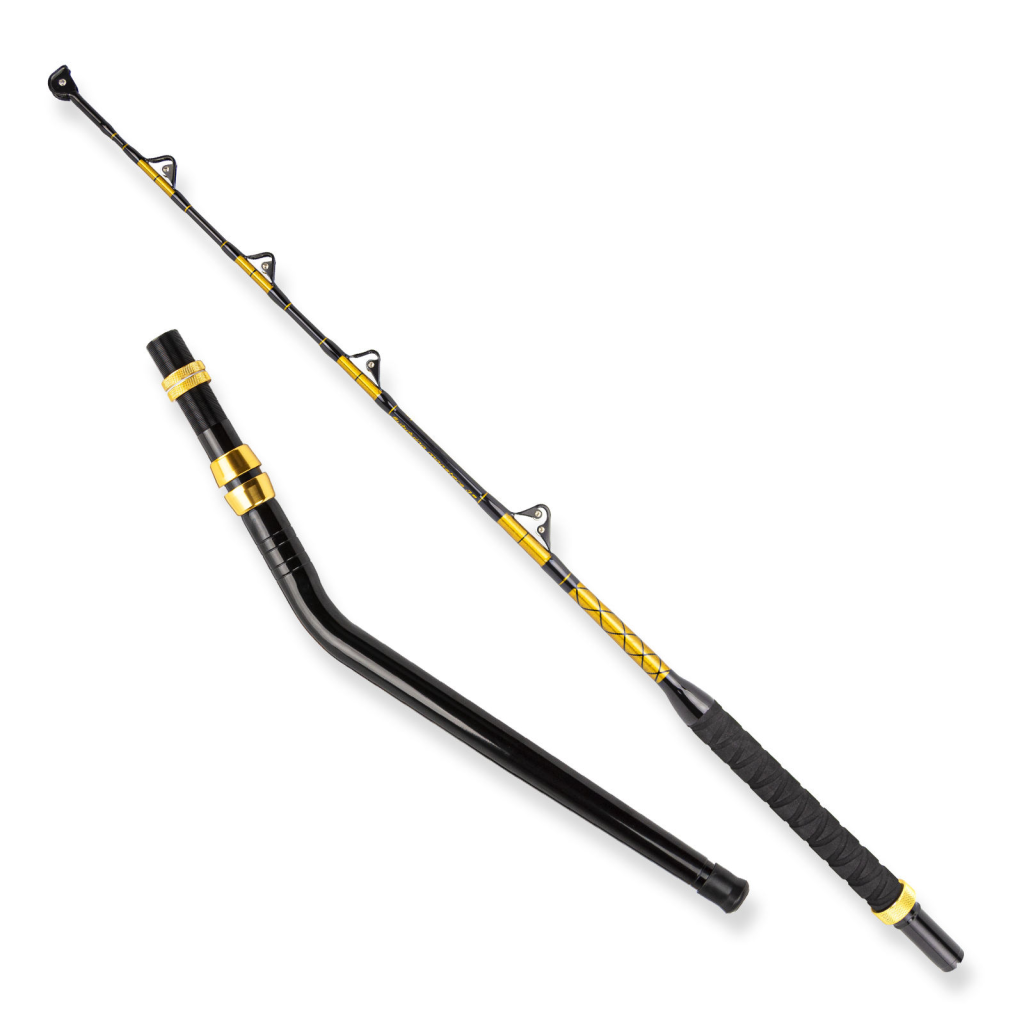
Rod length, power, and action describe different characteristics of a trolling rod. Anglers often compare these specifications as if one matters more than the others. In reality, they work together.
Rod length affects reach, leverage, and line control. Rod power determines how much force the blank can handle and how strongly it resists loading. Rod action describes where the blank bends when pressure increases.
For offshore trolling, you should consider all three specifications together. A longer rod is not automatically better if its power or action does not match your target fish and tackle.
Rod Length
Rod length refers to the overall physical length of the rod, usually measured from the butt to the tip.
Length affects how the rod interacts with the line and the fish. A shorter rod can provide more practical leverage and easier handling during a heavy fight. A longer rod can provide greater reach and help create more line separation across a trolling spread.
For example, a 5’6″ to 6’6″ trolling rod can work well when leverage and fish control are priorities. A 6’6″ to 7’6″ rod may provide more useful reach for spread management and lighter offshore applications.
However, length does not tell you how much load the rod can handle. You also need to consider its power and line rating.
Rod Power
Rod power describes how much force the rod needs to load or bend. Common descriptions include light, medium, heavy, and extra heavy, although manufacturers may use different rating systems.
Power has a close relationship with line class, lure weight, and expected fish size. A heavy offshore rod can handle greater loads than a light rod when the specifications match the application.
For example, an 80–130 lb-class trolling rod is designed for much heavier applications than a light offshore trolling rod. This does not mean every 130 lb rod performs the same way. Blank construction, action, guide system, and manufacturer specifications also matter.
When choosing a rod, match its power and line rating to the expected fish and the rest of your tackle. Using a rod with insufficient power can make heavy trolling difficult and may place excessive stress on the equipment.
Rod Action
Rod action describes where the rod bends along the blank when you apply pressure. A fast-action rod generally bends closer to the tip, while a slower action distributes more of the bend toward the middle or lower section of the blank.
Action can affect lure presentation, hook-setting characteristics, and fish-fighting behavior. It also changes how the rod loads under pressure.
For trolling, the right action depends on the lure, terminal tackle, line class, and target species. Some setups benefit from a rod that loads progressively during a strike, while others may require a different action to match the lure and fishing technique.
Action should therefore complement rod power and length rather than stand alone as a deciding factor.
Why These Three Specifications Must Work Together
Rod length should not determine your purchase by itself. The three specifications serve different purposes:
- Length affects reach, leverage, and line control.
- Power affects load capacity and how the rod handles pressure.
- Action affects where the rod bends and how it responds under load.
Consider a 6′ rod with 80–130 lb power and an appropriate action. For heavy big-game trolling, this setup may provide better leverage and fish control than simply choosing the longest rod available.
A 7’6″ rod with a lighter power rating may provide greater reach, but it may not suit a heavy-drag setup targeting large tuna or marlin. On the other hand, a shorter heavy-duty rod may provide excellent fighting control but less line separation for a wide trolling spread.
The goal is to match length → power → action → line class → lure weight → reel → drag as one complete system. When these specifications work together, you can choose a trolling rod that fits your fishing method instead of selecting one based on length alone.
How Rod Length Relates to Line Class
Line class is one of the main factors to consider when choosing trolling rod length. As line class increases, offshore anglers often move toward shorter, stronger rods because heavier tackle and higher drag pressure require more leverage and control. However, line class does not determine rod length by itself. Target species, fishing technique, reel type, lure setup, and boat configuration also matter.
30 lb Trolling Rod
A 30 lb trolling rod suits lighter offshore applications where anglers target species such as smaller tuna, mahi-mahi, wahoo, and other medium-sized game fish. These rods often work well in longer lengths, such as 6 to 7 feet, because the added length can provide more reach and help control the line around the boat.
A longer 30 lb rod can also offer a smoother bend and good lure presentation during trolling. The key is to balance length with the reel, line, and drag pressure rather than choosing the longest rod available.
50 lb Trolling Rod
A 50 lb trolling rod provides a versatile medium-heavy offshore setup. It can handle a wider range of offshore species while still offering manageable weight and good fighting control.
Rod length around 5’6″ to 7 feet can work depending on the fishing style and boat setup. Longer rods provide additional reach and can help spread trolling lines, while shorter models provide more leverage when fighting stronger fish.
For many offshore setups, the 50 lb class offers a practical balance between rod length, leverage, line capacity, and fighting power.
80 lb Trolling Rod
An 80 lb trolling rod is designed for heavier offshore fishing and larger game fish. At this line class, anglers often benefit from a shorter rod because heavy drag pressure can make long rods harder to control.
A 5’6″ to 6’6″ rod can provide strong leverage while reducing the effort required to maintain pressure on a powerful fish. Shorter lengths also work well with heavy conventional reels and high-drag setups.
When choosing an 80 lb rod, focus on the complete system. Rod power, action, guide strength, butt design, reel compatibility, and drag pressure can matter as much as overall length.
100–130 lb Trolling Rod
100–130 lb trolling rods are built for serious big-game applications, including large tuna, marlin, shark, and other powerful offshore species. At this level, rod length becomes only one part of the selection process.
Shorter heavy-duty rods can provide excellent leverage under high drag pressure, while longer models may offer additional reach and line control in certain trolling setups. The better choice depends on the target fish, fighting technique, and boat configuration.
For 100–130 lb tackle, pay close attention to:
- Heavy-duty blank construction for sustained loads.
- Large or roller guides that can handle heavy lines and high pressure.
- Bent or straight butt design based on the fighting style and reel setup.
- Reel compatibility, including conventional, lever-drag, and two-speed reels.
- Drag requirements, especially when targeting large and powerful fish.
- Rod length and leverage, rather than length alone.
The main principle is simple: heavier line classes do not automatically require the shortest rod. Instead, match rod length to the amount of leverage, reach, drag pressure, and control your offshore setup requires. A well-balanced rod + reel + line + leader + lure + drag system usually matters more than any single specification.
Bent Butt vs. Straight Butt: Does It Change the Ideal Rod Length?
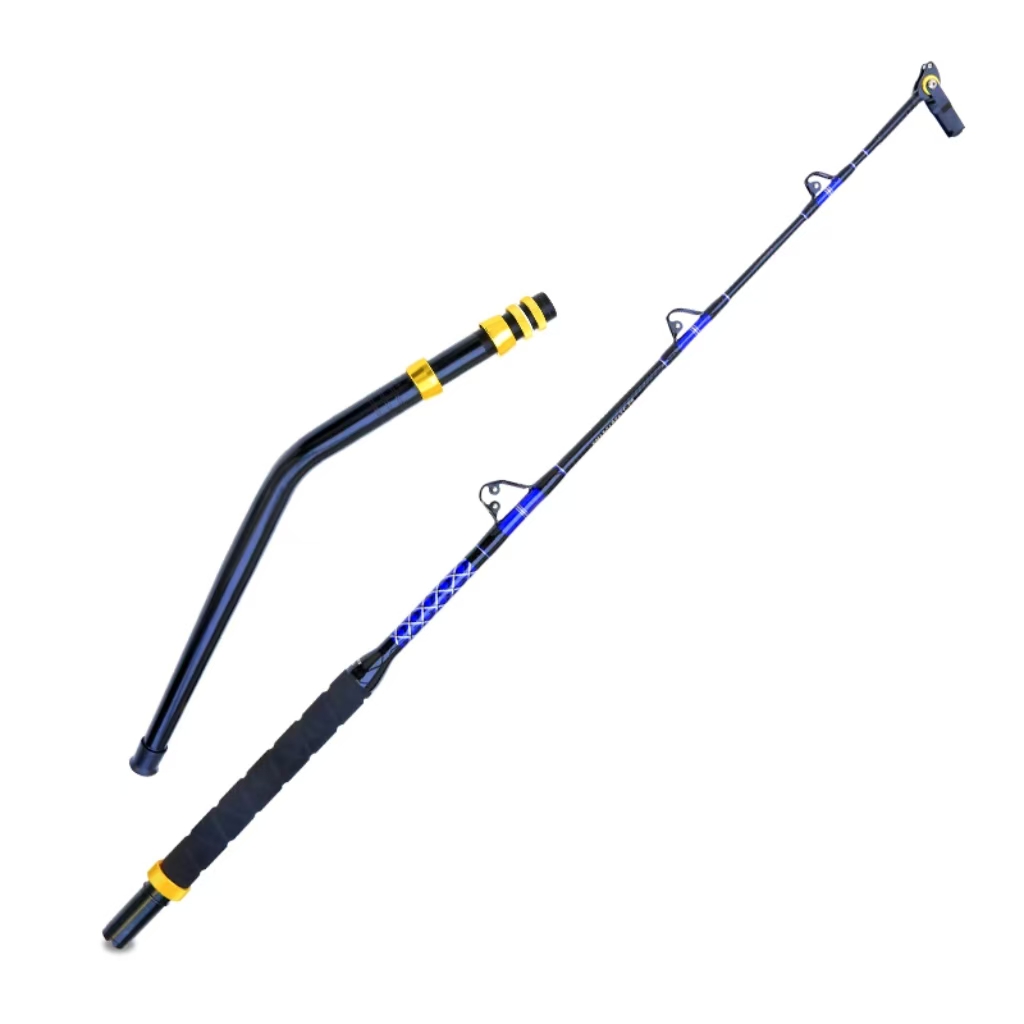
Butt style can change how a trolling rod feels and performs, especially when you compare bent-butt and straight-butt designs. The butt affects the rod’s position, fighting angle, and how the angler transfers pressure to a hooked fish. Because of this, two rods with different butt styles can perform very differently even when they have similar lengths.
Bent Butt Trolling Rods
Bent butt trolling rods are common in heavy big-game fishing. They work well with fighting chairs, harnesses, and heavy conventional reels. The curved butt helps position the rod and reel at a favorable angle during the fight.
A bent butt can also reduce the need to hold the rod at an awkward angle. This becomes especially useful when fighting large tuna, marlin, shark, and other powerful offshore fish under high drag pressure.
Many heavy-duty bent-butt rods use relatively short lengths, such as 5’6″ to 6’6″. The shorter blank provides strong leverage and works well with the fighting position created by the bent butt.
Straight Butt Trolling Rods
Straight butt trolling rods offer greater versatility across different offshore setups. Anglers can use them with various rod holders, reel configurations, and boat layouts.
Longer straight-butt rods can provide additional reach, line control, and lure spread. They can also give anglers more flexibility when trolling multiple lines or fishing without a dedicated fighting chair.
For example, a 6’6″ or 7′ straight-butt rod may suit an angler who wants more reach and a versatile setup. However, a longer rod can require more effort when fighting a powerful fish at high drag pressure.
How Butt Style and Length Work Together
Rod length should never be evaluated separately from butt design. A 5’6″ bent-butt rod and a 7′ straight-butt rod can serve very different purposes, even if both belong to the same general line class.
The 5’6″ bent-butt model may focus on leverage, heavy drag, and fighting-chair use. The 7′ straight-butt model may prioritize reach, line control, and versatility.
When choosing an offshore trolling rod, consider butt style + rod length + line class + reel + drag system as one complete setup. This approach gives you a better idea of how the rod will perform than looking at length alone.
How to Choose the Right Offshore Trolling Rod Length
Choosing the right offshore trolling rod length starts with your fishing conditions, not a single length number. A longer rod can improve line separation and reach, while a shorter rod can provide better leverage and control. Use the following steps to narrow down the right length for your setup.
Step 1: Identify Your Target Species
Start with the fish you plan to target. Mahi-mahi, wahoo, smaller tuna, large tuna, marlin, and shark can require very different tackle. Your target species gives you a starting point for rod power, line class, and length.
Step 2: Estimate the Typical Fish Size
Consider the average size and fighting strength of the fish in your fishing area. Larger fish usually require heavier tackle and stronger drag pressure. In these situations, a shorter rod may provide better leverage and control.
Step 3: Choose the Appropriate Line Class
Match the rod to the line class you expect to use. Common offshore options include 30 lb, 50 lb, 80 lb, 100 lb, and 130 lb. As line class increases, pay more attention to leverage, blank strength, guide durability, and reel compatibility rather than choosing length alone.
Step 4: Consider Your Boat Size and Cockpit Layout
Your boat configuration can affect the ideal rod length. A longer rod can work well when you have enough cockpit space and need additional reach or line separation. On a smaller boat, a shorter rod may provide better handling and reduce the risk of the rod contacting the gunwale, rail, or other equipment.
Step 5: Decide Whether You Need More Leverage or Line Separation
Think about what matters most in your trolling setup.
- More leverage: Consider a shorter rod.
- More line separation: Consider a longer rod.
- Balanced performance: Choose a moderate length based on your boat and target species.
This decision can help narrow your choices before you compare specific rod models.
Step 6: Match Rod Length With Lure Weight and Trolling Speed
Your lure setup also affects rod selection. Heavy lures and higher trolling speeds can place greater loads on the rod. Make sure the rod can handle the intended lure weight, trolling speed, and line tension without compromising control.
Step 7: Match the Rod With the Reel and Drag System
A trolling rod works as part of a complete system. Match its length and power with the reel type, line capacity, gear ratio, and drag system. Heavy reels and high drag pressures often pair well with shorter, powerful rods that provide strong leverage.
Step 8: Check Guide, Butt, and Blank Construction
Finally, look beyond rod length. Check the guide system, butt style, and blank construction. Roller guides can suit heavy offshore applications, while a bent butt can support fighting-chair setups. Fiberglass, carbon fiber, or composite blanks can also provide different combinations of strength, flexibility, and weight.
The right offshore trolling rod length is therefore a system decision, not a standalone specification. Start with the target species and fish size, then match line class → boat setup → leverage or line separation → lure and trolling speed → reel and drag → guides, butt, and blank construction. This approach helps you choose a rod that fits the way you actually fish.
Common Mistakes When Choosing Offshore Trolling Rod Length
Choosing the right offshore trolling rod length involves more than selecting a longer or heavier rod. Many anglers focus on one specification and overlook how the rod works with the boat, reel, lure, line, and fishing conditions. Avoiding these common mistakes can help you build a more balanced trolling setup.
Choosing the Longest Rod Available
A longer rod does not automatically provide better performance. Longer rods can offer more reach and help separate trolling lines, but they can also reduce leverage when fighting powerful fish.
A long rod may also feel awkward in a crowded cockpit. Consider target species, boat layout, line class, and fighting technique before choosing the longest option available.
Ignoring Boat Layout
Your boat has a major influence on the ideal rod length. A rod that works well on a large sportfishing boat may become difficult to handle on a smaller vessel.
Check the available cockpit space, rod-holder position, gunwale height, and distance between anglers. A shorter rod can provide better control when space is limited, while a longer rod may work better when you have enough room for additional reach and line separation.
Focusing Only on Rod Length
Rod length is only one part of the selection process. Power, action, line class, guides, butt style, blank construction, and reel compatibility can all affect how the rod performs.
For example, a 5’6″ heavy-duty rod may provide more useful leverage than a 7′ rod in a high-drag big-game setup. Always evaluate length as part of the complete trolling system.
Using a Heavy Rod for a Light Trolling Application
A heavier rod is not always the right choice for lighter offshore fishing. Excessive power can reduce versatility and make the setup more tiring to use.
If you target smaller tuna, mahi-mahi, wahoo, or other medium-sized offshore species, an appropriately rated rod can provide a better balance of flexibility, lure control, and fighting comfort.
Ignoring Lure Weight and Trolling Speed
The rod needs to load correctly under your actual fishing conditions. Lure weight and trolling speed affect the amount of pressure placed on the rod tip and blank.
A lure that is too heavy for the rod can overload the blank, while a lure that is too light may not load the rod properly at the intended trolling speed. Check the rod’s recommended lure range and consider the actual trolling conditions before making your choice.
Overall, avoid choosing an offshore trolling rod based on length alone. The right length should work with your line class, rod power, action, lure, trolling speed, reel, drag, boat layout, and fishing technique.
Frequently Asked Questions About Offshore Trolling Rod Length
What is the best length for an offshore trolling rod?
There is no single best length for every offshore trolling setup. A 5’6″ to 7′ trolling rod can work well depending on the target species, line class, boat layout, lure weight, and fishing technique. Shorter rods often provide more leverage, while longer rods can offer more reach and line separation.
Is a 6-foot trolling rod good for offshore fishing?
Yes. A 6-foot trolling rod is a versatile choice for many offshore applications. It offers a useful balance between leverage, line control, and handling. It can work particularly well when you need moderate rod length without making the setup difficult to manage in the cockpit.
Is a 7-foot trolling rod too long for big game fishing?
Not necessarily. A 7-foot trolling rod can work for big-game fishing when the boat layout, line class, reel, and fishing technique support the extra length. However, shorter rods can provide more leverage under high drag pressure. For very heavy big-game tackle, consider the complete setup rather than choosing length alone.
What length trolling rod is best for tuna?
The ideal tuna trolling rod length depends on the tuna species, expected fish size, line class, and fishing method. Rods around 5’6″ to 7 feet can suit different tuna applications. Shorter rods can provide strong leverage for larger tuna, while longer rods can help with reach and line separation.
What length trolling rod is best for marlin?
Marlin trolling commonly uses rods in the 5’6″ to 7-foot range, depending on the line class and boat setup. Heavy big-game outfits often favor shorter rods for leverage and high-drag fighting. Longer rods may provide additional reach and line control in suitable trolling configurations.
Are shorter trolling rods better for big fish?
Shorter rods can provide greater leverage when fighting large and powerful fish. They can also make high-drag situations easier to control. However, shorter does not automatically mean better. Rod power, action, line class, butt style, reel, and drag system also affect performance.
Are longer trolling rods better for lure spread?
Longer rods can help create greater separation between trolling lines, especially when anglers run multiple rods from different positions. They can also provide additional reach. However, the actual lure spread depends on rod position, boat width, trolling pattern, line length, lure design, and sea conditions.
Does rod length affect trolling distance?
Rod length can influence line angle, lure position, and line separation, but it does not directly determine trolling distance. The distance behind the boat depends more on line length, trolling speed, lure design, sea conditions, and the specific trolling pattern.
What is the best trolling rod length for a small boat?
For a small boat, a shorter or moderate-length trolling rod around 5’6″ to 6’6″ can be easier to handle. It takes up less cockpit space and provides better control around rod holders, rails, and other equipment. The final choice should still match your target species, line class, reel, and lure setup.
The key takeaway is that offshore trolling rod length should match the entire fishing system. Consider target species, fish size, line class, boat layout, leverage, lure spread, trolling speed, reel, drag, and butt style before choosing a specific length.
Final Thoughts: Choose Trolling Rod Length as Part of a Complete System
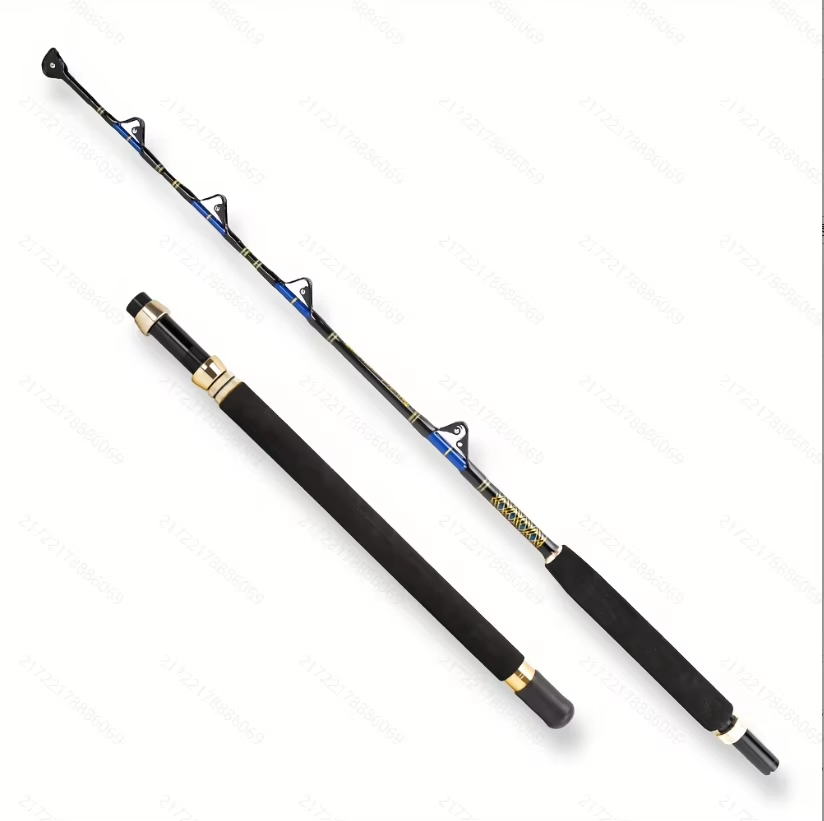
There is no universal ideal trolling rod length for every offshore angler. The right length depends on how the entire setup works together. Your target species, fish size, boat layout, line class, and fishing method should all influence the decision.
Shorter trolling rods can provide more leverage and better control when fighting heavy fish. They often suit high-drag big-game setups where the angler needs to maintain strong pressure. Longer trolling rods can provide more reach and help create better line separation when running multiple trolling lines.
Instead of choosing a rod based on length alone, follow a complete selection process:
Target species → fish size → boat → line class → power → action → lure weight → trolling method → reel → drag
Each factor affects how the rod performs on the water. A 5’6″ rod may work well for a heavy big-game setup, while a 7′ rod may better suit a trolling system that needs additional reach and line separation.
The goal is to build a balanced offshore trolling setup. Match the rod length with the reel, drag system, line, lure, and fishing conditions. This approach can give you better control and more predictable performance than simply choosing the longest or shortest rod.
If you are looking for a rod for offshore and big-game applications, explore our offshore trolling rod and heavy-duty trolling rod collection to find options designed for different line classes, target species, and fishing setups.
-
Sale!

-
Sale!

-
Sale!

-
Sale!
