
Introduction
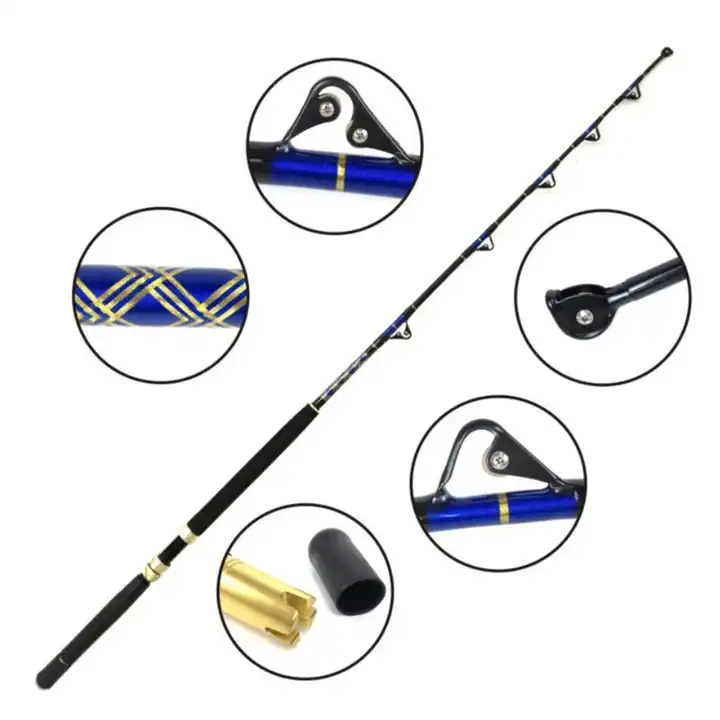
Tuna fishing puts serious pressure on a trolling rod. Tuna can make powerful runs and change direction quickly, forcing the rod to handle heavy and sudden loads. Offshore currents, deep water, heavy lures, and high drag pressure can add even more stress during a fight. A long battle with a strong tuna can test every part of your fishing setup.
Choosing the right trolling rod for tuna fishing starts with understanding your target and fishing conditions. Different tuna species can vary greatly in size and fighting power. Your fishing location, line class, reel, lure weight, and drag setting also affect the rod you need. A well-matched setup helps distribute the load and gives you better control throughout the fight.
So, what is the best trolling rod for tuna fishing? There is no single rod that works best for every tuna fishing situation. The right choice depends on the target tuna, line class, fishing technique, and overall tackle setup. A rod designed for lighter offshore trolling may not provide enough power for large tuna, while an excessively heavy rod may not suit smaller fish or lighter tackle.
In this guide, we will explain the key factors to consider when choosing a tuna trolling rod. We will cover rod power, action, length, line class, guide type, butt design, lure weight, materials, reel compatibility, and saltwater durability. By matching these specifications to your fishing conditions, you can build a balanced and reliable tuna trolling setup.
What Makes a Good Trolling Rod for Tuna Fishing?
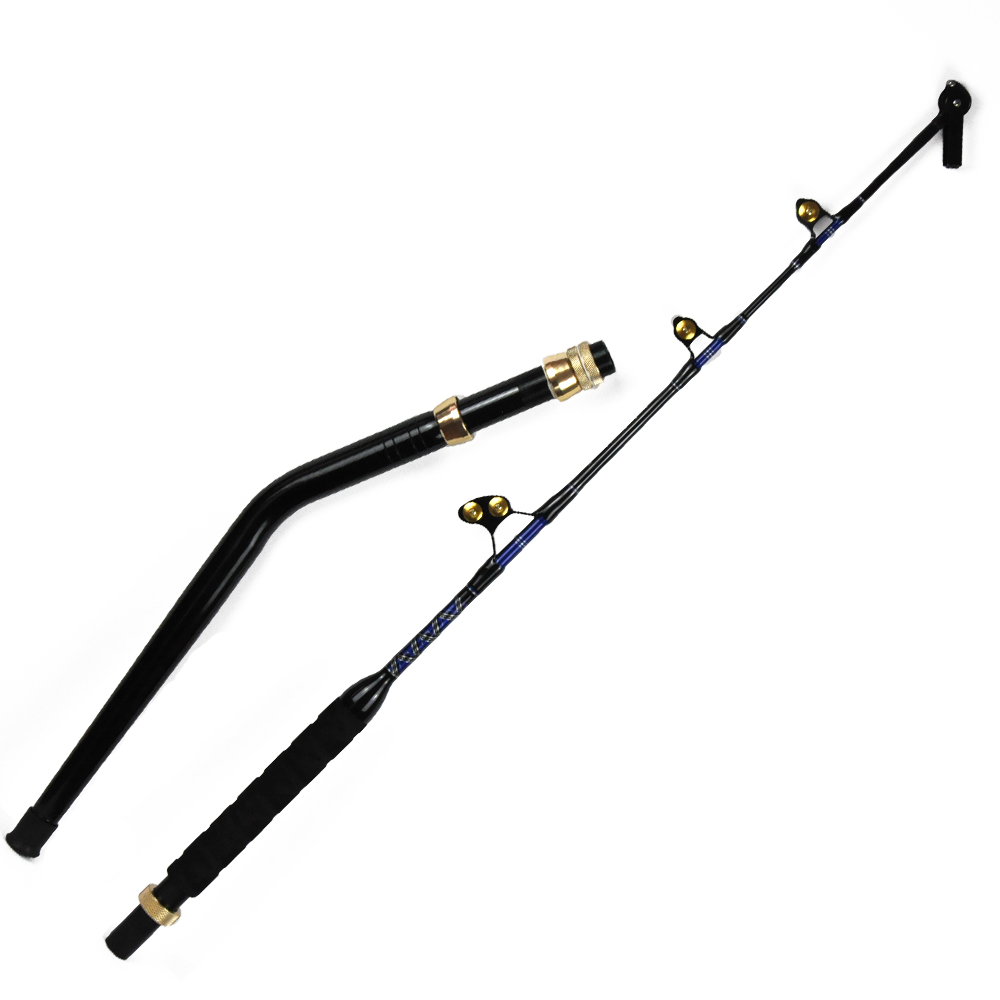
A good tuna trolling rod needs to handle high loads while giving the angler enough control during a long fight. Tuna can swim hard, make sudden runs, and pull against the drag for extended periods. This puts more stress on the rod than many smaller offshore species.
For this reason, a suitable tuna trolling rod should offer a strong blank, an appropriate line class, reliable guides, a secure reel seat, and a durable butt section. Saltwater corrosion resistance also matters because the rod faces constant exposure to seawater, spray, and moisture. At the same time, the rod should provide a comfortable fighting configuration that works with the boat, reel, harness, or fighting chair.
The key is to match the rod to the complete fishing system. Rod power, line strength, reel drag, lure weight, and target tuna should work together. A stronger rod does not automatically create a better setup if the rest of the tackle cannot handle the load.
Strength and Lifting Power
Rod strength and lifting power are critical when targeting tuna. During a long run, the fish can take large amounts of line while maintaining heavy pressure on the rod. A strong blank helps the angler maintain pressure and gradually turn the fish when conditions allow.
Rod power also needs to match the drag pressure and line strength. A heavier line class often requires a rod with enough power to support the intended drag setting. However, the rod should not simply be chosen based on the highest possible drag number. The entire system must stay within the working limits of the rod, reel, line, and leader.
For example, a rod rated for a heavy line class may suit larger tuna and stronger offshore conditions. A lighter setup may work better when targeting smaller tuna or using lighter line. Matching these components helps create a balanced setup and reduces unnecessary stress on the tackle.
Durable Guides for Offshore Trolling
The guides are another important part of a tuna trolling rod. They guide the fishing line along the blank and experience significant pressure when a tuna makes a powerful run. Poor-quality or unsuitable guides can increase friction, damage the line, or reduce reliability under heavy loads.
Conventional guides use individual guide rings to control the line. They are relatively simple and can work well for many trolling applications. Roller guides, on the other hand, use small rollers to reduce friction as the line moves through the guide. They are commonly considered for heavy-duty offshore trolling where anglers use heavier line and higher drag pressure.
The right guide system depends on the rod design, line type, fishing technique, and expected load. Regardless of the guide style, durability is essential. Guides should resist corrosion and maintain smooth line movement throughout the fight. Anglers should also inspect them regularly for wear, damage, or corrosion, especially after saltwater trips.
Strong Reel Seat and Butt
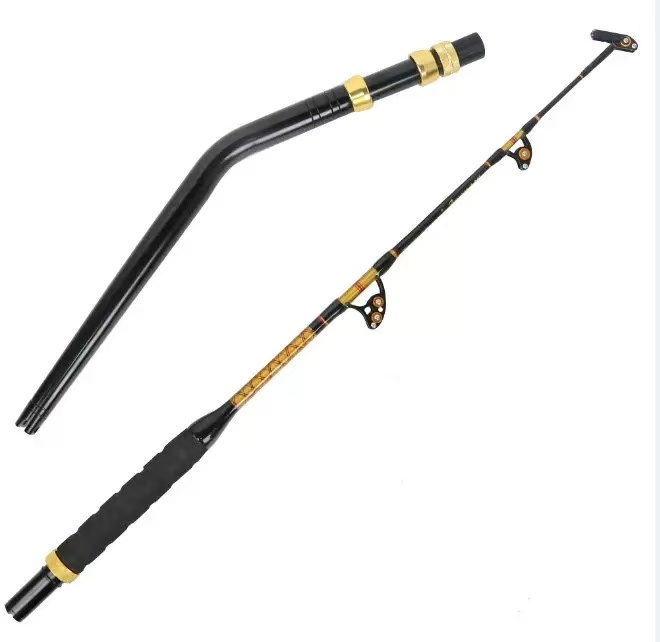
The reel seat and butt section transfer much of the load from the reel into the rod. During a tuna fight, the reel generates drag pressure while the angler applies additional lifting force. A strong connection between the reel and rod helps keep the setup stable under heavy pressure.
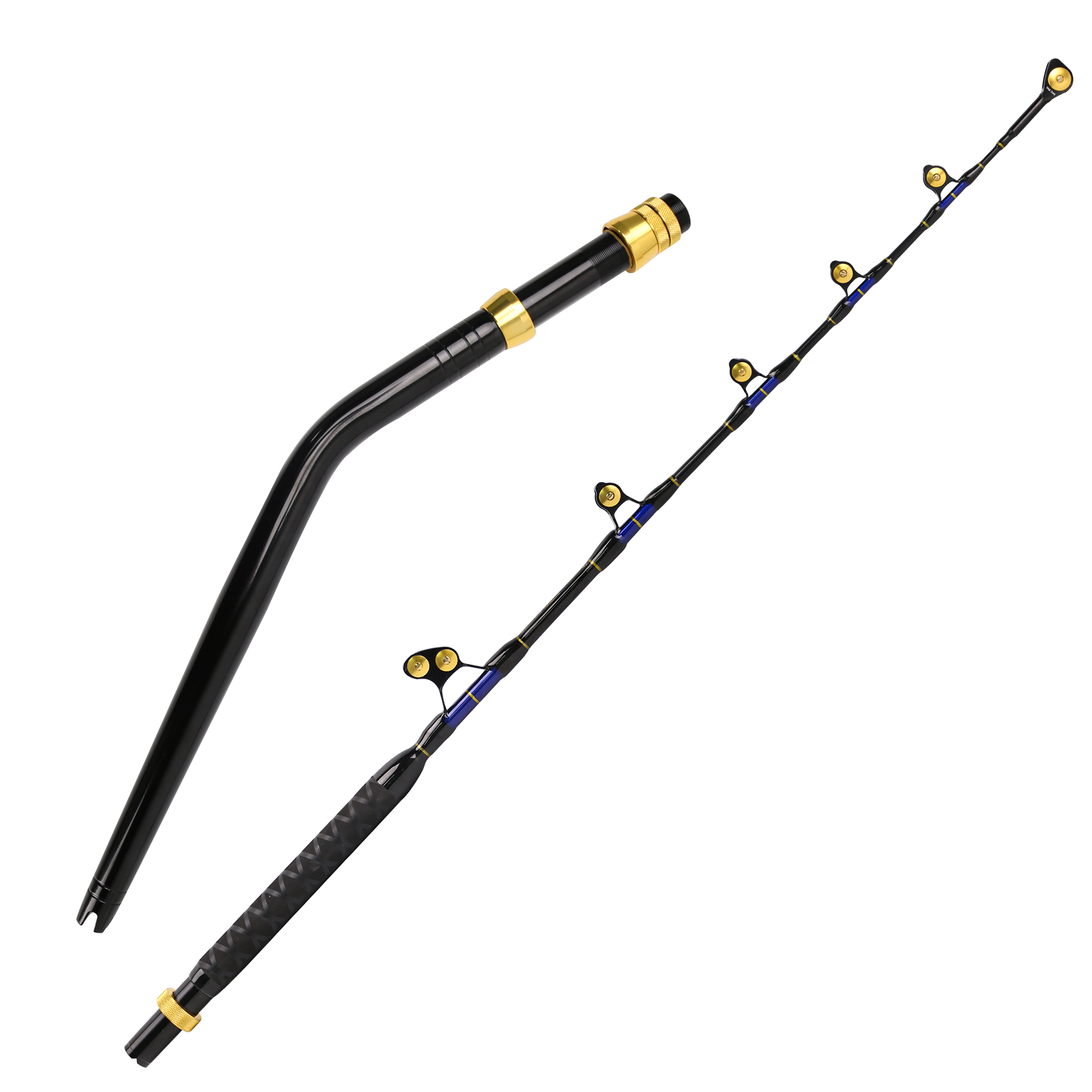
The butt design also affects how the angler fights the fish. Straight butt trolling rods offer a simple and versatile configuration that can suit different boat setups. Bent butt trolling rods change the angle between the rod and reel, which can provide a different fighting position and may work well with a fighting chair or harness system.
Neither design is universally better. The choice depends on the reel, boat layout, fighting technique, and personal preference. For heavy tuna trolling, the important point is to choose a butt and reel seat that can handle the expected load and work properly with the rest of the tackle.
Overall, a good tuna trolling rod combines strength, suitable line capacity, durable guides, a secure reel connection, and a practical fighting configuration. When these features match the target tuna and fishing conditions, the rod becomes part of a balanced system rather than simply the strongest component in the setup.
How to Choose the Right Line Class for Tuna Trolling
Line class refers to the approximate breaking-strength category of the fishing line used with a rod and reel setup. In tuna trolling, choosing the right line class helps balance fish size, drag pressure, reel capacity, and the rest of the tackle.
Common line classes for offshore trolling include 30 lb, 50 lb, 80 lb, 100 lb, and 130 lb. Each class can suit different fishing situations. A 30 lb setup may work for lighter tuna trolling, while 80 lb, 100 lb, or 130 lb tackle can provide more control when targeting larger tuna or fishing in demanding offshore conditions.
However, these numbers should serve as a starting point rather than fixed rules. The actual breaking strength of a fishing line can vary by line type, manufacturer, knot, and condition. Fishing regulations and local practices can also affect tackle selection.
Choosing a Line Class Based on Tuna Size
The expected size of the tuna is one of the first factors to consider. Smaller tuna may not require a very heavy line class. Using excessively heavy line can add unnecessary weight and reduce the flexibility of the overall setup.
For larger tuna, a heavier line class can provide more strength and allow the angler to apply greater pressure when conditions permit. For example, 80 lb, 100 lb, or 130 lb line may be considered for heavier offshore applications.
The goal is to select enough line strength for the fish you expect to encounter while maintaining a practical and balanced setup.
Matching Line Class to Drag Setting
The drag setting should work with the selected line class and the limits of the rod and reel. Higher drag pressure places more load on the fishing line, knots, reel, guides, and rod.
A heavier line class can provide a larger working margin for high-load situations, but simply increasing line strength does not mean you should increase drag indefinitely. The complete tackle system must support the intended load.
Before fishing, check the recommended ratings of the rod, reel, and line. Set the drag according to the weakest critical component rather than the strongest one.
Consider Reel Capacity
Line class also affects reel capacity. Heavier line takes up more space on the spool, so a reel may hold less 100 lb or 130 lb line than 30 lb or 50 lb line.
This matters when targeting tuna because these fish can make long runs. Your reel needs enough capacity for the selected line class and the amount of line required for your fishing depth and conditions.
A good tuna trolling setup balances line strength with sufficient capacity. Choosing extremely heavy line without considering spool capacity can leave you with less usable line when a fish makes a long run.
Match Leader Strength
The leader is another important part of the system. It connects the main line to the lure or terminal tackle and must withstand abrasion, sudden pressure, and contact with the fish or structure.
Your leader strength should complement the main line rather than create a major weak point. Consider the target tuna, fishing environment, lure, hook setup, and expected abrasion.
A strong main line cannot compensate for an unsuitable leader. The connection between the main line, leader, and terminal tackle also deserves careful attention.
Consider the Fishing Environment
Offshore conditions can change the amount of pressure placed on your tackle. Strong currents, deep water, rough seas, underwater structure, and heavy lures can all influence line selection.
For example, deep-water tuna fishing may require a different setup from lighter offshore trolling. Strong currents can increase lure resistance and line pressure, while rough conditions may make it harder to maintain consistent pressure on the fish.
Consider the entire fishing environment instead of selecting line class based only on the target species.
Is Heavier Fishing Line Always Better?
Not necessarily. Choosing the heaviest line class available can create several trade-offs.
Heavier line can reduce reel capacity, increase tackle weight, and affect lure presentation. It may also require a stronger rod and reel to create a properly balanced setup. For some tuna fisheries, lighter tackle can provide an appropriate balance between strength, control, and fishing performance.
The right approach is to choose the line class that matches the expected tuna size, drag setting, reel capacity, leader, and fishing conditions. More line strength is useful when the situation requires it, but it should not be the only factor in your decision.
Matching Rod, Reel, and Fishing Line
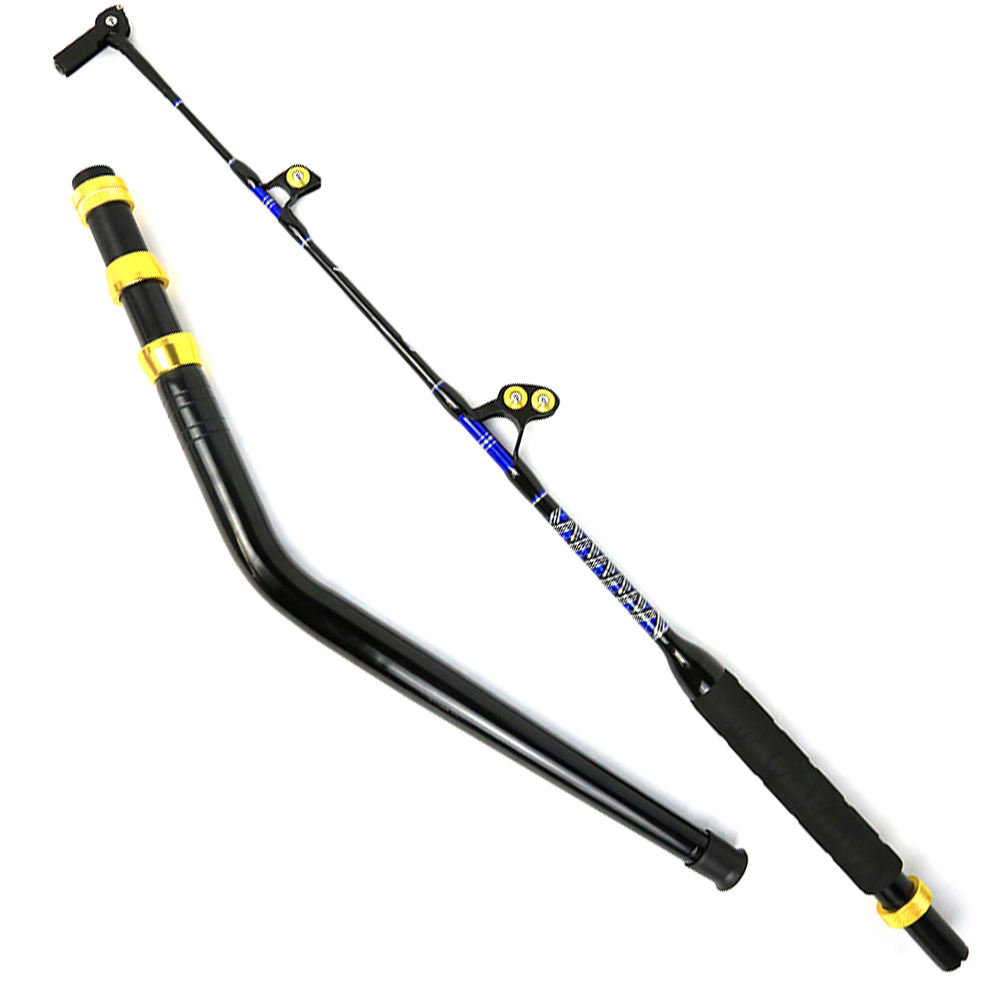
A tuna trolling rod should work as part of a complete fishing system. The rod, trolling reel, main line, leader, lure, and drag setting all affect one another.
For example, pairing a heavy-duty rod with a reel that has limited line capacity can create an unbalanced setup. Likewise, using heavy line with a lure or rod that is not designed for that load can affect performance and increase tackle stress.
Consider these components together:
| Tackle Component | What to Match |
| Rod | Line class, rod power, action, and lure weight |
| Trolling Reel | Line capacity, drag range, gear system, and rod rating |
| Main Line | Breaking strength, reel capacity, and fishing conditions |
| Leader | Strength, abrasion resistance, and terminal tackle |
| Lure | Weight, trolling speed, and rod rating |
| Drag Setting | Line strength and the working limits of the rod, reel, and connections |
A balanced setup allows each component to perform within its intended range. Instead of asking which line class is the strongest, ask which line class creates the right combination of strength, capacity, control, and compatibility for your tuna trolling conditions.
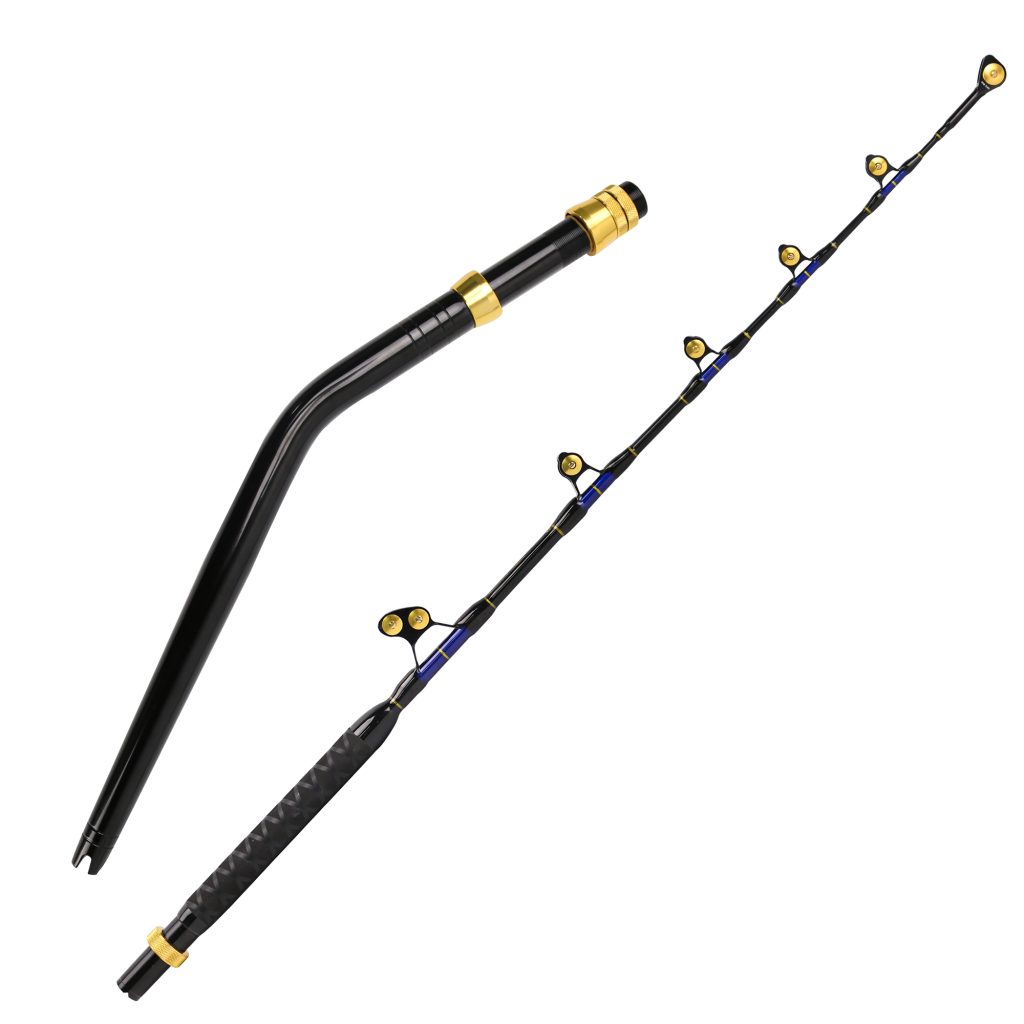
Rod Power and Action for Tuna Fishing
When choosing a trolling rod for tuna fishing, two specifications deserve close attention: rod power and rod action. These terms describe different characteristics of a rod, and both can affect how the rod performs during trolling and fighting a fish.
Rod power describes how much force the rod needs to bend. A more powerful rod can handle greater loads and usually suits heavier line and larger fish. Rod action describes where the rod bends along the blank. A fast-action rod bends closer to the tip, while a moderate-action rod bends farther down the blank.
The right combination depends on the target tuna, line class, lure weight, trolling technique, and overall tackle setup. A powerful rod with an unsuitable action may not perform as expected, so consider both specifications together.
Rod Power
Rod power indicates the overall strength and lifting capability of a fishing rod. For tuna trolling, medium-heavy, heavy, and extra-heavy rods can all have a place. The appropriate choice depends on the expected fish size and fishing conditions.
Medium-Heavy Trolling Rod
A medium-heavy trolling rod can suit lighter tuna trolling and smaller fish. It offers a balance between strength and flexibility, which can make it useful when anglers want a less rigid setup.
This power range may work well with lighter line classes and smaller trolling lures. However, anglers should check the rod’s specific line and lure ratings rather than relying on the power label alone.
Heavy Trolling Rod
A heavy trolling rod provides more lifting power and can handle higher loads than a medium-heavy rod. It can suit offshore tuna fishing where anglers expect larger fish, stronger currents, heavier lures, or higher drag pressure.
Heavy rods often provide a practical balance for many offshore tuna applications. The reel, main line, leader, and lure should still match the rod’s specifications.
Extra-Heavy Trolling Rod
An extra-heavy trolling rod is designed for situations that demand substantial strength and lifting power. It can be appropriate for large tuna, heavy line classes, and demanding offshore conditions.
This type of rod can help anglers maintain strong pressure during a prolonged fight. However, extra-heavy power is not automatically better. A rod that is too powerful for the fish, line, or lure can create an unnecessarily stiff and heavy setup.
The table below provides a general guide:
| Rod Power | Potential Application | Key Consideration |
| Medium-Heavy | Lighter tuna and moderate offshore trolling | Balance, flexibility, and lighter tackle |
| Heavy | Larger tuna and general heavy offshore trolling | Strength and lifting power |
| Extra-Heavy | Large tuna and high-load offshore applications | Maximum system compatibility |
These categories are not universal specifications. Manufacturers may use different rating systems, so always check the actual line and lure ratings for the specific rod.
Rod Action
Rod action describes how much of the rod bends when it comes under load. It affects how the rod loads during a strike, how it moves a trolling lure, and how pressure transfers through the blank during a fight.
The three action categories commonly discussed for tuna trolling are fast, moderate, and moderate-fast.
Fast Action
A fast-action trolling rod bends mainly toward the upper section of the blank. This design can provide a more direct response when the angler reacts to a strike.
Fast action may help with precise lure control and quick hook-setting movements. However, it can place more concentrated stress on the upper section of the rod and line system when the fish makes sudden movements.
Moderate Action
A moderate-action trolling rod bends farther down the blank. This creates a deeper loading pattern and allows more of the rod to absorb pressure.
For trolling, this can help keep the rod loaded as the lure moves through the water. During a fight, the deeper bend can also help distribute pressure along more of the blank. This can be useful when dealing with sustained pulls from tuna.
Moderate-Fast Action
A moderate-fast action sits between the two. It provides a relatively responsive tip while allowing the rod to load farther down the blank under greater pressure.
This combination can offer a useful balance between lure presentation, hook setting, and fish-fighting control. It may suit anglers who want responsiveness without using an extremely fast-action design.
How Rod Action Affects Tuna Trolling
Rod action can influence several parts of the fishing process:
- Lure presentation: The way the blank loads and recovers can affect how a trolling lure moves through the water.
- Hook setting: A faster response can help transfer movement quickly when responding to a strike, while a softer action may provide more flex as the fish takes the lure.
- Pressure distribution: A moderate or moderate-fast action can allow the blank to load progressively as pressure increases.
- Fish fighting: The bend profile affects how the rod absorbs sudden runs and maintains pressure during a long fight.
There is no single rod power or action that works for every tuna trolling situation. Rod power should match the expected load, while rod action should match the desired balance of lure control, hook-setting response, and pressure distribution. Consider both specifications alongside line class, reel drag, lure weight, and target tuna to build a balanced setup.
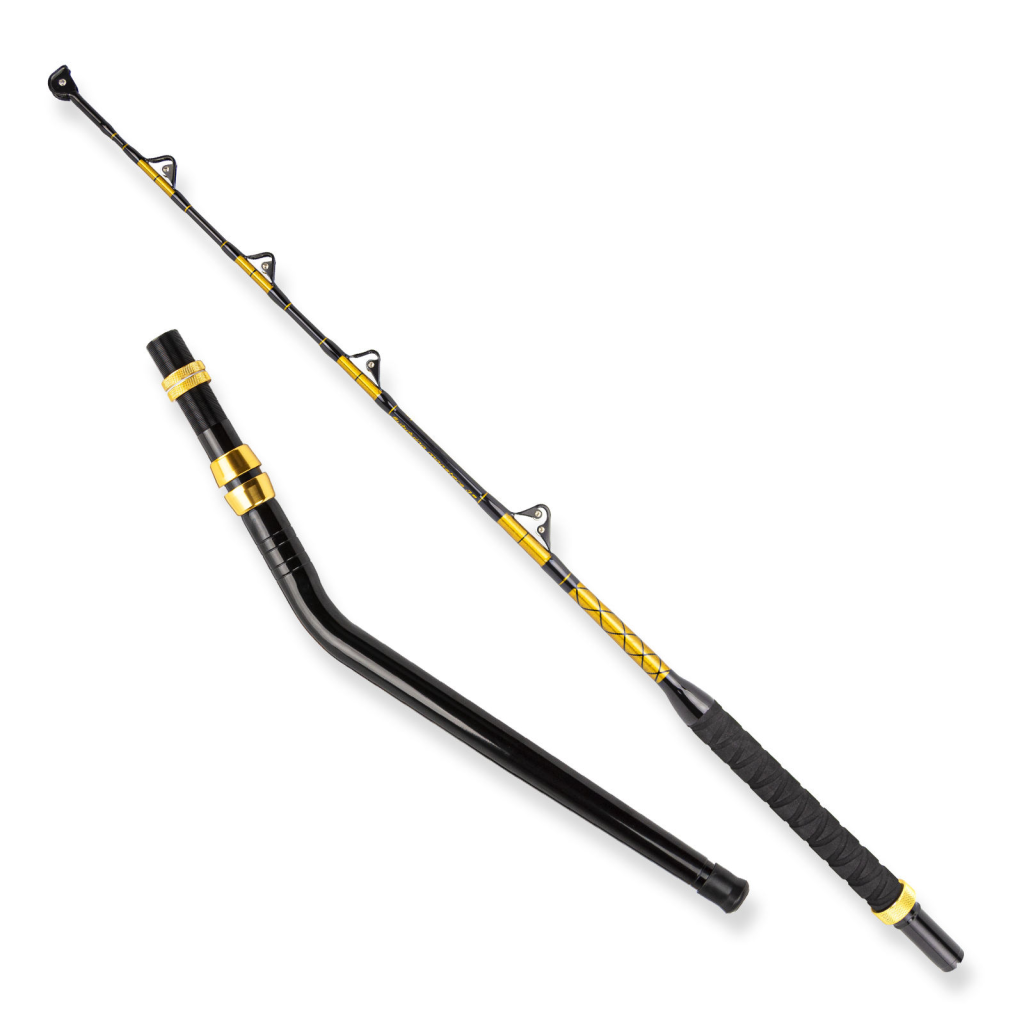
How to Choose the Right Trolling Rod Length
Trolling rod length affects lure positioning, line control, leverage, and fighting comfort. The right length can also help you create a better lure spread behind the boat. However, longer does not always mean better. Shorter rods can provide more leverage, while longer rods can offer greater control over line position and lure placement.
For tuna fishing, rod length should match your boat setup, trolling strategy, reel position, and target fish size. A rod that works well from a large offshore boat may not suit a compact boat or a different rod-holder layout.
Short Trolling Rods
Short trolling rods are often useful for heavy offshore applications. Their compact design gives anglers better leverage when fighting powerful tuna. A shorter rod also reduces the distance between the angler and the fish, which can make it easier to apply steady pressure during a long fight.
Short rods work well when the setup relies on high drag pressure and heavy line. They are also convenient when fishing from a fighting chair, stand-up harness, or a boat with limited space.
Another advantage is easier handling. A shorter blank usually feels more manageable when a large tuna changes direction or makes a strong run. This can reduce the effort required to control the rod during close-range fighting.
Longer Trolling Rods
Longer trolling rods provide greater line control and can help anglers position lures at different distances from the boat. This can be useful when running multiple trolling rods and trying to maintain an organized lure spread.
A longer rod can also provide more flexibility for specific trolling configurations. For example, anglers may use different rod lengths to place lures in different positions around the boat. This approach can help separate lines and create a wider spread.
However, longer rods can require more effort during the fight. They may also provide less direct leverage against a powerful tuna compared with a shorter heavy-duty rod. The extra length can become harder to manage when fishing with high drag pressure or from a compact boat.
Match Rod Length to Your Trolling Strategy
There is no single best trolling rod length for tuna fishing. The ideal length depends on how you fish and how your boat is configured.
Consider these factors when choosing:
| Factor | Short Trolling Rod | Long Trolling Rod |
| Leverage | Strong advantage | Moderate |
| Fighting control | Compact and direct | More rod movement |
| Line control | Good | Excellent |
| Lure positioning | More limited | More flexible |
| Boat space | Good for compact setups | Needs more room |
| Heavy offshore use | Very suitable | Depends on setup |
| Multiple-rod spread | Useful for specific positions | Useful for wider spread |
For heavy tuna fishing, a shorter offshore trolling rod can provide the leverage and control needed during a demanding fight. For multi-rod trolling, a longer rod may help with lure positioning and line separation.
The key is to match rod length with your boat setup and trolling strategy, rather than choosing a length based only on the rod itself. Your rod holder position, reel type, fighting method, lure spread, target tuna, and fishing conditions should all work together as one system.
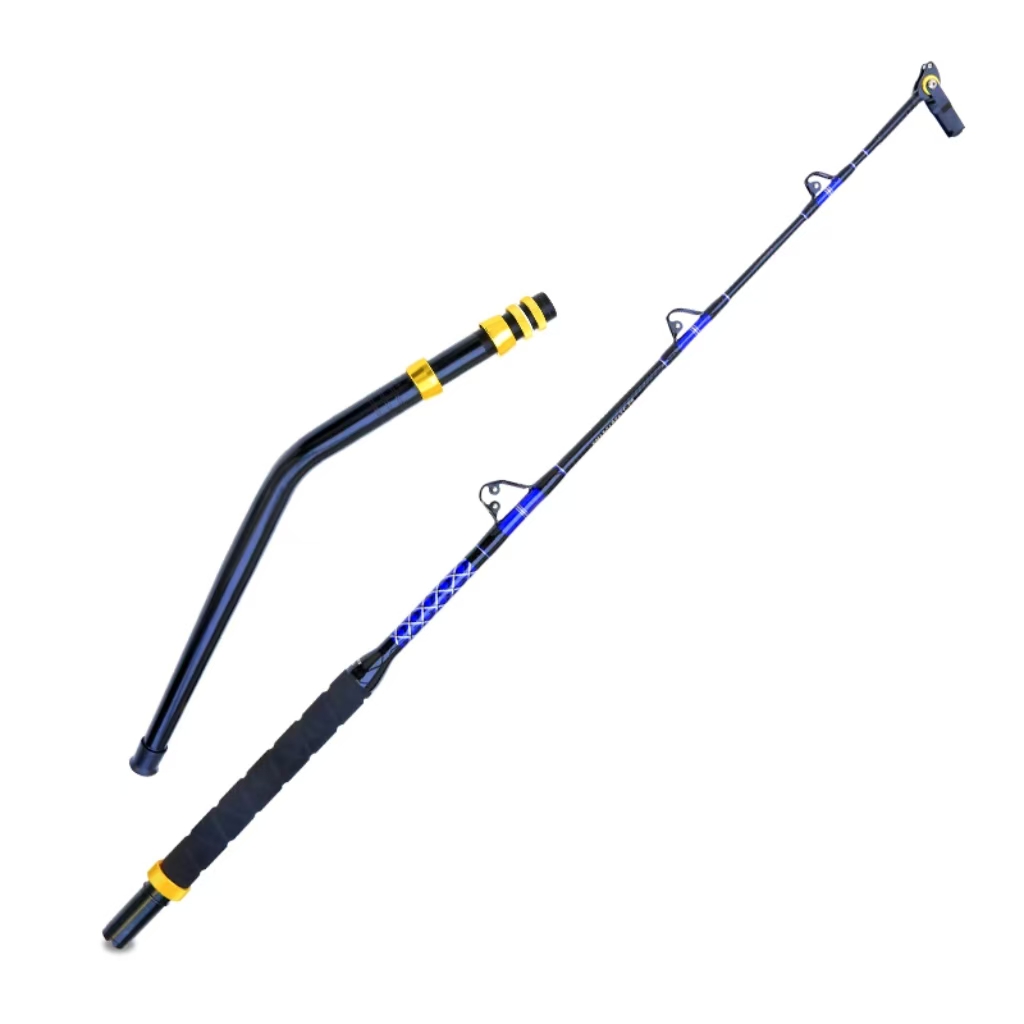
Roller Guides vs. Conventional Guides for Tuna Trolling
The guide system is an important part of a tuna trolling rod. It helps control the fishing line as it moves between the reel and the rod tip. The two common options are roller guides and conventional guides.
Conventional guides use fixed rings that keep the line aligned as it travels along the rod. Roller guides use small rollers that allow the line to move across the guide with less direct contact against a fixed surface. Both designs can work for tuna trolling, but they have different strengths and maintenance needs.
Roller Guides vs. Conventional Guides: Key Differences
| Factor | Roller Guides | Conventional Guides |
| Load distribution | Helps manage heavy line under high pressure | Distributes load through fixed guide frames and rings |
| Line friction | Rollers can reduce friction as line moves through the guide | More contact between line and guide ring |
| Maintenance | Requires regular cleaning and roller inspection | Generally simpler to clean and inspect |
| Weight | Usually heavier | Usually lighter |
| Durability | Strong when properly maintained | Durable with fewer moving parts |
| Cost | Generally more expensive | Usually more affordable |
| Saltwater care | Rollers need careful maintenance to prevent corrosion or sticking | Simpler maintenance but still needs saltwater cleaning |
When Are Roller Guides Useful for Heavy Tuna Trolling?
Roller guides can be useful when targeting large tuna with heavy line and high drag pressure. During a long fight, the line can place substantial pressure on the guides. A roller system allows the line to travel over moving surfaces instead of sliding continuously across fixed guide rings.
This design can help manage line movement under heavy loads. It can be particularly useful on heavy-duty offshore trolling rods designed for large tuna and other powerful game fish.
However, roller guides are not automatically the right choice for every tuna setup. They add weight, cost more, and require more maintenance. Your line class, reel, drag setting, target fish, and trolling conditions should all influence the decision.
Conventional Guides for Tuna Trolling
Conventional guides remain a practical option for many tuna trolling setups. They have a simpler construction and fewer moving parts. This makes them easier to inspect and maintain during regular use.
Their lower weight can also help create a more manageable rod setup. For lighter or moderate tuna trolling, conventional guides may provide enough performance without the added weight and maintenance requirements of a roller system.
The key is to match the guide type with the overall load of your setup. A properly matched conventional guide system can work well when the line class and drag pressure stay within the rod’s intended range.
Maintain Roller Guides in Saltwater
Saltwater can create problems for any metal fishing component, and roller guides need particular attention because they contain moving parts. Salt, sand, and debris can affect roller movement and contribute to corrosion if you neglect regular care.
After each saltwater trip, rinse the rod and guides with clean, fresh water. Avoid using excessive water pressure, which can force salt or debris into moving components. Allow the rod to dry completely before storage.
Inspect the rollers regularly. Check for rough movement, unusual noise, corrosion, or debris around the roller mechanism. If a roller does not turn smoothly, clean and service it according to the manufacturer’s instructions.
Good roller guide maintenance helps preserve smooth line movement and keeps your tuna trolling rod ready for the next offshore trip.
Ultimately, neither guide type is universally better. Choose roller guides when your heavy tuna setup benefits from their load-handling and low-friction design. Choose conventional guides when you prefer a lighter, simpler system that matches your line class and fishing conditions.
Bent Butt vs. Straight Butt Tuna Trolling Rod
The butt design is another important factor when choosing a tuna trolling rod. The two common options are bent butt trolling rods and straight butt trolling rods. The main difference is the shape and angle of the lower section of the rod.
This design affects how the rod sits in the rod holder and how the angler handles the rod during a fight. It can also change the fighting angle and overall comfort of the setup.
Bent Butt Trolling Rod
A bent butt trolling rod has an angled lower section that changes the position of the rod relative to the angler. This design can create a more suitable fighting angle when applying pressure to a powerful tuna.
Bent butt rods can work particularly well with a fighting chair or harness setup. The angled butt helps position the rod and reel for this type of fighting system. It can also provide a stable configuration for heavy offshore fishing.
This design is commonly associated with heavy-duty trolling rods and big-game applications. Anglers targeting large tuna, marlin, and other powerful offshore species may choose a bent butt rod when their boat and fighting system support it.
However, a bent butt does not automatically make a rod more powerful. The blank, line class, guides, reel, and drag system still determine how much load the complete setup can handle.
Straight Butt Trolling Rod
A straight butt trolling rod uses a simple, continuous lower section without the pronounced angle of a bent butt. This makes it a versatile option for different boat configurations and fighting styles.
Straight butt rods can work well with standard rod holders and stand-up fishing setups. They are also easier to use when anglers want a more flexible configuration that does not depend on a specific fighting chair or harness system.
For anglers who fish different locations or switch between fishing styles, a straight butt offshore trolling rod can offer a practical setup. Its simple design also makes it easier to match with different reels, rod holders, and boat layouts.
Which Butt Design Should You Choose?
The choice between a bent butt and a straight butt should depend on your boat, reel, harness or fighting system, and personal preference.
Consider how you normally fight tuna before choosing:
- Bent butt: Useful when you want a specific fighting angle and regularly use a fighting chair or compatible harness system.
- Straight butt: A versatile choice for standard rod holders, stand-up fishing, and different boat configurations.
- Heavy tuna setup: Consider the complete tackle system rather than choosing a butt style based only on fish size.
- Boat layout: Make sure the butt fits your rod holder and provides enough clearance for the reel and angler.
- Fighting style: Your preferred fighting position can determine which design feels more comfortable and controllable.
There is no single butt design that works best for every tuna angler. A bent butt tuna trolling rod can suit specialized heavy offshore setups, while a straight butt rod can provide greater versatility. The right choice is the one that fits your boat and works smoothly with your reel, harness or fighting system, and fishing technique.
Match the Trolling Rod to Your Reel and Drag System
A tuna trolling rod works as part of a complete tackle system. The rod, reel, line, and drag must work together. Choosing a powerful reel does not automatically make a setup suitable for heavy tuna. The rod must safely handle the expected load from the reel and line.
Four specifications deserve close attention: rod rating, reel size, line capacity, and drag pressure.
Rod Rating and Reel Size
The rod rating indicates the type of line and load the rod is designed to handle. Many offshore trolling rods use line-class ratings such as 30 lb, 50 lb, 80 lb, 100 lb, or 130 lb. Always check the manufacturer’s line and lure ratings because specifications can vary between rod models.
The reel should fit within the rod’s intended class. A large conventional trolling reel may provide high line capacity and strong drag, but the rod still needs to support the load created by that reel.
For heavy tuna fishing, anglers often use larger offshore trolling reels with stronger frames, larger spools, and greater line capacity. These reels can handle substantial amounts of heavy monofilament or braided line. However, the rod, reel seat, guides, and butt should all suit the same level of fishing pressure.
Line Capacity and Drag Pressure
Line capacity matters because tuna can make long, powerful runs. A reel needs enough capacity for the chosen line while leaving a reasonable amount of working line on the spool.
As line strength increases, it usually requires more spool space. This makes reel size an important part of rod and reel selection.
Drag pressure creates another important connection. When you increase drag, the reel transfers more force through the line, reel seat, and rod blank. The rod must safely handle this working load.
For example, a reel may advertise a very high maximum drag number. That does not mean you should fish the rod at that maximum value. The practical drag setting depends on the line, knots, leader, reel, rod rating, and overall tackle system.
Conventional and Offshore Trolling Reels
Conventional trolling reels are widely used for offshore tuna fishing. They offer a stable platform for heavy line and can provide the capacity and drag range needed for larger fish.
Offshore trolling reels come in different sizes and configurations. Some are designed for lighter trolling, while larger models target heavy-duty big-game applications. Match the reel size to the rod’s line class and physical specifications.
A well-matched setup should allow the reel to sit securely in the reel seat without making the rod unnecessarily heavy or difficult to handle.
Why the Rod Must Handle the Expected Drag Load
The rod experiences significant pressure when the reel applies drag to a hooked tuna. The load travels from the line through the guides and blank to the reel seat and butt. If the rod does not match the expected load, the setup can become difficult to control and may place excessive stress on the equipment.
This is why anglers should consider working drag pressure, not just the reel’s maximum advertised drag.
The goal is to create a balanced tuna trolling setup:
| Component | What to Match |
| Trolling rod | Line class, power, action, and lure rating |
| Reel | Size, line capacity, drag range, and rod compatibility |
| Main line | Breaking strength and reel capacity |
| Leader | Strength and abrasion resistance |
| Drag | Working load suitable for the complete setup |
| Lure | Weight and trolling conditions |
Do Not Choose a Rod by Maximum Drag Alone
One common mistake is choosing a trolling rod based only on the maximum drag number printed on the reel. A reel with a high maximum drag does not automatically require a rod with the same numerical rating.
Maximum drag describes the reel’s capability under specified conditions. It does not define the safe working limit of every rod, line, knot, leader, or terminal connection in the setup.
Instead, look at the complete system. Check the rod’s line rating, reel specifications, line capacity, drag range, lure weight, and manufacturer’s recommendations. Then choose a combination that provides enough strength without creating unnecessary weight or stress.
For tuna fishing, the right approach is to match the trolling rod to the reel and drag system as a complete unit. This creates a more controlled setup and helps ensure that the rod can handle the pressure you expect to apply during the fight.
Consider Lure Weight and Trolling Conditions
Lure weight plays an important role when choosing a tuna trolling rod. A heavier lure places more load on the rod during casting, deployment, and trolling. Water resistance can also increase the load as the lure moves behind the boat.
The right trolling rod for tuna should match the weight and type of lure you plan to use. It should also handle the conditions where you normally fish. A lure that works well in calm water may behave differently when you add strong current, deeper water, or higher boat speed.
Heavy Trolling Lures
Heavy trolling lures place more continuous pressure on the rod. The lure itself adds weight, while water resistance creates additional load as it moves through the water.
If you regularly troll large or heavy lures, choose a rod with a suitable lure rating and enough power for the expected load. Do not assume that a heavier lure always requires the strongest available rod. Match the lure to the rod’s specifications and the rest of your tackle system.
Skirted Lures
Skirted lures are common in offshore tuna trolling. They come in different sizes and weights, so their effect on the rod can vary.
A larger skirted lure can create significant water resistance, especially at higher trolling speeds. Consider both the lure’s actual weight and the drag it creates in the water. A rod with the right power and action can maintain a consistent bend without becoming overloaded.
Plugs
Trolling plugs also vary considerably in size, weight, and diving depth. Deep-diving plugs can create substantial resistance as they move through the water.
Check the plug weight against the rod’s lure rating before using it. Also consider the plug’s running depth and trolling speed. These factors can affect the load placed on the rod during continuous trolling.
Natural Bait Rigs
Natural bait rigs can range from relatively light setups to heavy, multi-hook configurations. The total rig weight includes the bait, hooks, leader, sinkers, and other terminal components.
A natural bait rig may also create more water resistance as it moves through the water. Make sure the complete rig stays within the rod’s intended range. This helps the rod load properly without placing excessive stress on the blank.
Consider Trolling Conditions
Lure weight is only one part of the equation. Trolling conditions can significantly change how much pressure the rod experiences.
- Strong current: Current increases water resistance and can make a lure pull harder against the rod.
- Deep water: Deep trolling can require heavier rigs or additional weight. Long line lengths can also affect line control.
- Rough seas: Waves can cause the rod tip to load and unload repeatedly as the boat moves.
- Boat speed: Higher trolling speeds generally increase water resistance on the lure and can increase rod loading.
These factors matter when selecting an offshore trolling rod. A lure that falls within the manufacturer’s weight range may still behave differently depending on trolling speed, depth, current, and sea conditions.
Keep Lure Weight Within the Rod’s Intended Range
Always check the rod’s recommended lure weight or lure rating before choosing a trolling lure. Staying within the intended range helps the rod load as designed and reduces unnecessary stress on the blank, guides, reel seat, and connections.
Do not select a lure simply because it is heavier or larger. The goal is to create a balanced tuna trolling setup where the rod, reel, line, leader, lure, and trolling conditions work together.
For tuna fishing, consider both the lure’s weight and its behavior in the water. Lure weight, trolling speed, water depth, current, and sea conditions should all influence your rod selection.
What Materials Are Best for a Tuna Trolling Rod?
The material of a tuna trolling rod affects its strength, weight, flexibility, durability, and price. The three common options are fiberglass, carbon fiber, and composite construction.
Each material has different characteristics. The right choice depends on the target tuna, line class, lure weight, fishing method, and how much load you expect the rod to handle.
Fiberglass Trolling Rods
Fiberglass has long been used for heavy-duty offshore fishing. It offers good strength and flexibility, which can help a rod handle sustained loads during long fights.
Fiberglass rods are usually heavier than carbon fiber models. However, the extra weight can be acceptable for heavy trolling setups where durability and load handling matter more than minimum weight.
This makes fiberglass a common consideration for heavy offshore trolling rods, especially when targeting powerful tuna and other big-game species.
Carbon Fiber Trolling Rods
Carbon fiber offers a high strength-to-weight ratio. A carbon fiber trolling rod can provide strong performance while keeping overall rod weight relatively low.
Carbon fiber blanks can also provide a responsive feel. This can benefit anglers who value precise lure control and reduced rod weight during active fishing.
However, carbon fiber construction can cost more, and its characteristics vary significantly with fiber type, layup, resin system, and blank design. A carbon fiber rod is not automatically better for every heavy tuna application.
Composite Trolling Rods
Composite construction combines fiberglass and carbon fiber or other reinforcing materials. The goal is to balance the characteristics of the individual materials.
A composite tuna trolling rod can provide a useful combination of strength, flexibility, weight, and durability. This makes composite construction suitable for anglers who want a versatile offshore rod without focusing on only one material characteristic.
The exact performance depends on the material ratio and blank design. Two composite rods can have very different specifications, so always check the manufacturer’s ratings.
Tuna Trolling Rod Material Comparison
| Material | Strength | Weight | Flexibility | Typical Use |
| Fiberglass | High | Heavier | High | Heavy trolling |
| Carbon Fiber | High | Lighter | Lower | Performance-oriented setups |
| Composite | Balanced | Moderate | Balanced | Versatile offshore fishing |
Which Material Should You Choose?
Fiberglass and composite constructions are often considered for heavy-duty trolling because they can provide a useful balance of strength, flexibility, and durability. They can handle the sustained loads that occur during offshore trolling without focusing solely on reducing rod weight.
Carbon fiber can be a suitable option when lower weight and responsiveness are important. It may work well for anglers who want a lighter setup and precise control.
The most important factor is not the material name alone. Look at the complete rod design, including blank construction, line class, power, action, guide system, reel seat, and butt design.
For tuna fishing, match the rod material to the complete tackle system. A well-designed fiberglass, carbon fiber, or composite rod can all serve different fishing needs. The goal is to choose a material and construction that fit your target tuna, fishing conditions, and expected load.
How to Choose a Tuna Trolling Rod for Different Fishing Conditions
The right tuna trolling rod depends on more than the species you want to catch. Fishing location, water depth, tuna size, line class, trolling speed, and boat setup can all change your tackle requirements.
A rod that works well for smaller tuna close to shore may not provide enough power for large tuna in deep offshore water. Instead of choosing one rod for every situation, match the rod to the conditions you expect to face.
Inshore/Light Offshore Tuna Trolling
Inshore or light offshore tuna trolling usually calls for a lighter and more manageable tackle system. This setup can work well when targeting smaller tuna or fishing in areas where extreme drag pressure and heavy line are not necessary.
A lighter line class can provide better balance between the rod and reel. You can also use a moderate-power trolling rod that matches the expected fish size and lure weight.
When choosing a trolling rod for smaller tuna, consider:
- Lighter line classes suited to the target fish
- Moderate rod power and action
- A reel with enough line capacity for expected runs
- Lighter trolling lures or natural bait rigs
- A manageable setup for stand-up or standard rod-holder fishing
The goal is to maintain enough strength without adding unnecessary weight. Check the rod’s line and lure ratings before building the complete setup.
Offshore Yellowfin Tuna Trolling
Offshore yellowfin tuna trolling can require a more powerful setup, especially when targeting larger yellowfin. These fish can make strong runs and place significant pressure on the rod, reel, and line.
A heavy-duty tuna trolling rod can provide the power needed for demanding offshore conditions. Pair it with a strong conventional or offshore trolling reel that offers sufficient line capacity for long runs.
The drag system also needs careful consideration. The reel should provide a suitable working drag range for the selected line and rod. Do not choose the rod based only on the reel’s maximum drag specification.
A practical yellowfin tuna trolling setup should include:
- A heavy-duty offshore trolling rod
- A strong conventional or offshore trolling reel
- Sufficient line capacity for the target fish and fishing depth
- A suitable main line and leader
- A controlled drag system
- Lures or bait rigs that stay within the rod’s intended range
The rod and reel should work as one system. Increasing one component’s capacity without matching the others can create an unbalanced setup.
Deep-Sea Big Tuna Fishing
Deep-sea big tuna fishing demands more from the entire tackle system. Deep water, heavy line, strong currents, long runs, and large fish can all increase the load on your equipment.
For this type of fishing, anglers may consider heavy or extra-heavy trolling rods with suitable line ratings. The reel should have high line capacity because a large tuna can take substantial amounts of line during a powerful run.
Strong guides and a durable butt section also become important. The rod must transfer the load between the reel and blank while maintaining control throughout the fight.
For a deep-sea big tuna trolling setup, consider:
- Heavy or extra-heavy rod power
- A high-capacity offshore trolling reel
- Strong guides suited to the selected line class
- A durable reel seat and butt section
- Heavy main line and abrasion-resistant leader
- A drag system that matches the rod and line
- Reliable saltwater-resistant construction
Saltwater durability also matters during long offshore trips. Rinse and dry the rod and reel after use, inspect the guides and reel seat, and check for corrosion or damage before the next trip.
Match the Rod to the Fishing Scenario
These scenarios show why there is no single best tuna trolling rod for every fishing condition. A lighter setup can suit smaller tuna and moderate offshore conditions, while larger yellowfin and big tuna may require substantially heavier tackle.
Before buying a rod, consider where you fish, the size of tuna you target, the line class you plan to use, the reel’s capacity and drag range, lure weight, and your boat’s trolling configuration. Matching these factors creates a more balanced and reliable tuna trolling system.
Common Mistakes When Choosing a Tuna Trolling Rod
Choosing a tuna trolling rod based on one specification can lead to an unbalanced setup. Many anglers focus on line rating, drag power, or price without considering how the rod works with the rest of the tackle. Understanding these common tuna trolling rod mistakes can help you choose a setup that fits your target fish and fishing conditions.
1. Choosing a Rod Only by Maximum Line Rating
A high line rating does not automatically make a rod the right choice for tuna fishing. Line class should match the target fish, reel, drag, leader, and fishing conditions.
For example, a 130 lb rod may offer plenty of power, but it can be excessive for smaller tuna and lighter tackle. Always check the complete line-class range and the manufacturer’s specifications instead of choosing the highest number.
2. Selecting Excessive Rod Power for Smaller Tuna
More rod power can help with large tuna, but an extra-heavy rod may not suit smaller fish. An overly powerful blank can reduce the flexibility you need during lighter fights and may make the setup less comfortable to use.
Choose rod power based on the expected fish size, line class, lure weight, and fighting method. A medium-heavy, heavy, or extra-heavy rod can each make sense in different tuna fishing situations.
3. Ignoring Lure Weight
Lure weight is another important part of rod selection. A trolling lure creates both static weight and water resistance while moving through the water. Large skirted lures and deep-diving plugs can place significant load on the rod, especially at higher trolling speeds.
Check the rod’s recommended lure range and consider the complete rig, including hooks, leader, bait, and added weights. Do not assume that a heavier lure always produces better results.
4. Using an Incompatible Reel
A strong tuna fishing rod still needs a suitable reel. The reel should match the rod’s line class, physical size, line capacity, and expected drag range.
A reel with insufficient line capacity can become a problem when tuna make long runs. At the same time, a reel with very high maximum drag does not mean the rod can safely handle that load. Match the reel, rod, line, leader, and drag as one system.
5. Overlooking Guide Quality
Guides transfer line pressure through the rod and experience repeated loads during a tuna fight. Poorly matched or poorly maintained guides can affect line movement and durability.
For heavy offshore trolling, anglers may choose conventional or roller guides depending on the line class and setup. Roller guides can help reduce line friction under heavy loads, but they also have moving parts that require regular maintenance. Whatever guide type you choose, look for a durable design that suits saltwater use.
6. Choosing the Wrong Rod Length
Rod length affects leverage, line control, lure positioning, and fighting comfort. A long rod can help manage line position in some trolling spreads, while a shorter rod can provide a more compact and controlled fighting setup.
Consider your boat layout, rod holders, fighting chair or harness, trolling spread, and target tuna before choosing the length. Do not select a rod simply because it is longer or shorter.
7. Ignoring the Fighting Setup
The way you fight the fish should influence your rod choice. Stand-up fishing, harness fishing, rod-holder fighting, and fighting-chair setups can place different demands on the rod and butt section.
A bent-butt trolling rod can provide a different fighting angle and may work well with certain heavy offshore setups. A straight butt offers a more conventional and versatile configuration. The right choice depends on your boat and fighting system.
8. Failing to Consider Saltwater Corrosion
Tuna trolling usually takes place in saltwater, so corrosion resistance matters. Guides, reel seats, metal components, and butt fittings can all face exposure to salt and moisture.
Look for suitable saltwater construction and materials, but remember that corrosion resistance also depends on maintenance. Rinse the rod with fresh water after fishing, dry it thoroughly, and inspect metal components regularly.
9. Focusing on Maximum Drag Instead of Balanced Tackle
Maximum drag numbers can look impressive, but they should not determine your rod choice by themselves. The actual working load must stay within the limits of the rod, reel, line, leader, knots, and terminal tackle.
A balanced tuna trolling setup should provide enough drag and rod power to control the target fish without creating unnecessary stress on the system. In many cases, matching the components correctly matters more than choosing the highest-rated specification.
10. Buying Based Only on Price or Marketing Claims
Price alone does not tell you whether a trolling rod suits your fishing needs. Marketing terms such as “heavy duty,” “high strength,” or “big game” also need context.
Check the actual specifications, including line class, power, action, lure rating, length, guide type, butt design, materials, and reel compatibility. Consider your target tuna and fishing conditions first, then compare construction and overall value.
Key Takeaway
The most common tuna trolling rod mistakes come from evaluating the rod in isolation. A high line rating, powerful blank, large lure rating, or high maximum drag does not automatically create a better tuna setup.
Instead, match the trolling rod, reel, line, leader, lure, drag, and fighting system to your target tuna and fishing conditions. This approach helps create a more balanced setup with the power, control, and durability needed for offshore tuna fishing.
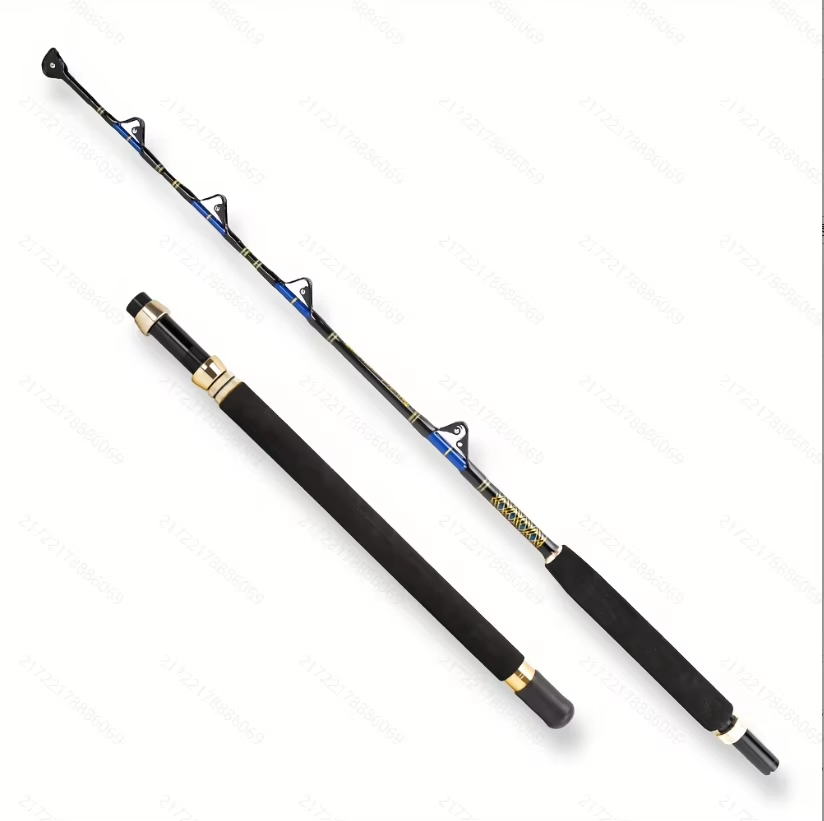
Tuna Trolling Rod Setup: A Complete Tackle System
A tuna trolling rod is only one part of the fishing system. The rod must work with the reel, main line, leader, swivel, lure or bait, and drag. If one component does not match the others, it can limit the performance of the entire setup.
A well-balanced tuna trolling rod setup starts with the target fish and fishing conditions. Consider the expected tuna size, trolling speed, water depth, lure weight, line capacity, and fighting method. Then select each component around those requirements.
The basic system follows this order:
Trolling Rod → Reel → Main Line → Leader → Swivel → Lure/Bait
Each component affects the next one. For example, a heavier rod may support a heavier line and larger reel, while heavier line requires enough spool capacity. A larger lure also needs to stay within the rod’s recommended lure range.
How Each Component Works Together
| Component | What to Match |
| Trolling Rod | Line class, power, action, length, and lure weight |
| Reel | Rod rating, line capacity, drag range, and physical compatibility |
| Main Line | Rod rating, reel capacity, target tuna size, and fishing conditions |
| Leader | Target size, abrasion risk, main-line strength, and terminal tackle |
| Swivel | Line and leader strength, lure or bait connection, and trolling conditions |
| Lure/Bait | Rod’s recommended lure range, trolling speed, depth, and target tuna |
| Drag | Main-line strength, leader strength, rod rating, and overall tackle limits |
Trolling Rod and Reel
Start by matching the trolling rod and reel. The rod’s line class and power should suit the reel’s size, line capacity, and expected drag range.
A large offshore reel can hold more heavy line and provide substantial drag, but that does not mean every heavy-duty rod can safely handle its maximum drag. Check the rod’s line rating and other manufacturer specifications before pairing the two.
Main Line and Reel Capacity
The main line must fit both the rod and reel. Heavier line generally takes up more spool space. This can reduce the amount of line available for a long tuna run.
For example, moving from a lighter line class to a much heavier class may require a larger reel or a different spool configuration. Consider line diameter, breaking strength, reel capacity, and expected running distance together.
Leader and Terminal Connection
The leader connects the main line to the lure or bait and must handle the expected load. It also needs enough abrasion resistance for the fishing environment and target species.
The swivel should match the strength of the rest of the terminal system. A strong main line does not compensate for a weak leader, swivel, knot, or connection. The complete connection should work as one unit.
Lure or Bait and Rod Rating
Lure weight directly affects how the rod loads during trolling. Large skirted lures, diving plugs, and bait rigs can create additional resistance in the water.
Always check the rod’s recommended lure range. Also consider trolling speed and water conditions. A lure that looks suitable by weight alone may create much more resistance at higher speeds or in strong currents.
Drag and Overall Tackle Limits
Drag should work within the practical limits of the entire system. The rod, reel, main line, leader, knots, swivel, and lure connection all share the load during a tuna fight.
This is why maximum drag should not be the only specification you consider. A reel may have a high maximum drag rating, but using that setting does not automatically make the setup safer or more effective. Set the working drag according to the line, leader, rod, reel, and fishing conditions.
Build a Balanced Tuna Trolling Setup
The goal is not to create the strongest possible setup. The goal is to create a setup in which every component works together.
For example, pairing a very powerful heavy-duty trolling rod with a reel, line, and lure that cannot match its working range creates an unbalanced system. Likewise, a lighter rod with an oversized reel and heavy drag may place unnecessary stress on the rod and terminal tackle.
A practical tuna trolling rod setup should provide enough power for the target fish while maintaining suitable line capacity, drag control, lure performance, and fighting comfort. Match the complete system to the tuna you expect to catch rather than simply choosing the strongest component available.
Tuna Trolling Rod Maintenance and Care
Proper tuna trolling rod maintenance helps protect your rod from saltwater damage, corrosion, and unnecessary wear. Offshore tuna fishing can expose the rod to salt, moisture, heavy loads, and repeated pressure. A simple cleaning and inspection routine can help keep your tuna trolling rod reliable for future trips.
Rinse the Rod After Saltwater Fishing
Rinse the rod with fresh water after every saltwater trip. Salt residue can build up around the guides, reel seat, butt, and other components.
Use a gentle stream of fresh water rather than high-pressure spray. High pressure can force water and salt deeper into some components. After rinsing, wipe away excess water with a clean, soft cloth.
Dry the Rod Before Storage
Allow the rod to dry completely before storing it. Pay particular attention to the guide frames, roller guides, reel seat, and butt section.
Storing a wet rod in a closed case or damp area can increase the risk of corrosion and other moisture-related problems. Good airflow can help the rod dry more thoroughly.
Inspect Guides and Rollers
Check the guides before and after regular use. Look for corrosion, cracks, loose guide frames, or damaged inserts.
If your tuna trolling rod uses roller guides, make sure each roller moves smoothly. Remove salt and debris from the roller area and follow the manufacturer’s maintenance instructions. A roller that sticks or develops rough movement can affect line performance during a heavy fight.
Check the Reel Seat and Butt
The reel seat and butt section transfer significant load from the reel to the rod. Check these areas regularly for loose fittings, cracks, unusual movement, or visible damage.
Make sure the reel seat holds the reel securely. Also inspect the butt cap, gimbal, or bent-butt connection if your rod uses one.
Look for Cracks, Loose Components, and Corrosion
Give the entire rod a quick visual inspection. Look for cracks, dents, loose components, damaged thread wraps, and signs of corrosion.
Pay extra attention to areas that experience high loads. Small damage can become more serious when the rod handles heavy drag pressure or a powerful tuna. If you find significant structural damage, stop using the rod until it receives a proper inspection or repair.
Store the Rod in a Dry Location
Store your offshore trolling rod in a cool, dry location away from direct sunlight and excessive humidity. Use a suitable rod rack, tube, or protective case to reduce the risk of accidental damage.
Avoid leaning the rod against hard edges for long periods. Keep it away from areas where other tackle can fall onto it.
Avoid Excessive Pressure During Transport and Storage
Fishing rods can handle substantial loads when they bend as designed, but concentrated pressure can cause damage. Do not place heavy equipment on top of the rod during transport or storage.
Use a protective rod tube or case when traveling. Secure the rod so it does not move around or strike hard surfaces. Take extra care with the tip and guide sections, as these areas can be more vulnerable to impact.
Simple Maintenance Checklist
| Maintenance Task | What to Check |
| Freshwater rinse | Remove salt and debris after saltwater fishing |
| Drying | Make sure the rod is completely dry before storage |
| Guides | Check for cracks, corrosion, and loose components |
| Roller guides | Check for smooth movement and trapped debris |
| Reel seat | Check for secure fitting and damage |
| Butt section | Inspect for cracks, looseness, or corrosion |
| Rod blank | Look for cracks, dents, and unusual damage |
| Storage | Keep the rod dry and protected |
| Transport | Avoid impact and excessive pressure |
Regular care does not need to take much time. A quick rinse, thorough drying, and basic inspection after each trip can help protect your tuna fishing rod and extend its service life. Good maintenance also helps you identify potential problems before the next offshore tuna fishing trip.
How Much Should You Spend on a Tuna Trolling Rod?
The price of a tuna trolling rod can vary widely. However, a higher price does not automatically mean better performance for every tuna angler. The right budget depends on the rod’s specifications, construction quality, target fish, and fishing conditions.
Instead of asking only, “How much does a tuna trolling rod cost?” consider what you actually need from the rod. A rod for smaller tuna and lighter offshore trolling may not need the same construction as a heavy-duty rod for large tuna in deep water.
What Affects the Price of a Tuna Trolling Rod?
Several factors can influence the cost of a trolling rod for tuna.
- Material: Fiberglass, carbon fiber, and composite blanks have different costs and performance characteristics. Material selection can affect weight, flexibility, strength, and durability.
- Guide system: Conventional guides generally have a simpler construction, while roller guide systems can add cost because of their components and manufacturing requirements.
- Construction: Blank design, reinforcement, wrapping, connections, and overall build quality can affect both price and durability.
- Butt design: Straight and bent-butt rods serve different fishing setups. Specialized bent-butt construction may increase manufacturing complexity.
- Brand: Established brands may charge more for product development, distribution, brand reputation, and warranty support.
- Manufacturing quality: Consistent blank construction, guide alignment, reel-seat fitting, finishing, and quality control can contribute to a higher price.
Price differences do not always translate into a major performance difference for your particular application. A well-made rod with the right specifications can be more suitable than a more expensive rod with specifications that do not match your setup.
Budget Tuna Trolling Rods
Budget rods can make sense for anglers who fish occasionally or target smaller tuna with moderate tackle. Look for the basic specifications you actually need, such as the correct line class, suitable rod power, appropriate lure rating, and reliable components.
A lower price should not mean ignoring construction quality. Check the blank, guides, reel seat, butt, and overall finish before making a decision.
Mid-Range Tuna Trolling Rods
Mid-range rods often provide a balance between features, construction, and cost. They may offer stronger blanks, better guide systems, improved components, or more specialized designs for offshore fishing.
This range can suit anglers who fish for tuna regularly and need dependable performance without paying for features they may not use. Focus on the specifications that directly affect your fishing style.
Premium Tuna Trolling Rods
Premium rods may use more specialized materials, advanced blank construction, high-end guide systems, or carefully finished components. They can also offer features designed for demanding big-game applications.
However, premium does not mean universally better. A highly specialized 130 lb heavy-duty trolling rod may be unnecessary if you mainly target smaller tuna with lighter line and lures.
Focus on Specification-to-Application Matching
The most useful way to set your budget is to start with your fishing application.
Consider:
- Target tuna size
- Line class
- Rod power and action
- Lure weight
- Reel size and line capacity
- Expected drag range
- Guide type
- Rod length
- Butt design
- Saltwater fishing conditions
For example, a heavy offshore setup for large tuna may justify spending more on a strong blank, durable guides, and a suitable butt system. A lighter tuna setup may benefit more from a lighter and more flexible rod than from expensive heavy-duty construction.
The goal is to spend money on the specifications that your fishing actually requires. Specification-to-application matching matters more than simply choosing the most expensive tuna trolling rod.
A balanced combination of rod, reel, line, leader, lure, and drag can provide better overall performance than an expensive rod paired with incompatible tackle. Choose the rod based on your target fish and fishing conditions first, then compare price, construction, and features within that specification range.
Best Trolling Rod Specifications for Tuna Fishing: Quick Checklist
Before buying a tuna trolling rod, check the rod specifications against your target fish, fishing conditions, and complete tackle setup. The best choice depends on how the rod, reel, line, lure, and drag work together.
Before Buying a Tuna Trolling Rod, Check:
- Target tuna species and approximate size – Consider the species, expected fish size, and fighting power. Larger tuna generally require heavier tackle.
- Fishing location – Identify whether you fish inshore, offshore, or deep water. Current, depth, and sea conditions can affect the required rod power and line class.
- Line class – Match the rod’s line rating to your main line, reel, leader, and expected fish size. Common offshore classes include 30 lb, 50 lb, 80 lb, 100 lb, and 130 lb, but ratings vary by manufacturer.
- Rod power – Choose medium-heavy, heavy, or extra-heavy power according to the expected load. Avoid excessive power when targeting smaller tuna.
- Rod action – Consider how and where the blank bends. Fast, moderate, and moderate-fast actions can suit different lure presentations and fighting styles.
- Rod length – Match the length to your boat layout, rod holder, lure spread, and fighting method. Shorter rods can offer leverage, while longer rods can provide greater line control.
- Lure weight – Keep the lure or bait rig within the rod’s recommended range. Consider water resistance and trolling speed as well as the lure’s actual weight.
- Guide type – Choose between conventional and roller guides based on line class, expected load, maintenance requirements, and fishing conditions.
- Butt style – Select a straight or bent butt based on your fighting setup, rod holder, harness, or fighting chair.
- Reel compatibility – Make sure the reel matches the rod’s line class, physical dimensions, line capacity, and expected drag range.
- Saltwater resistance – Check the materials and construction of the guides, reel seat, butt, and other metal components. Regular freshwater rinsing and proper storage also matter.
- Overall tackle balance – Make sure the rod, reel, main line, leader, swivel, lure or bait, and drag work together. Do not choose the rod based only on its highest line rating or maximum drag capability.
Quick Takeaway
The key trolling rod specifications for tuna fishing are not limited to line rating or rod power. A suitable rod should match the target tuna, location, line class, power, action, length, lure weight, guides, butt design, reel, and saltwater conditions.
Most importantly, evaluate the rod as part of the complete tackle system. A balanced tuna trolling setup can provide the right combination of strength, control, lure performance, and fighting comfort without simply choosing the strongest specification available.
FAQ About Tuna Trolling Rods
What size trolling rod is best for tuna?
There is no single trolling rod size that works best for every tuna. Choose the rod based on the expected tuna size, line class, rod power, lure weight, and fishing conditions. Smaller tuna may suit lighter and more flexible rods, while larger tuna often require heavier offshore rods with higher line ratings.
What pound trolling rod should I use for tuna?
Common tuna trolling rod line classes include 30 lb, 50 lb, 80 lb, 100 lb, and 130 lb. A 30 lb or 50 lb setup may suit smaller tuna and lighter offshore trolling. An 80 lb, 100 lb, or 130 lb setup can suit larger tuna and heavier offshore conditions. The right choice also depends on reel capacity, drag, leader strength, lure weight, and local fishing practices.
Always check the manufacturer’s line rating because rod specifications can vary between models.
Is a heavy-duty trolling rod necessary for tuna?
A heavy-duty trolling rod becomes more important when you target large tuna, use heavy line and drag, fish deep water, or face strong currents and demanding offshore conditions. Large fish can place substantial and repeated loads on the rod.
For smaller tuna or lighter tackle, a heavy-duty rod may provide more power than you need. Match the rod’s power and line class to the expected load instead of automatically choosing the heaviest model.
Are roller guides good for tuna trolling rods?
Roller guides can work well on heavy tuna trolling rods, especially when anglers use heavy line and high loads. The rollers allow the line to move across the guide with less sliding friction.
However, roller guides require more maintenance than conventional guides. Salt, sand, and debris can affect roller movement. Rinse the guides with fresh water after saltwater fishing, dry them thoroughly, and inspect the rollers regularly.
What is better for tuna fishing, a bent butt or straight butt?
A bent butt and a straight butt serve different fishing setups. Bent-butt rods can provide a different fighting angle and often suit fighting chairs, harnesses, and specialized heavy offshore systems.
A straight-butt trolling rod offers a more conventional and versatile configuration. It can work well with standard rod holders and stand-up fishing.
The better match depends on your boat layout, reel position, fighting method, and personal preference.
What length trolling rod is best for tuna?
The appropriate tuna trolling rod length depends on your boat layout, lure spread, rod holder position, and fighting technique. Shorter rods can provide strong leverage and a compact fighting setup. Longer rods can offer greater line control and help position lures in certain trolling spreads.
Consider how you fish rather than choosing a rod based only on length. Your rod length should also work comfortably with your reel, holder, harness, or fighting chair.
Can I use the same trolling rod for tuna and marlin?
Yes, one trolling rod can cover both tuna and marlin when the target fish, line class, lure weight, and fishing conditions fall within the rod’s specifications. A strong offshore trolling rod may handle both applications when the tackle requirements overlap.
Specialized rods make more sense when the target sizes, lure systems, line classes, or fighting techniques differ significantly. For example, a lighter tuna setup may not provide the power or line capacity required for large marlin. Conversely, an extremely heavy marlin setup may offer more power than necessary for smaller tuna.
The key is to match the rod to the actual fishing application rather than choosing a rod based only on the species name.
Final Verdict: How to Choose the Best Trolling Rod for Tuna Fishing
There is no single best trolling rod for every tuna fishing situation. The right rod depends on the target tuna, expected fish size, fishing conditions, line class, lure weight, and complete tackle system.
When choosing a trolling rod for tuna fishing, follow these steps:
- Identify the target tuna. Consider the species and the typical size of fish in your fishing area.
- Estimate the fish size and fishing conditions. Account for water depth, current, trolling speed, sea conditions, and boat setup.
- Choose an appropriate line class. Match the rod rating to your main line, leader, reel, and expected fish size.
- Match rod power and action. Choose enough power for the expected load while considering lure control and fighting technique.
- Select the appropriate length. Match rod length to your boat layout, lure spread, rod holders, and fighting method.
- Consider guide and butt design. Choose conventional or roller guides and a straight or bent butt based on your application.
- Match the rod with the reel, line, leader, and lure. Make sure every component can work together within its intended specifications.
- Consider durability and saltwater maintenance. Look for suitable saltwater construction and maintain the rod after every offshore trip.
The goal is not to choose the strongest or most expensive rod available. Instead, build a balanced tuna trolling setup in which the rod, reel, line, leader, lure, and drag complement each other.
If you are looking for a rod for demanding offshore conditions, explore our offshore trolling rods and heavy-duty trolling rods to find a model that matches your target tuna and tackle specifications.
-
Sale!

-
Sale!

-
Sale!

-
Sale!
