
I. Introduction
Saltwater fishing is exciting, but it can be brutal on your gear. The salt, constant motion, and strong fish push your equipment to its limits. If you’re not using the right rod—especially when trolling offshore—you’ll probably run into problems pretty fast.
Offshore trolling is no joke. You’re chasing big, fast fish far from land, which means your rod needs to be strong, dependable, and built to handle serious pressure. It’s not just about preference—it’s about performance.
In this guide, we’ll walk you through what makes a solid saltwater trolling rod. We’ll talk about why corrosion resistance is crucial, what kind of strength you should look for, and how rod length affects your success. Whether you’re upgrading or buying your first rod, you’ll find helpful info here.

II. Why Corrosion Resistance Matters in Saltwater Rods
Saltwater is rough on gear. It corrodes metal fast and eats away at parts that aren’t designed for it. Even an expensive rod won’t last long if it’s made with the wrong materials.
That salt in the water—and even just in the air—causes rust, especially on rod guides, reel seats, and hardware. That’s why it’s smart to choose rods made with stainless steel, anodized aluminum, or even titanium. These materials hold up way better over time. For the rod blank itself, graphite or carbon fiber is a good choice. They don’t corrode and help keep the rod light.
You can also make your rod last longer with basic care. Rinse it with fresh water after every trip, especially the guides and metal parts. Let it dry before storing, and consider using a corrosion-resistant spray now and then.
If you fish in saltwater often, corrosion resistance isn’t a bonus—it’s a necessity.

III. Strength and Durability: What to Look for in a Saltwater Rod
Offshore fishing puts a ton of pressure on your rod, especially when you hook into big fish like marlin or tuna. You need a rod that won’t snap or fold under the weight.
Most saltwater rods are made from fiberglass, graphite, or a composite of both.
Fiberglass rods are known for being tough. They’re flexible and can handle heavy loads without breaking.
Graphite rods are more sensitive and lightweight. You’ll feel every bump and bite—but they’re not quite as forgiving if pushed too hard.
Composite rods give you the best of both. They’re strong like fiberglass, but still offer some of the responsiveness of graphite. These are great for trolling.
Before buying, test the rod’s bend and feel. It should flex smoothly without feeling weak or overly stiff. Also check that the guides and reel seat are solid and made of corrosion-resistant materials.
Durability and strength aren’t extras—they’re the foundation of a good saltwater rod.

IV. Offshore Trolling: Why It Needs the Right Rod
Offshore trolling means dragging lures or bait behind a boat, often miles from the shore. You’re targeting powerful species like mahi-mahi, tuna, marlin, and wahoo—the kind of fish that hit hard and don’t give up easy.
This style of fishing puts constant strain on your rod. The boat’s movement adds pressure, and the fish themselves can run fast and deep. If your rod isn’t up to the task, it’ll wear out quickly or even break under load.
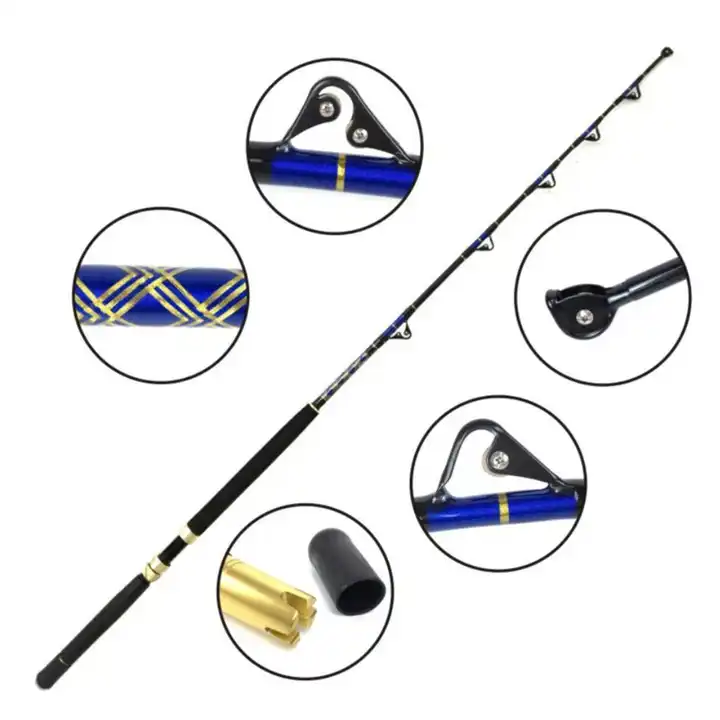
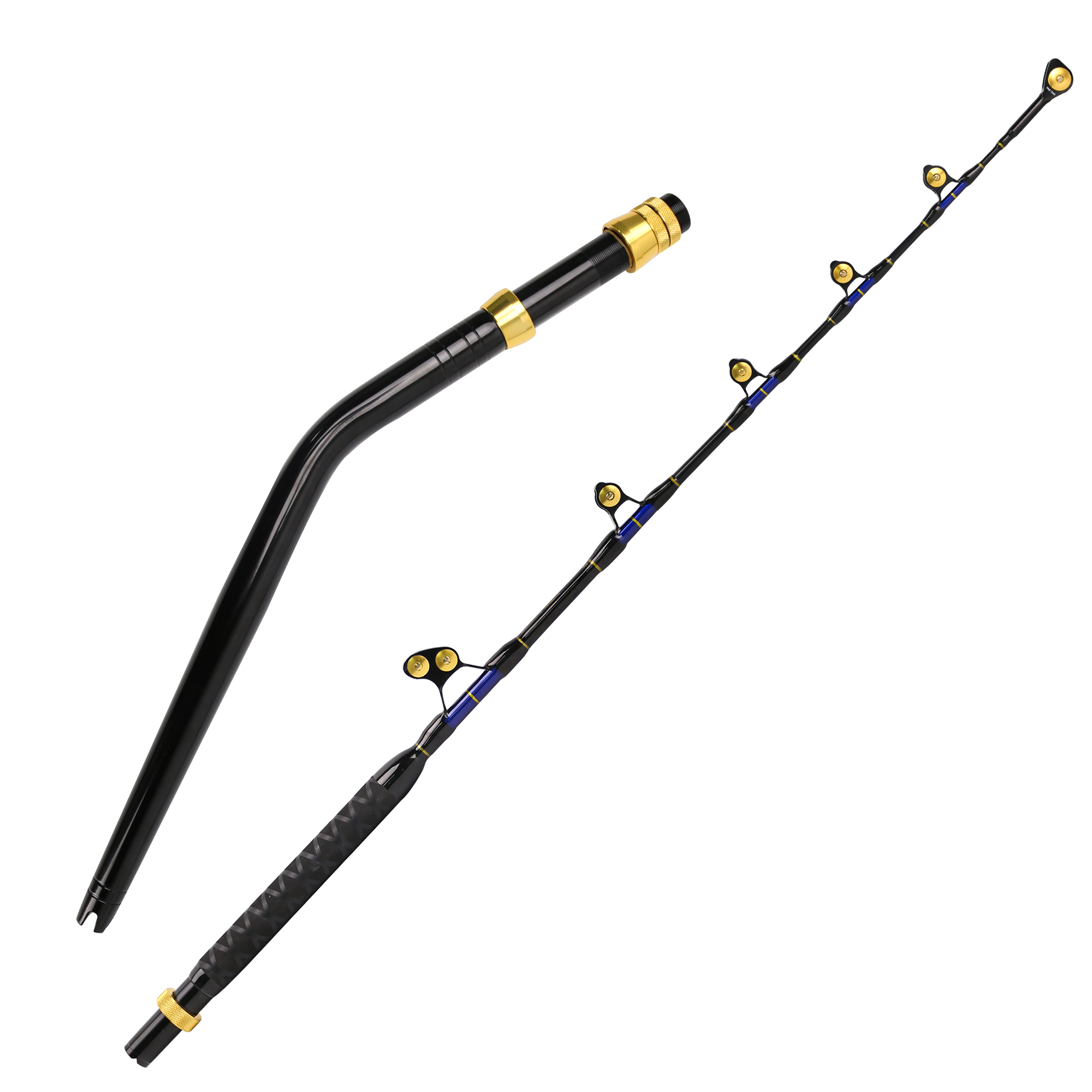
That’s why offshore trolling rods are different. They’re built with heavy-duty components like roller guides, reinforced blanks, and strong reel seats. These parts help spread the pressure evenly and reduce friction during a long fight.
Bottom line: if you’re serious about offshore trolling, don’t cut corners on your rod.

V. What’s the Ideal Rod Length for Offshore Trolling?
When it comes to offshore trolling, rod length matters more than people think. Most trolling rods fall between 5’6” and 7’, and the right size really depends on your boat, gear, and target fish.
Shorter rods (5’6”–6’6”) offer more control and better leverage. They’re great for heavy tackle and tight boat spaces.
Longer rods (6’6”–7’+) help spread out your lines, which is handy if you’re running several rods at once. They also work better for light tackle and live bait.
Here’s a simple breakdown:
Small boats & heavy setups: go with 5’6” to 6’.
Medium boats & all-around use: 6’ to 6’6”.
Large boats or light tackle: 6’6” to 7’ or more.
Short rods give you power. Long rods give you reach. Choose based on how you fish and what you’re chasing.

VI. Top Saltwater Rod Picks for Offshore Trolling in 2025
Need help picking a rod? Here are five solid options for 2025 that cover a range of budgets and styles:
Rod Comparison Table
Brand Model Length Material Strength Price
Penn Carnage III 6’6″ Composite Heavy $220
Shimano Terez 7′ Carbon/Glass Med-Heavy $280
Ugly Stik Bigwater Trolling 6’6″ Fiberglass Heavy $90
Okuma Cedros CJ-C-701MH 7′ E-glass/Graphite Med-Heavy $130
Daiwa Saltist Boat Rod 6’6″ HVF Carbon Heavy $200
1. Penn Carnage III
Pros: Built strong, light for its class, handles big fish easily
Cons: Not great for light setups
Best For: Targeting tuna or wahoo with heavy gear
2. Shimano Terez
Pros: Premium feel, excellent sensitivity, durable
Cons: Expensive if you’re just getting started
Best For: Anglers who want performance and don’t mind paying for it
3. Ugly Stik Bigwater Trolling
Pros: Tough as nails, super affordable
Cons: Heavier and not as sensitive
Best For: Beginners or anyone who needs a budget-friendly workhorse
4. Okuma Cedros CJ-C-701MH
Pros: Good value, smooth action, balanced design
Cons: Reel seat may need occasional tightening
Best For: Mixed-species trips with medium tackle
5. Daiwa Saltist Boat Rod
Pros: Solid carbon build, great lifting power
Cons: Might feel too stiff for lighter fish
Best For: Anglers chasing marlin or kingfish
No matter your skill level or setup, there’s something on this list that’ll fit your needs.

VII. Buyer’s Guide: How to Choose the Right Rod
Choosing a rod isn’t just about grabbing the most expensive one on the rack. You’ve got to think about your fishing habits, your gear, and your budget.
Things to Consider
Budget: Spend what makes sense for your experience. Beginners can start under $100. Pros may want more features.
Skill Level: New anglers need rods that are simple and tough. If you’re more advanced, look for sensitivity and weight savings.
Fishing Location: Nearshore and offshore fishing demand different strengths. Shorter rods for tight spaces; longer ones for open water.
Reel Compatibility: Make sure your reel matches the rod’s rating and seat. A mismatch affects performance and balance.
Feature Checklist
Rod Guides: Stainless steel or ceramic are best for saltwater.
Handle Material: EVA foam or cork for comfort and grip.
Action: Fast action rods bend near the tip—ideal for quick hooksets.
Power: Medium-heavy or heavy is best for offshore trolling.
Mistakes to Avoid
Buying Too Light: It might feel nice, but it won’t handle big fish.
Skipping Corrosion Resistance: This will cost you in the long run.
Not Testing First: Always check balance, weight, and flex if you can.
Ignoring Storage Space: A rod that’s too long can be a hassle on smaller boats.
VIII. Conclusion
Offshore trolling demands a lot from your gear. The right rod can be the difference between landing a trophy fish and going home empty-handed.
Look for corrosion-resistant materials, solid construction, and the right length for your setup. Short rods offer power and control, while long rods help with line spread and finesse.

-
Sale!

-
Sale!

-
Sale!

-
Sale!
