
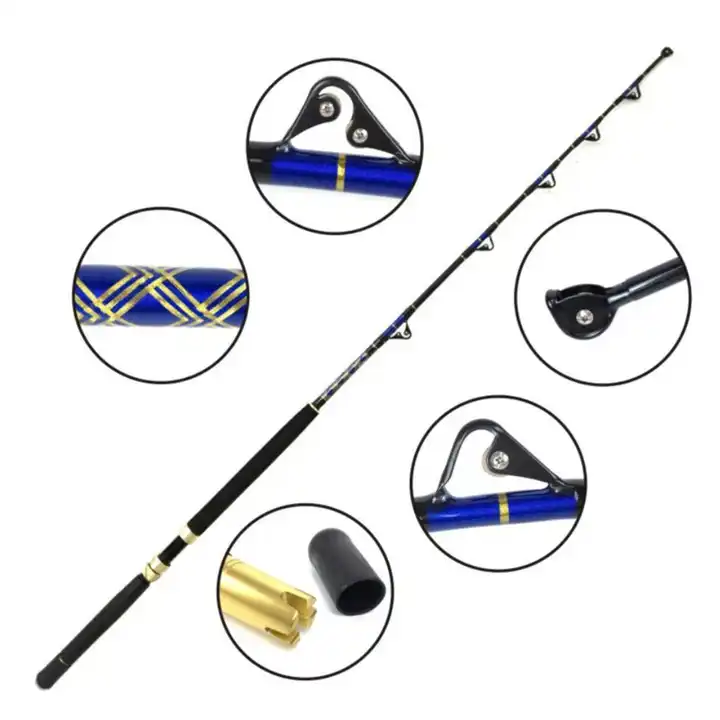
What Are Deep Sea Fish Rods?
Deep sea fish rods are specialized fishing tools designed to withstand the demanding conditions of saltwater fishing and target large, powerful fish species found in the ocean’s depths. Unlike standard fishing rods used in freshwater or light inshore environments, these rods are built for strength, durability, and performance in extreme conditions.

Definition and Purpose
A deep sea fish rod is a robust fishing rod tailored for saltwater environments, specifically designed to handle the heavy tackle and intense pressure required when battling deep-water species. Whether you’re trolling for marlin or jigging for grouper, the purpose of these rods is to provide anglers with the strength and flexibility needed to conquer the challenges of offshore fishing.
Key Characteristics
- Strength:
Deep sea fish rods are engineered to endure the immense force exerted by large, fighting fish like tuna, sailfish, or swordfish. They are reinforced with materials such as fiberglass or carbon fiber to ensure they don’t snap under pressure. - Length:
Typically, these rods range between 5 to 7 feet in length. Shorter rods provide more power and leverage, making them ideal for heavy lifting, while longer rods offer better line control and casting distance. - Material:
- Fiberglass: Known for its durability and flexibility, ideal for battling large species.
- Carbon Fiber: Lightweight yet incredibly strong, providing sensitivity to detect bites and withstand heavy loads.
- Composite Blends: Combining the best of both materials for a balance of power and responsiveness.
Comparison to Other Types of Rods
- Freshwater Rods:
Designed for lighter lines and smaller fish, freshwater rods lack the strength and corrosion resistance necessary for deep sea fishing. - Inshore Saltwater Rods:
While inshore rods are suitable for smaller saltwater fish in shallow waters, they fall short when targeting the larger, more aggressive species found offshore. - Deep Sea Fish Rods:
These rods excel in open water due to their reinforced construction, corrosion-resistant components, and ability to handle heavy-duty reels and lines.
By choosing the right deep sea fishing rod, anglers are equipped to tackle the challenges of saltwater fishing, ensuring a successful and enjoyable experience.
Types of Deep Sea Fishing Rods
When it comes to deep sea fishing, selecting the right type of rod is crucial to ensuring a successful and enjoyable fishing experience. Deep sea fishing rods are designed for specific techniques and target species, and understanding their differences can help anglers make an informed choice. Below are the three main types of deep sea fishing rods, each with its unique features, advantages, and limitations.
1. Trolling Rods
Trolling rods are designed for use in the trolling technique, where bait or lures are dragged behind a moving boat to attract large pelagic species like marlin, tuna, and sailfish.
- Features:
- Long and sturdy, typically over 6 feet in length.
- Equipped with roller guides to reduce friction and protect fishing lines.
- Built to handle heavy-duty trolling reels and withstand high tension.
- Pros:
- Exceptional strength for targeting massive fish.
- Durable materials (fiberglass or composite) suitable for prolonged use in saltwater.
- Roller guides prevent line wear during long fights.
- Cons:
- Less versatile; primarily designed for trolling techniques.
- Heavier and bulkier compared to other rods.
2. Jigging Rods
Jigging rods are optimized for vertical fishing techniques, where metal lures or jigs are dropped to the seabed and jerked upward to mimic the movements of prey, enticing fish like groupers, snappers, and amberjacks.
- Features:
- Shorter and lightweight, typically 5–7 feet in length.
- High strength-to-weight ratio for handling large fish in deep water.
- Fast action and strong backbone for quick hook sets.
- Pros:
- Compact and easy to maneuver, even in tight spaces.
- Highly effective for deep-water fishing.
- Lightweight design reduces fatigue during repetitive jigging.
- Cons:
- Limited to jigging techniques; not suitable for trolling or long casting.
- Less casting distance compared to spinning rods.
3. Spinning Rods
Spinning rods are versatile tools suitable for various deep sea fishing scenarios, from casting lures to bottom fishing. They are popular among beginner and experienced anglers alike.
- Features:
- Medium-length rods with large guides and a spinning reel seat.
- Balanced design for ease of casting and retrieving.
- Suitable for medium-sized saltwater species like mahi-mahi and kingfish.
- Pros:
- Highly versatile and beginner-friendly.
- Effective for multiple fishing techniques, including casting and bottom fishing.
- Lightweight and easier to handle compared to trolling rods.
- Cons:
- Not ideal for extremely large or heavy fish.
- Lacks the specialized power of trolling or jigging rods.
Key Features to Consider When Buying a Deep Sea Fish Rod
Choosing the right deep sea fishing rod is essential to ensure success and enjoyment on your fishing adventures. With so many options available, understanding the key features can help you make an informed decision tailored to your fishing style and target species. Here are the most important aspects to consider:

1. Material: Fiberglass vs. Carbon Fiber
The material of a deep sea fishing rod greatly influences its strength, weight, and flexibility.
- Fiberglass:
- Known for its durability and flexibility.
- Handles the strain of large, powerful fish effectively.
- Ideal for beginners or those who want a budget-friendly option.
- Downside: Heavier than carbon fiber, which can lead to fatigue during long fishing sessions.
- Carbon Fiber:
- Lightweight yet incredibly strong, offering better sensitivity to detect bites.
- Perfect for anglers targeting species with subtle strikes or those who prioritize comfort.
- Downside: Typically more expensive than fiberglass rods.
2. Action and Power: What They Mean for Deep Sea Fishing
- Action:
Refers to how much and where a rod bends under pressure.- Fast Action: Bends near the tip, ideal for quick hook sets and targeting larger fish.
- Medium/Slow Action: Bends further down the rod, providing more flexibility for fighting fish and using live bait.
- Power:
Indicates the rod’s strength and the amount of weight it can handle.- Heavy Power: Best for large, hard-fighting species like marlin or tuna.
- Medium Power: Suitable for versatile fishing scenarios and mid-sized fish.
3. Reel Compatibility: Spinning, Baitcasting, or Trolling Reels
The type of reel you pair with your rod depends on your fishing technique and target species.
- Spinning Reels:
- Versatile and beginner-friendly.
- Suitable for casting and lighter setups.
- Baitcasting Reels:
- Offers greater precision and control.
- Often paired with rods for jigging or bottom fishing.
- Trolling Reels:
- Designed for heavy-duty use when targeting big game fish.
- Paired with trolling rods for high drag capacity and durability.
4. Guide Types and Durability
The guides (rings) on a fishing rod play a critical role in directing the line and reducing friction during casting and retrieving.
- Roller Guides:
- Found on trolling rods; reduce friction and protect the line from wear.
- Ideal for handling heavy lines and prolonged fights with big fish.
- Standard Guides:
- Used on spinning and jigging rods.
- Look for corrosion-resistant materials like stainless steel with ceramic inserts for durability in saltwater conditions.
Top Recommendations for Deep Sea Fish Rods
Finding the perfect deep sea fishing rod can be challenging with so many options on the market. To make your choice easier, here are some of the top-rated models that combine performance, durability, and affordability. These rods cater to different fishing techniques, target species, and budgets, ensuring there’s something for every angler.
1. Penn International VI Trolling Rod
- Features:
- Constructed with high-strength fiberglass and aluminum components for maximum durability.
- Roller guides for reduced line friction during trolling.
- Heavy power and fast action, ideal for big game fish.
- Target Species: Tuna, marlin, and sailfish.
- Price Range: $250–$400.
- Why It’s Recommended: Renowned for reliability and performance during high-pressure battles.
2. Shimano Trevala Jigging Rod
- Features:
- Lightweight carbon and fiberglass composite for superior strength and sensitivity.
- Compact design with medium-heavy power, perfect for vertical jigging.
- High-quality Fuji guides for smooth line flow.
- Target Species: Grouper, snapper, amberjack.
- Price Range: $150–$250.
- Why It’s Recommended: Combines power with a lightweight design for all-day jigging comfort.
3. Okuma Cedros CJ-65 Spinning Rod
- Features:
- Built with E-glass blanks for durability in saltwater conditions.
- Split EVA foam grips for comfort and improved control.
- Medium-fast action, ideal for casting and bottom fishing.
- Target Species: Mahi-mahi, kingfish, smaller tuna.
- Price Range: $100–$180.
- Why It’s Recommended: A versatile and affordable option for spinning enthusiasts.
4. Daiwa Saltiga G Jigging Rod
- Features:
- High-density carbon fiber construction for strength and sensitivity.
- Heavy-duty reel seat to accommodate larger jigging reels.
- Extra-fast action for quick hook sets.
- Target Species: Large snapper, grouper, and amberjack.
- Price Range: $300–$500.
- Why It’s Recommended: A premium rod designed for serious jigging anglers..
5. Ugly Stik Bigwater Trolling Rod
- Features:
- Ugly Tech construction with a blend of graphite and fiberglass for exceptional toughness.
- Oversized stainless steel guides for smooth line management.
- Available in various lengths and power levels for flexibility.
- Target Species: Tuna, wahoo, sailfish.
- Price Range: $80–$150.
- Why It’s Recommended: Budget-friendly without compromising on quality.
6. St. Croix Mojo Salt Spinning Rod
- Features:
- Advanced SCII carbon fiber blank for lightweight strength.
- Corrosion-resistant Fuji guides for saltwater use.
- Medium-heavy power with moderate action.
- Target Species: Striped bass, cobia, smaller tuna.
- Price Range: $200–$300.
- Why It’s Recommended: Exceptional performance and durability for spinning anglers.
Tips for Maintaining Your Deep Sea Fishing Rod
Deep sea fishing rods are an investment, and proper maintenance ensures they remain in top condition for years of successful fishing. Saltwater environments are tough on equipment, so regular care is essential to prevent damage and maintain performance. Follow these tips to keep your deep sea fishing rod in excellent shape.

1. Cleaning and Rinsing After Saltwater Exposure
Saltwater is highly corrosive and can damage your rod and guides over time if not cleaned properly.
- Steps:
- Rinse your rod with fresh water after every fishing trip.
- Use a soft cloth or sponge to remove salt residue from the rod and guides.
- Avoid using high-pressure water, which can force salt deeper into small crevices.
- Dry thoroughly with a clean towel before storing.
- Pro Tip: Use a mild soap or specialized rod cleaner for a deeper clean every few outings.
2. Storing Properly to Prevent Warping or Damage
Proper storage is crucial for preserving your rod’s structure and functionality.
- Dos:
- Store your rod vertically or horizontally with adequate support to avoid bending or warping.
- Use rod racks or sleeves to keep rods organized and protected from scratches.
- Keep rods in a cool, dry place away from direct sunlight and excessive heat.
- Don’ts:
- Don’t lean rods against walls for long periods, which can cause warping.
- Avoid storing rods with heavy reels attached, as this adds unnecessary strain.
3. Regular Inspection for Wear and Tear
Routine checks can prevent small issues from becoming costly repairs.
- What to Look For:
- Inspect the guides for cracks, corrosion, or wear, as damaged guides can fray your line.
- Check the reel seat for tightness and corrosion.
- Examine the rod blank for any chips, scratches, or structural issues.
- Maintenance Tips:
- Replace damaged guides promptly to avoid further wear on your fishing line.
- Apply a light coat of reel oil to metal components to prevent rust.
- Test the rod’s flexibility and strength occasionally to ensure it hasn’t weakened.
Additional Tips for Longevity
- Avoid dropping your rod or subjecting it to unnecessary impact.
- Remove the reel during long-term storage to reduce strain on the reel seat.
- Use a rod sock or cover during transportation to protect it from scratches and dirt.
Caring for Your Investment
With proper cleaning, storage, and inspection, your deep sea fishing rod will serve you well for countless fishing trips. Regular maintenance not only preserves its functionality but also enhances your overall fishing experience.
SEO Tip: Use FAQs like How do I care for my deep sea fishing rod? and What’s the best way to clean a saltwater fishing rod? to target user queries and boost engagement.
Conclusion
Choosing the right deep sea fishing rod is a crucial step toward ensuring a successful and enjoyable fishing experience. Whether you’re trolling for big game, jigging for deepwater species, or casting for smaller fish, the right rod makes all the difference in terms of performance, comfort, and durability. The ideal rod can help you land the catch of a lifetime while reducing the strain on both you and your gear.
By considering factors such as rod length, material, power, and action, you can tailor your equipment to your fishing style and the species you’re targeting. Investing in a high-quality rod not only enhances your fishing experience but also ensures that you’re equipped to handle the tough conditions of deep sea environments.
Explore our recommended deep sea fishing rods for your next adventure! Choose from a wide range of options that fit your needs, from affordable models to high-performance gear designed for the most demanding fishing trips.
-
Sale!

-
Sale!

-
Sale!

-
Sale!
