
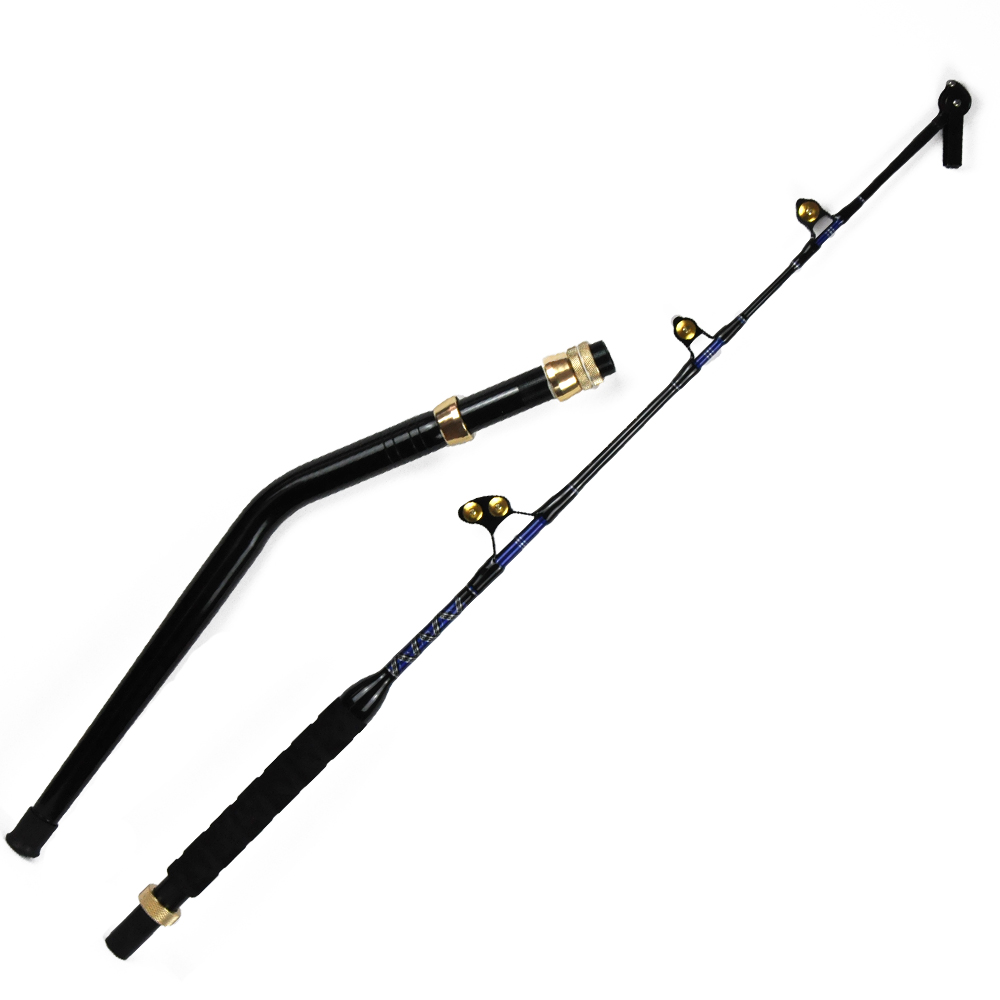
H2: What Is a Big Game Trolling Rod & Who This Guide Is For
A big game trolling rod is built to pull hard-running offshore fish behind your boat. It handles heavy line classes, violent runs, and long battles. This guide works for anglers who chase trophy pelagic species. It fits weekend boat trollers, tournament anglers, and anyone building an offshore trolling spread. Skip this guide if you only fish nearshore for small species.
H3: Difference between inshore trolling rods and big game offshore trolling rods
Inshore trolling rods are lighter. They target smaller fish and use light line. They flex easily and cannot soak up the raw power of giant pelagics.
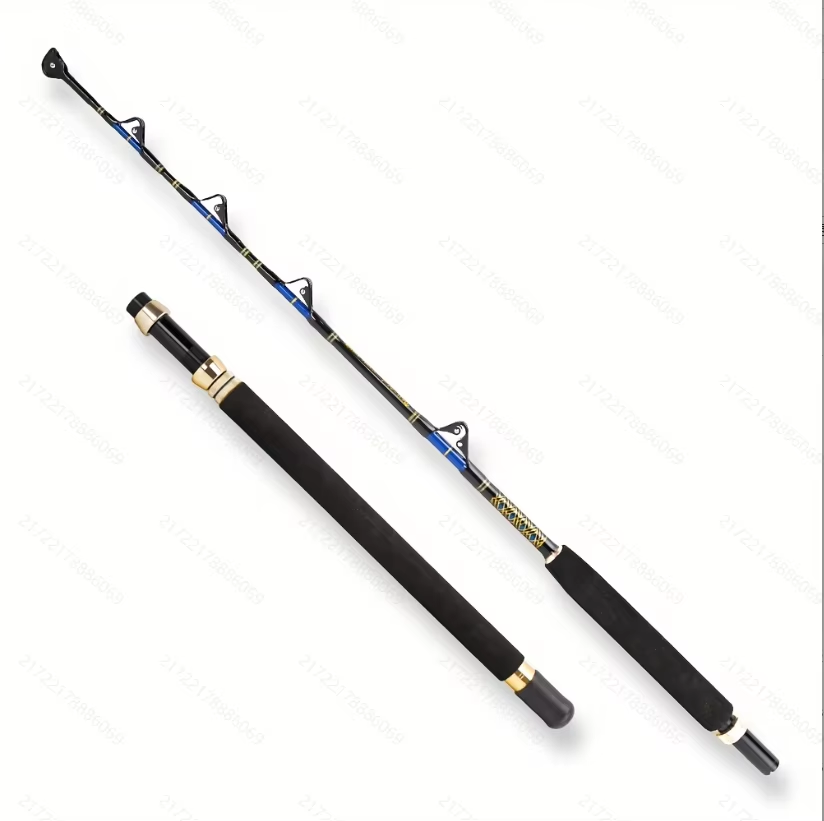
Big game offshore trolling rods have stout blanks. Most use reinforced fiberglass or heavy composite construction. They come with roller guides, strong reel seats, and gimbal butts. They hold 30 lb to 100 lb+ line classes. They are made to stand up to repeated, brutal runs from large fish in open ocean.
Simple rule: Use inshore rods for bay and coastal trolling. Pick big game trolling rods once you run offshore for hard-fighting pelagics.
H3: Target species breakdown: Tuna, Marlin, Wahoo, Sailfish, Mahi-Mahi
Each fish fights differently. Your rod choice needs to match that behavior.
Tuna Bluefin, yellowfin, and bigeye tuna blast off with fast, deep runs. They dive hard and fight low. You need a stiff rod with strong backbone. It stops them from digging into structure and snapping your line.
Marlin Blue marlin and black marlin combine long runs and acrobatic jumps. They surge unpredictably. Your rod needs enough give to absorb jumps, plus plenty of power to turn their heavy weight. Most large marlin call for 50 lb class or heavier rods.
Wahoo Wahoo hit at blinding speed. They make short, screaming runs and have sharp teeth. The rod must absorb their sudden strike without breaking. A moderate-stiff blank works well for wahoo trolling setups.
Sailfish Sailfish make fast, flashy runs and frequent leaps. They do not carry the raw weight of big marlin. A 30–50 lb class rod balances flexibility and power to keep hooks pinned during jumps.
Mahi-Mahi Mahi fight hard for their size. They make quick, chaotic runs near the surface. They are lighter than tuna or marlin. A lighter big game trolling rod works great if you target mahi alongside larger species.
H2: Key Specs to Check When Buying a Trolling Rod for Tuna & Marlin
Pick the right specs first. Bad specs turn a hot bite into lost fish or broken gear. Below are the critical features you need to compare before you buy.
H3: Line Weight / Line Class Rating (the #1 buying factor for big game)
Line class sets the maximum load your rod safely handles. It matches your reel, line, and target fish.
- 30 lb class: Great for sailfish, smaller mahi, and light tuna.
- 50 lb class: The most versatile option. It handles yellowfin tuna, mid-size marlin, and wahoo.
- 80 lb class: For large bluefin and solid marlin.
- 100 lb+ class: Tournament gear for giant blue marlin and trophy bigeye tuna.
Rule of thumb: Do not run heavy line on a light-class rod. The blank will fail under hard runs.
H3: Rod Blank Material: Fiberglass vs Carbon Fiber vs Composite
The blank forms the core strength of your rod. Each material brings different benefits for offshore trolling.
- Solid fiberglass: Holds steady under heavy shock. It absorbs sudden surges well. Most captains trust it for marlin and big tuna. It bends slowly and resists breaking.
- Carbon fiber: Light and responsive. It gives sharp feedback. But it is brittle against violent, repeated shocks. It works better for lighter big game setups.
- Composite: Mixes fiberglass and carbon. It balances weight and durability. It fits anglers who want less fatigue on long days.
H3: Rod Action & Power for Big Game Trolling
Action describes where the rod bends. Power describes its raw lifting strength. Big game trolling rods mostly run moderate or slow action. They bend near the butt, not the tip. Stiff, heavy power stops fish from diving deep. Fast action feels snappy, but it lacks the forgiveness you need for jumping marlin.
H3: Rod Length
Short rods (5’–6’) work best for stand-up fishing. They give you leverage for close fights and fit tight cockpits. Longer rods (6’6”–7’6”) help spread your lures wider. They suit spreader bars and multi-lure trolling setups. Longer rods add more flex, but they are harder to control when a giant fish makes a run.
H3: Guides, Roller Guides & Frame Material
Guides take constant friction from fast line pulls. Ceramic guides work for light line classes. They wear fast under heavy braid or wire leaders. Roller guides spin freely. They cut friction and stop line burn. Always choose roller guides for 50 lb+ setups. Pick stainless steel or anodized aluminum frames. Saltwater eats cheap metal quickly.
H3: Reel Seat & Butt Design
The reel seat locks your reel firmly in place. Solid aluminum seats beat plastic or graphite for heavy fights. Butt style matches your fishing method:
- Straight butt: Works with rod holders and stand-up angling.
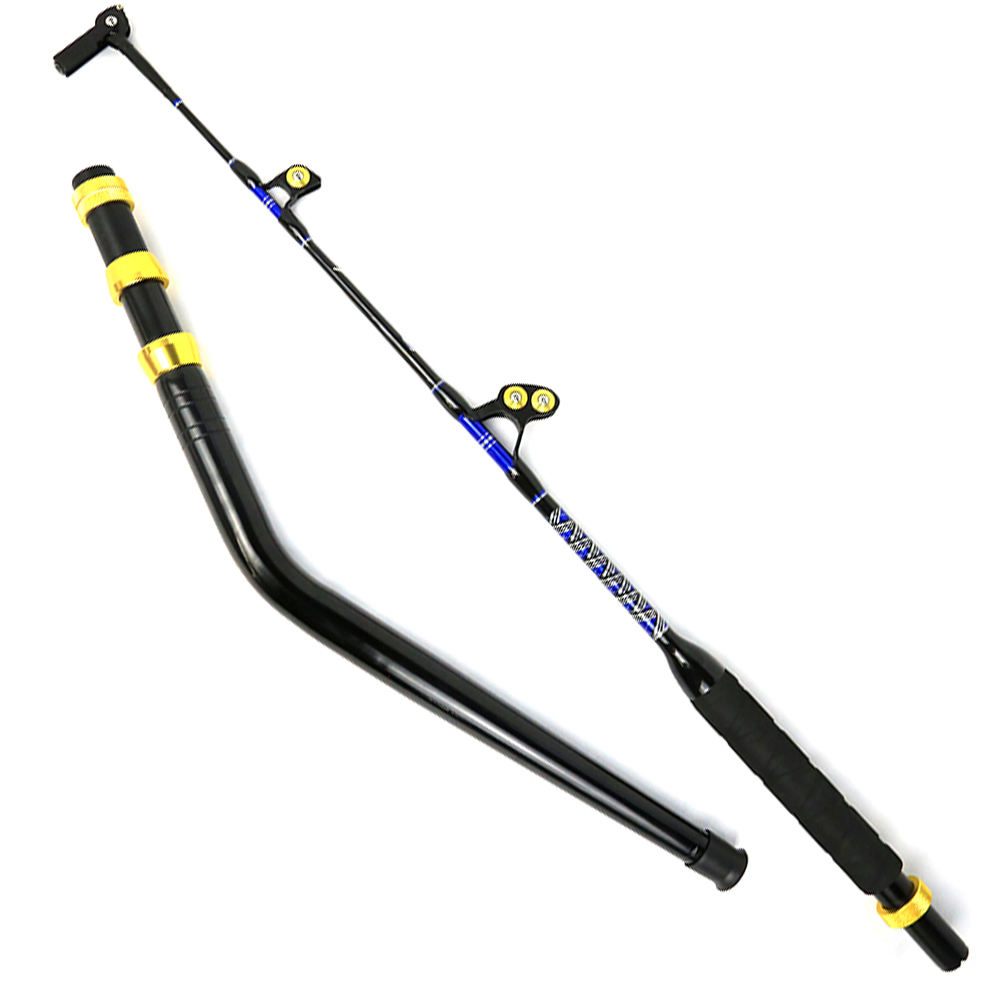
- Bent butt: Pushes against your harness. It transfers fish weight to your body.
- Gimbal butt: Locks into a fighting chair gimbal. It takes load off your arms during marathon battles.
H3: Handle Material: EVA, Cork, Rubber
You grip the handle through wet, slippery conditions. EVA foam stays grippy when wet. It resists salt and holds up for years. Cork feels comfortable, but it stains and wears fast in harsh offshore saltwater. Hard rubber handles offer a firm, non-slip hold. Many anglers pair them with gloves.
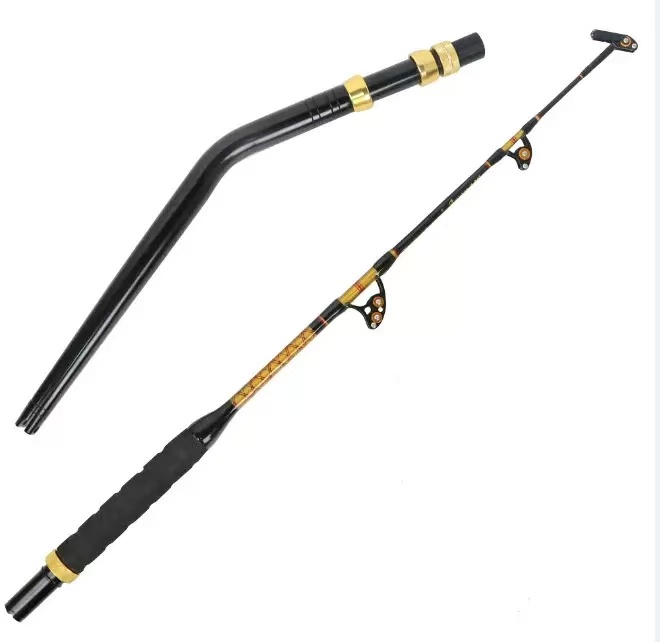
H2: Stand-Up Trolling Rod vs Fighting Chair Trolling Rod for Big Game
You have two main styles for big game trolling. Each fits a different fighting style and target fish. Pick the wrong one, and you fight at a big disadvantage.
H3: Stand-up trolling rods: Best for tuna, smaller marlin, mobility
Stand-up rods put you in full control. You fight fish on your feet, with a harness taking most of the strain. These rods feel balanced and responsive. They let you chase fast-moving tuna and jumpy smaller marlin. They work great in tight boat cockpits. You can move around easily. Many anglers prefer them for day trips that target yellowfin tuna, wahoo, and juvenile marlin. They rely on your strength and technique. You cannot hold back a true giant marlin for hours with one.
H3: Fighting chair rods: Built for giant marlin, extended battles
Fighting chair rods pair with a chair and gimbal mount. The chair absorbs massive load, not your body. These rods carry extra-heavy power. They handle long, draining fights with trophy blue marlin. You stay seated and steady. The rod butt locks into the gimbal. This setup saves your energy over multi-hour battles. They are less flexible for quick movement. They are not ideal if you want to chase fast tuna around the boat.
H3: Quick comparison table
表格
| Feature | Stand-Up Trolling Rod | Fighting Chair Trolling Rod |
| Power | Medium-heavy to heavy | Extra-heavy |
| Length | Shorter | Medium |
| Use case | Active angling, tuna | Giant marlin, long figh |
H2: Additional Big Game Trolling Rod Features for Saltwater Durability
Saltwater is harsh. Spray, brine, and constant exposure break cheap gear fast. These extra features keep your rod reliable trip after trip.
H3: Saltwater corrosion protection
Salt eats unprotected metal quickly. Look for anodized aluminum parts and stainless hardware. Good brands coat frames, reel seats and guides with anti-corrosion finish. Rinse your rod with fresh water after every offshore trip. Even the best coating fails if you skip cleaning. Avoid raw steel or cheap alloy parts. They rust and jam mid-fight.
H3: Gimbal and harness compatibility
Gimbals and harnesses transfer heavy load away from your arms. Stand-up rods need a butt that locks into a fighting harness. Fighting chair rods must fit standard chair gimbals. Check the butt diameter before buying. A mismatched butt slips under pressure. Slippage costs you fish and hurts your body.
H3: Rod holder compatibility for offshore trolling spreads
You run multiple rods at once in an offshore spread. Your rod has to sit stable in rod holders. Check the butt shape and thickness. Bent butts and straight butts fit different holder styles. Some thick big-game butts do not slide into standard holders. Confirm fit before you build your spread. Stable holders keep lures running right and prevent rods from pulling overboard.
H3: Handle material: EVA, cork, rubber
Your handle stays wet and covered with salt spray all day. EVA foam is the top pick. It grips well when wet, resists salt damage, and cleans easily. Cork feels soft and natural. But it soaks up salt, stains easily, and wears down fast with heavy use. Hard rubber handles deliver a firm grip. They hold up well in rough conditions. Most anglers wear gloves with rubber handles.
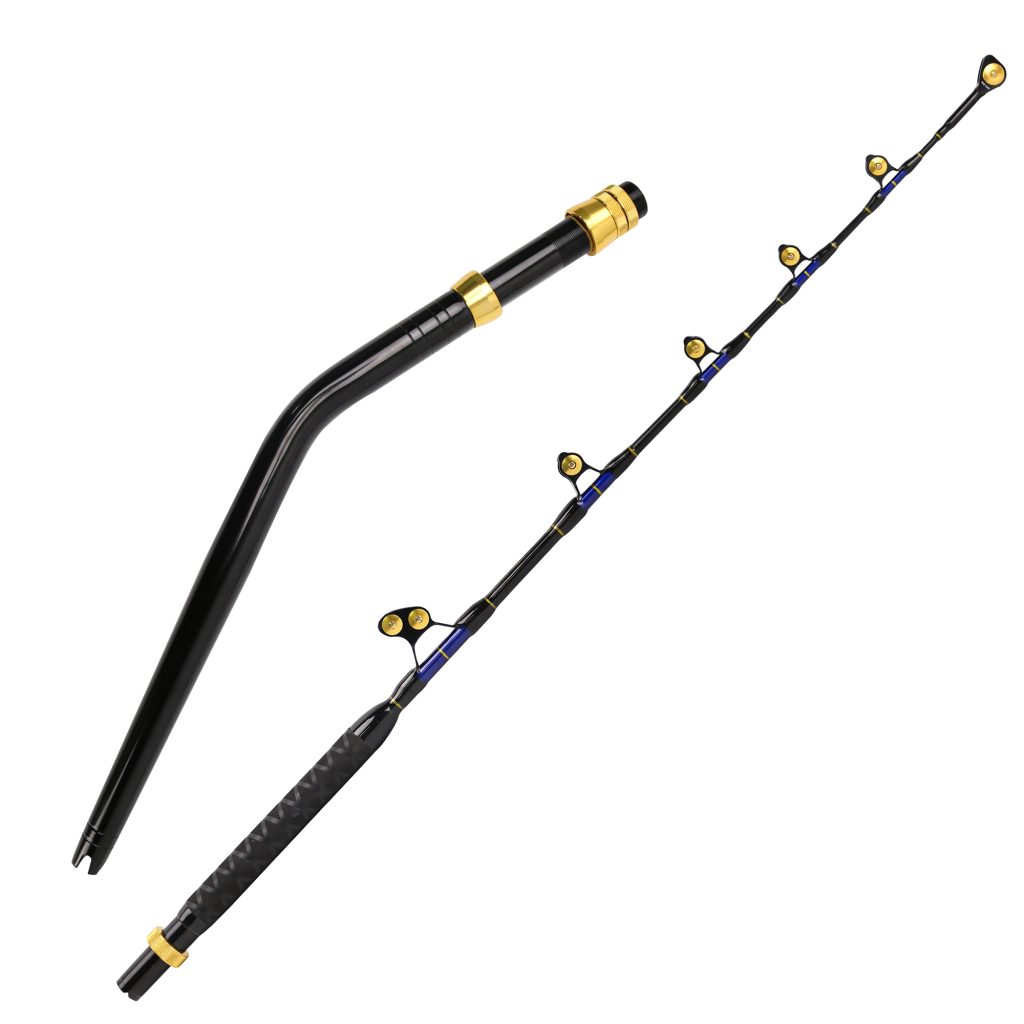
H2: How to Match Your Trolling Rod With Reels, Lines & Rigs
A great rod underperforms if paired with the wrong reel, line or rig. Match every part to work as one system. This setup keeps tension steady and helps you land big pelagics.
H3: Rod + reel matching rule for big game
Start with your rod’s line class rating. Pick a reel built for that same weight range. A 50 lb class rod pairs with a 50 lb lever-drag reel. Do not mount a tiny light reel on an 80 lb rod. It cannot hold enough line or deliver enough drag. Lever drag reels are the standard for big game trolling. They let you adjust drag smoothly during long runs. Check the reel seat size too. A reel that does not seat tight will shift and wobble under load.
H3: Monofilament, braid, wire leader considerations
Monofilament stretches. That stretch cushions sudden strikes and jumps from marlin or sailfish. It works well for most trolling lures. But it has thicker diameter, so you fit less line on the spool. Braid has almost no stretch. It gives you sharp bite feedback. It packs more line onto your reel. Its rough surface creates line burn risk, so roller guides become extra important. Wire leaders fight sharp teeth from wahoo. Always add wire leaders when wahoo swim in your area. For tuna and marlin, fluorocarbon leaders work if toothy species are not around.
H3: Rigs: Trolling lures, spreader bars, daisy chains
Single trolling lures put direct shock on your rod. Use a rod matched to your lure weight and target fish. Heavy lures need stiffer blanks. Spreader bars push more water. They create strong, steady pull. They demand consistent backbone from your rod. 50 lb or heavier rods handle most spreader bar setups. Daisy chains run multiple small teasers. They create light, steady tension. You can run them on mid-range rods. They draw fish toward your main lure. Keep your boat speed consistent for each rig. Fast speed adds extra load to your rod.
H2: Common Mistakes When Choosing a Tuna & Marlin Trolling Rod
Many anglers grab the wrong rod and lose trophy fish. Avoid these frequent errors before you buy.
Buying too light a rod for the target species
A light rod feels easy to carry. But it cannot handle the brutal runs of big tuna or marlin. The blank bends too far and snaps under heavy load. Always match the rod line class to the largest fish you plan to chase.
Confusing casting rod specs with trolling rod specs
Casting rods are built for casting and quick, sharp hooksets. Trolling rods need steady backbone to hold constant pull behind the boat. A casting rod lacks the slow, forgiving bend for long trolling fights. Do not substitute a casting rod for trolling work.
Skimping on roller guides for heavy line classes
Standard ceramic guides create friction. Braid and heavy mono burn fast during long runs. Roller guides spin and cut that friction. Never skip roller guides if you run 50 lb test or heavier line. Cheap guides cost you fish.
Ignoring saltwater build quality for offshore trips
Some rods look tough but only work for freshwater or inshore use. Low-grade metal rusts fast in ocean spray. Rusty reels seats and guides jam mid-fight. Check hardware material before you take the rod offshore.
Overlooking boat space and rod holder size
A powerful rod does you no good if it does not fit your boat. Extra-long rods crowd small cockpits. Thick or oddly shaped butts may not slide into your rod holders. Measure your holders and check available deck space first.
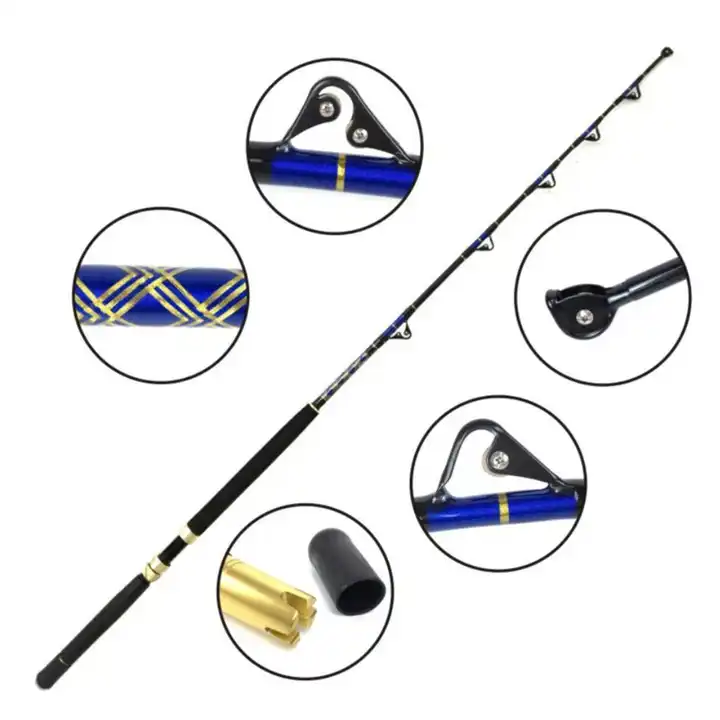
H2: Budget Recommendations: Entry, Mid-Range, Premium Big Game Trolling Rods
You do not need the priciest rod to catch big pelagics. Match your budget to how often you fish and what species you chase.
Entry-level: casual offshore tuna trolling
Entry rods work for occasional offshore trips. Most use fiberglass or basic composite blanks. They usually come with stainless roller guides and standard aluminum reel seats. They handle 30–50 lb line class. They work great for yellowfin tuna, small wahoo and mahi-mahi. Do not push these rods to fight giant marlin. Their hardware and blank can fail under extreme, long-lasting load. Pick this tier if you only head offshore a few times each season.
Mid-range: regular marlin and big game trips (best value)
This is the sweet spot for most serious offshore anglers. Mid-range rods use upgraded composite or solid E-glass blanks. They fit 50–80 lb line classes. Components hold up to repeated saltwater exposure. They handle tuna, wahoo, sailfish and mid-sized marlin reliably. Most models support both stand-up and fighting-chair setups. They cost less than tournament gear but skip the weak parts of budget rods. If you fish offshore monthly, choose this tier first.
Premium: tournament-grade marlin rods
Premium rods target trophy marlin and tournament fishing. Many follow IGFA rules. Builders use high-grade fiberglass or advanced composite blanks. They fit 80 lb to 130 lb+ line classes. You get heavy-duty roller guides, precision-machined reel seats and reinforced wraps. These rods deliver consistent power for multi-hour battles. They balance strength and weight to cut down angler fatigue. Choose premium rods if you chase giant blue marlin, join tournaments, or run offshore every week.
H2: Frequently Asked Questions (FAQ Section — huge for featured snippets & voice search)
Q: What size trolling rod for bluefin tuna? A: Smaller bluefin work well on a 50 lb class rod. Target large trophy bluefin, go with an 80 lb to 100 lb+ stand-up rod. Pick solid fiberglass for its shock resistance during deep, powerful runs.
Q: Do I need roller guides for marlin trolling? A: Yes, for 50 lb class and heavier setups. Marlin make long, fast runs. Roller guides lower line friction and stop line burn. Light 30 lb rigs with mono can use ceramic guides, but roller guides are still the safer pick.
Q: Is carbon fiber or fiberglass better for big game trolling? A: Fiberglass wins for most big game trolling. It absorbs sudden surges and resists breaking under heavy shock. Carbon fiber is lighter and more sensitive, but it cracks easier during brutal, repeated runs. Many anglers choose composite blanks to balance both benefits.
Q: Can I use a stand-up rod in a fighting chair? A: You can, but it is not ideal. Stand-up rods are shorter and built for harness work. They lack the backbone geometry designed for long chair battles. A dedicated chair rod handles sustained heavy load much better.
Q: What pound test rod do I need for marlin? A: Smaller sailfish and juvenile marlin suit a 30–50 lb class rod. Most blue marlin trips rely on 50–80 lb class rods. Target giant black or blue marlin, step up to 100 lb+ line class.
Q: How long should a big game trolling rod be? A: Stand-up rods usually run 5′ to 6′. Fighting chair rods sit around 6′6″ to 7′. Longer rods help spread lures wider, but shorter rods give stronger leverage for close-quarters fights.
H2: Final Buying Checklist Before You Purchase
Use this quick checklist before you order your new rod. Save it to reference on your next offshore shopping trip.
- Confirm target species and expected line class
- Choose blank material based on your fishing style
- Pick roller guides for 50lb+ big game
- Select bent butt or straight butt to match stand-up or fighting chair fishing
- Verify saltwater-ready construction and corrosion-resistant hardware
- Check compatibility with your reel, gimbal, and fighting harness
Conclusion
Choosing a trolling rod for tuna, marlin, and other big game fish comes down to matching specs to your fishing plans. Start with the right line class, blank build, guide type, and butt style. Think about whether you fish stand-up or from a fighting chair, and always prioritize saltwater durability for offshore trips.
Skip rushed buys. A well-matched trolling rod gives you the backbone and forgiveness you need to fight hard-running pelagics and turn bites into landed trophies.
What big game species do you plan to chase first? Drop a comment below. You can also browse our full trolling rod reviews to narrow down your next purchase.
-

-

-
Sale!
 Out of stock
-
Sale!
