
Introduction
Saltwater fishing is a demanding sport. Whether you’re casting from a pier or battling a giant tuna offshore, the ocean tests your gear in every way. Unlike freshwater environments, saltwater is harsh. It causes corrosion, weakens materials, and pushes fishing rods to their limits.
That’s why you can’t rely on just any rod. Saltwater anglers need equipment built for strength, durability, and corrosion resistance. Offshore fishing, especially for big game species like tuna and marlin, requires rods made from high-performance materials, such as carbon fiber and advanced composites.
In this article, we’ll break down the best saltwater fishing rods that offer top-tier strength and corrosion resistance. We’ll explain what features to look for, compare popular models, and help you choose the perfect rod for chasing offshore giants.

II. Why Corrosion Resistance Matters in Saltwater Fishing Rods
Saltwater is brutal on fishing gear. The salt, moisture, and constant exposure to the elements speed up wear and tear. If your rod isn’t built to handle it, corrosion will set in quickly, especially on metal parts like guides, reel seats, and hook keepers.
Once corrosion starts, performance drops. Rusted components can damage your line, reduce casting distance, and even break under pressure. For serious anglers, that means missed strikes and lost fish.
To fight corrosion, manufacturers use specific materials. Stainless steel is common for guides and reel seats. Titanium is even better—lighter, stronger, and nearly rust-proof. Some rods also use epoxy coatings or anodized finishes to add an extra layer of protection.
Proper care goes a long way, too. After each saltwater trip, rinse your rod thoroughly with fresh water. Let it dry completely before storing. Check for signs of rust or wear, especially around the guides. A little maintenance helps your rod stay strong and reliable, season after season.
III. The Strength Factor: High-Strength Carbon and Composite Rods
When fighting powerful fish like tuna or marlin, rod strength matters. Offshore fishing puts extreme pressure on your gear, and a weak rod won’t hold up. That’s where high-strength carbon and composite rods shine.
Carbon fiber rods are lightweight, stiff, and very responsive. They give you better sensitivity, so you can feel every strike. More importantly, they offer an excellent backbone to handle heavy loads and fast runs. This makes them ideal for offshore fishing, where strength and control are key.
Fiberglass rods are tougher and more flexible, but they’re heavier and less sensitive. They can take a beating, which is great for rough conditions or novice anglers. However, they may not provide the power or precision needed for big game fishing.
Composite rods combine carbon and fiberglass. They strike a balance between strength, flexibility, and sensitivity. These rods are great for anglers who want the best of both worlds.
Big game fishing demands more from your gear. When targeting tuna or marlin, you need a rod with high tensile strength, fast action, and strong lifting power. Carbon or composite rods are built for this job. They give you the control, durability, and performance needed to land the fight of your life.
IV. Key Features to Look for in a Saltwater Fishing Rod
Choosing the right saltwater rod isn’t just about brand or price. You need to look at specific features that match your fishing style and target species. Here are the most important ones:
Rod Length and Power
Longer rods (7–9 feet) help with casting distance, especially when fishing from shore or a boat. Shorter rods (5–6.5 feet) offer more control and lifting strength, which is ideal for battling big fish. Power refers to the rod’s strength—medium-heavy to heavy power rods work best for offshore game like tuna or marlin.
Line Weight and Lure Rating
Always match the rod’s line weight rating to your target species. For big game fishing, look for rods rated for 30 to 100 lb test lines. Lure rating tells you the ideal lure size for the rod. Staying within these limits ensures better casting and prevents rod damage.
Reel Seat Quality and Guide Material
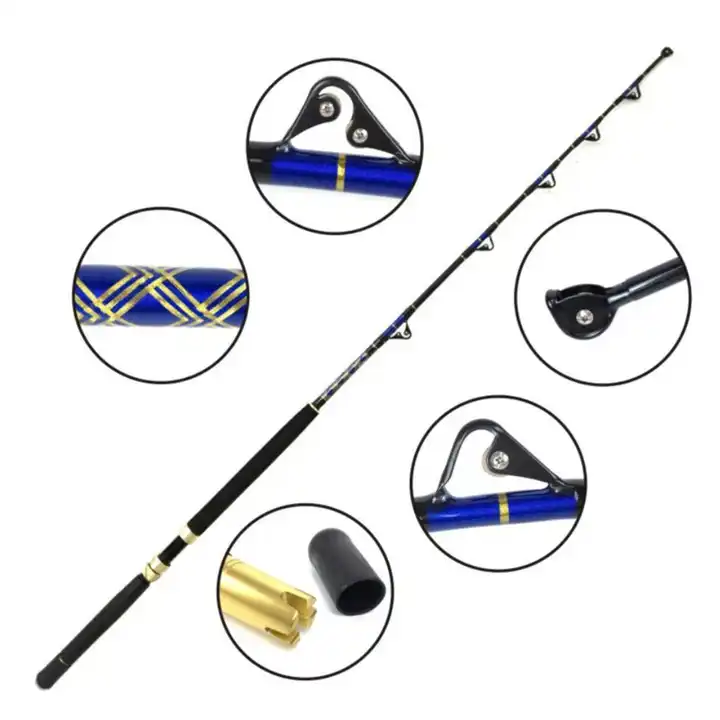
The reel seat must hold your reel firmly, even under stress. Look for corrosion-resistant materials like anodized aluminum or graphite. For guides, stainless steel or titanium with ceramic inserts will reduce friction and stand up to saltwater exposure.
Handle Comfort and Grip
A good grip is essential during long fights. EVA foam handles are durable, lightweight, and easy to grip when wet. Cork handles offer better sensitivity but may wear out faster in saltwater conditions. Choose a handle that feels comfortable and provides a secure hold.
V. Top 7 Saltwater Fishing Rods for Offshore Big Game Fishing
1. Shimano Terez Saltwater Rod
Key Specs:
Length: 6’6” to 7’2”
Power: Medium-heavy to heavy
Blank: High-modulus carbon fiber
Guides: Fuji K-Frame with Alconite inserts
Pros:
✔️ Lightweight yet powerful
✔️ Excellent corrosion resistance
✔️ Designed for both spinning and conventional reels
Cons:
❌ Premium price point
2. Penn Carnage III Jigging Rod
Key Specs:
Length: 5’8” to 6’6”
Power: Heavy
Blank: SLS3 carbon composite
Guides: Fuji K-series
Pros:
✔️ Great lifting power
✔️ Durable construction for jigging
✔️ Slim yet strong
Cons:
❌ Limited flexibility in lighter applications
3. Daiwa Proteus Heavy Action Rod
Key Specs:
Length: 6’6” to 8’
Power: Medium-heavy to extra heavy
Blank: HVF carbon technology
Guides: Fuji Alconite
Pros:
✔️ Strong backbone for big fish
✔️ Sensitive tip for bite detection
✔️ Lightweight feel
Cons:
❌ Stiff for finesse techniques
4. Okuma Makaira Offshore Rod
Key Specs:
Length: 6’ to 7’
Power: Heavy
Blank: E-glass with carbon outer wrap
Guides: ALPS stainless with zirconium inserts
Pros:
✔️ Built for extreme battles
✔️ Excellent torque and lift
✔️ Reinforced for long-term durability
Cons:
❌ Slightly heavier than carbon-only rods
5. St. Croix Mojo Salt Rod
Key Specs:
Length: 6’6” to 7’6”
Power: Medium-heavy to heavy
Blank: SCII carbon + Fortified Resin System
Guides: Sea Guide with aluminum-oxide inserts
Pros:
✔️ Affordable for its class
✔️ Smooth casting and solid hook sets
✔️ Great sensitivity
Cons:
❌ May not match the power of high-end rods
6. Ugly Stik Bigwater Spinning Rod
Key Specs:
Length: 6’6” to 12’
Power: Medium to heavy
Blank: Ugly Tech construction (graphite/fiberglass blend)
Guides: Stainless steel
Pros:
✔️ Very tough and nearly unbreakable
✔️ Budget-friendly
✔️ Handles rough use
Cons:
❌ Heavier than pure carbon rods
7. Tsunami Trophy Series Spinning Rod
Key Specs:
Length: 6’6” to 8’
Power: Medium-heavy to heavy
Blank: High-density carbon fiber
Guides: Aluminum oxide
Pros:
✔️ Solid backbone
✔️ Good casting range
✔️ Corrosion-resistant components
Cons:
❌ Not ideal for very large pelagic species

VI. Best Rod for Tuna Fishing
Tuna are aggressive fighters. They hit hard, run fast, and test every part of your gear. If your rod can’t keep up, you’ll lose the fish—and possibly your tackle.
Key Features Needed for Tuna
1. High Drag Resistance
Tuna make long, powerful runs. Your rod must handle high drag pressure without folding. Look for models rated for heavy lines and strong reel pairings.
2. Stiff, High-Tensile Blank
A rod with a rigid, high-strength blank gives you the lifting power needed to control the fight. Carbon fiber or composite builds work best here. They provide the backbone required without adding too much weight.
3. Good Casting Distance
Reaching tuna schools means casting far and fast. A longer rod with a responsive tip helps you place your bait where it counts—without spooking the fish.
Recommended Rod: Shimano Terez Saltwater Rod
The Shimano Terez checks all the boxes. It’s lightweight but built tough with a high-modulus carbon fiber blank. The rod handles heavy drag pressure and stays firm during long battles. Its design also allows smooth, long-distance casts—perfect for working offshore tuna boils.
If you want a reliable, high-performance rod for tuna fishing, the Shimano Terez delivers.
Top Recommendation: Shimano Terez Saltwater Rod
The Shimano Terez stands out for tuna fishing. Its lightweight carbon fiber construction offers serious backbone while staying easy to handle. The Fuji guides help reduce friction, which is crucial when using heavy lines and high drag.
It balances strength, sensitivity, and durability—exactly what you need when chasing 100+ lb yellowfin or bluefin tuna.
VII. Best Rod for Marlin Fishing
Marlins are among the toughest fish in the ocean. Hooking one means you’re in for a long, intense fight. You need a rod that’s built for serious pressure.
Key Characteristics for Marlin Rods
Extreme lifting power to handle long battles and deep dives
Solid backbone with just enough flex to absorb sudden surges
Reinforced components like heavy-duty guides and reel seats
Top Recommendation: Okuma Makaira Offshore Rod
The Okuma Makaira is designed for large pelagic species like marlin. Its E-glass core and carbon wrap construction create unmatched strength and durability. With ALPS stainless steel guides and a strong reel seat, this rod holds up under the heaviest loads. It’s battle-tested and trusted by offshore pros.
VIII. Tips for Maintaining Saltwater Fishing Rods
Saltwater can ruin even the best gear if you don’t take care of it. A few simple habits will keep your rod performing season after season.
1. Rinse and Dry After Every Trip
Always rinse your rod with fresh water as soon as you finish fishing. Focus on the guides, reel seat, and handle. Let it air dry completely before storage.
2. Smart Storage
Store rods in a cool, dry place. Use vertical rod holders or wall racks to prevent warping. Avoid leaving them in hot cars or damp garages.
3. Check and Replace Worn Parts
Inspect your guides for cracks or corrosion. Damaged guides can fray your line. Replace grips if they become loose or start to degrade. Staying ahead of wear and tear prevents bigger problems later.
IX. Frequently Asked Questions (FAQs)
Q: Can I use freshwater rods in saltwater?
A: It’s not recommended. Freshwater rods often lack corrosion-resistant materials. Salt can quickly damage the guides, reel seat, and blank.
Q: What’s the best rod material for saltwater use?
A: Carbon fiber and composites are ideal. They offer strength without extra weight and resist saltwater damage better than cheaper alternatives.
Q: How do I match a rod with a saltwater reel?
A: Match the rod’s power and line rating with the reel’s capacity. Make sure the reel seat fits securely and the setup feels balanced in your hands.
Q: What length rod is best for offshore fishing?
A: For big game offshore, 6 to 7 feet is usually ideal. These lengths provide strong leverage and good casting distance without sacrificing control.
X.. Why Choose Us as a High-Strength Carbon Rods Manufacturer
When it comes to saltwater fishing gear, quality matters. Here’s why we stand out as your trusted partner for high-strength carbon fishing rods:
1. Advanced Materials
We use premium-grade carbon fiber designed for extreme durability and performance. Our rods are built to withstand harsh offshore conditions and intense battles with big game fish.
2. Precision Engineering
Each rod is crafted with precision. We control every detail—from blank taper and guide placement to the final finish—to ensure peak performance on the water.
3. Corrosion-Resistant Components
Our rods feature top-tier guides, reel seats, and finishes that resist rust and salt damage. You get gear that lasts, even with regular saltwater exposure.
4. Customization Options
Need a specific length, action, or grip style? We offer custom solutions tailored to your needs. Whether you’re outfitting a fleet or building a retail brand, we’ve got you covered.
5. Proven Track Record
Our rods are trusted by offshore anglers, charter captains, and retailers worldwide. We don’t just build rods—we help you build your reputation.
6. Competitive Pricing & Fast Delivery
We combine factory-direct pricing with reliable delivery timelines. You get premium rods without the premium wait.
�� Contact us today to request a quote or learn more about OEM/ODM options. Let’s build better gear—together.
XI.Conclusion
Saltwater fishing puts serious stress on your gear. That’s why corrosion resistance and rod strength aren’t optional—they’re essential. Whether you’re targeting tuna, marlin, or any other ocean predator, choosing the right rod can mean the difference between landing a trophy and losing the fight.
Invest in quality gear built for offshore conditions. It lasts longer, performs better, and helps you fish with confidence.
�� Browse Our Recommended Saltwater Rods Here
-
Sale!

-
Sale!

-
Sale!

-
Sale!
